As City Council resumes deliberations on the Envision Evanston 2045 comprehensive plan next week, the Northwestern University-City Committee weighed stakeholder opinions on transitional zoning near NU and off-campus housing goals at its meeting Tuesday afternoon.
The meeting factored in a preemptive discussion on potential zoning changes to properties surrounding the University, many of which fall under transitional zoning districts that act as “buffers” between the University and lower-density residential districts.
Previous Envision Evanston zoning proposals eliminated the transitional districts west of Sheridan Road and were rezoned to university housing districts, which also permit university and college-related nonresidential uses. While current zoning has not changed, resident after resident took to the podium to preserve the buffer districts.
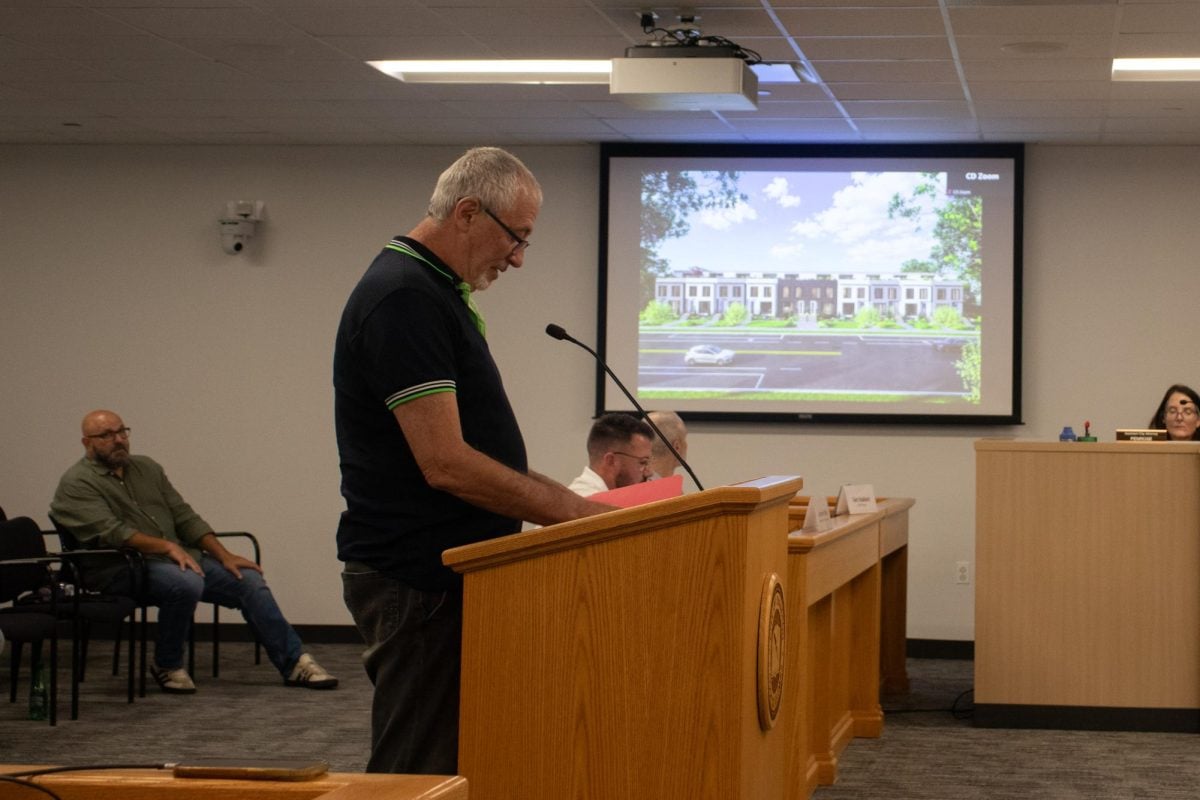
Evanston resident Judy Lubin, who lives near the University and has advocated for stronger town-gown relationships, said that collaborative efforts between the two communities would crumble if buffer zones were eliminated.
“All good relationships have boundaries and buffers,” Lubin said during public comment.
David Schoenfeld, a community representative and committee member, echoed residents’ concerns and said he was “disturbed” to see the proposed zoning change, calling it a “gigantic mistake.”
Dave Davis, Northwestern’s executive director of neighborhood and community relations, responded that while residents’ demands make sense, he is “unaware of any proposed plan to remove that buffer zone,” though acknowledging he is not the expert in that area.
Davis added that while he could not personally share the University’s plans around the zoning and comprehensive plan, as it is not in his purview, he appreciated residents’ feedback.
In a pivot toward the in-progress comprehensive plan, committee members advocated to address the state of off-campus student housing and off-campus community relations.
In previous Council meetings, committee member and Ald. Clare Kelly (1st) argued that increased density in downtown Evanston near the University would only raise housing prices and displace residents.
At the committee, Schoenfeld contended that Northwestern students looking to live off-campus do not look for affordable housing, and that properties near campus become “luxury goods” that put students and young families in competition for housing.
In response, Jason McKean, NU’s assistant dean of students and director of strategy and operations, clarified that Northwestern has a growing population of first-generation low-income students who use financial aid for off-campus housing. He added that his office regularly addresses off-campus housing affordability at the start of every school year.
“The vast majority of questions that I receive are, ‘How much am I going to pay for an apartment? Can I afford it? If I don’t think I can afford it immediately, how can I?’” McKean said.
University representatives also affirmed their commitment to strengthening town-gown connections and monitoring student activity off-campus through the Northwestern Off-Campus Life office.
Going forward, Kelly proposed coordination with Northwestern to ensure appropriate development and appropriate spaces for future growth and improvement of off-campus housing.
The student population is a serious housing demographic that is “very much missing” from the draft comprehensive plan, according to Kelly. She said she hopes it will be included in the plan going forward for the community and Northwestern’s mutual benefit.
Email: [email protected]
Related Stories:
— Council reauthorizes ‘Putting Assets to Work’ contract
— Housing language debates dominate City Council’s first Comprehensive Plan review
— HCDC evaluates ‘muddy’ Envision Evanston, Zolomij continues as Vice-Chair