Dystopian and fantasy have always been some of my favorite book genres, and Veronica Roth’s (Weinberg ’10) “Divergent” has long been considered one of the genre’s most popular offerings. Written over the winter break of Roth’s senior year at Northwestern and published in 2011, the novel quickly became a defining young adult series of the 2010s, spawning sequels, film adaptations and a devoted fanbase with which I unabashedly identify.
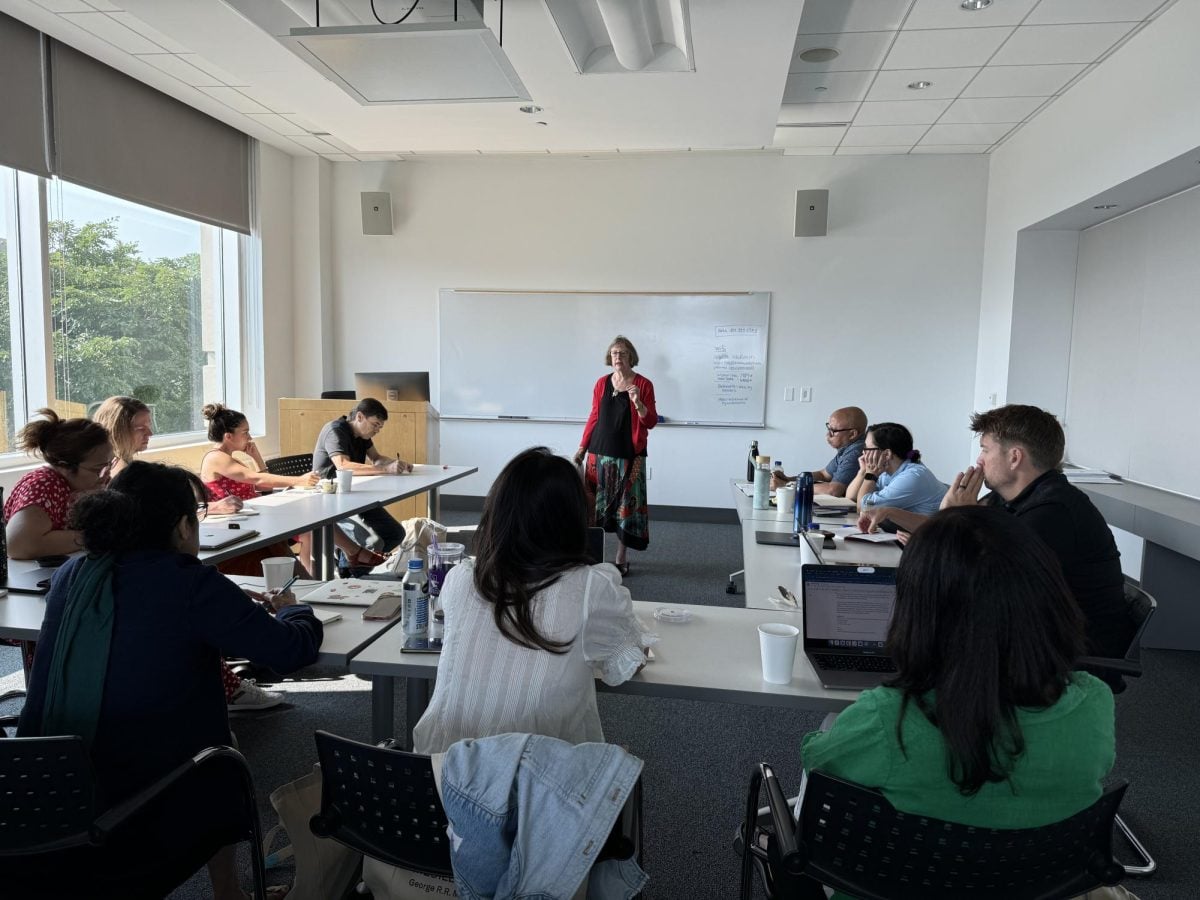
Yet, Roth’s last book in the series, “Allegiant,” sparked fierce backlash, and this time around, she told the audience at the Chicago Humanities Festival on May 17 that she wanted to write for joy rather than concede to the pressure of satisfying her massive fandom. It was with this mindset that Roth’s newest novel, “Seek the Traitor’s Son,” was born.
The book centers on a fictional Earth split between two warring groups: the dominant Talusar, who worship an illness called the Fever that kills and revives half of those infected with special powers, and the resistant Cedre, who reject the virus and fight for their increasingly shrinking autonomy.
The main character is Elegy Ahn, the so-called “Hope of Cedre,” who is wrapped up in a prophecy with Talusaran-born Theran Forint to bring about either the destruction or victory of her people.
Roth wastes little time throwing readers into the novel’s intricate political and religious tensions, without the book feeling like it’s drowning in foreign phraseology. By the third chapter, I had pretty much caught on, and most of my energy was dedicated to unearthing the complicated relationship between Elegy and Theran.
The pair’s dynamic carries much of the novel’s emotional weight, with Elegy actively fighting against the attraction — not because the book falls into the classic “enemies to lovers” trope, but because Elegy is still healing from the death of her first husband and great love, while Theran is recovering from his own trauma. The book leans into both characters’ vulnerability, which is a welcome counterweight to dominant romantic fantasy.
Fans expecting another “Divergent” may be surprised by the book’s noticeably darker, more mature tone. While Roth still excels at writing tense action sequences and morally conflicted protagonists, this novel feels less interested in spectacle. Instead, it focuses on deep emotional aftermath.
The thematic focus feels fitting, given Roth’s comments about wanting to return to writing for enjoyment rather than audience appeasement.
“Seek the Traitor’s Son” does not attempt to recreate the phenomenon of “Divergent,” nor does it feel burdened by trying to satisfy a decade’s worth of fan expectations. Instead, the novel succeeds because it is confident in its own identity. For longtime Roth readers, that individual confidence may ultimately be the book’s greatest strength.
Email: [email protected]
Related Stories:
— Cover to Cover: ‘Ghost Town’ promises a haunt but doesn’t quite deliver
— Cover to Cover: ‘Yesteryear’ is a twisty satire of modern trad wife culture
— Cover to Cover: Patrick Radden Keefe’s ‘London Falling’ masterfully unravels a web of lies