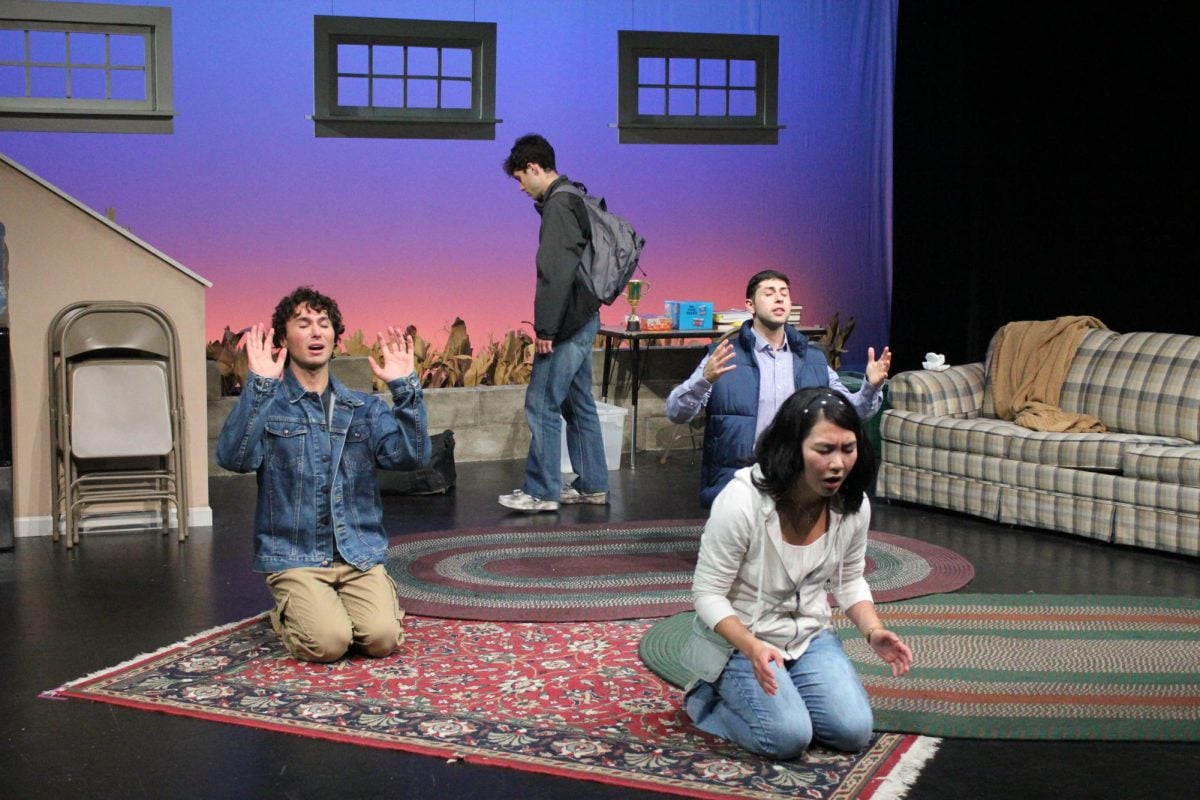
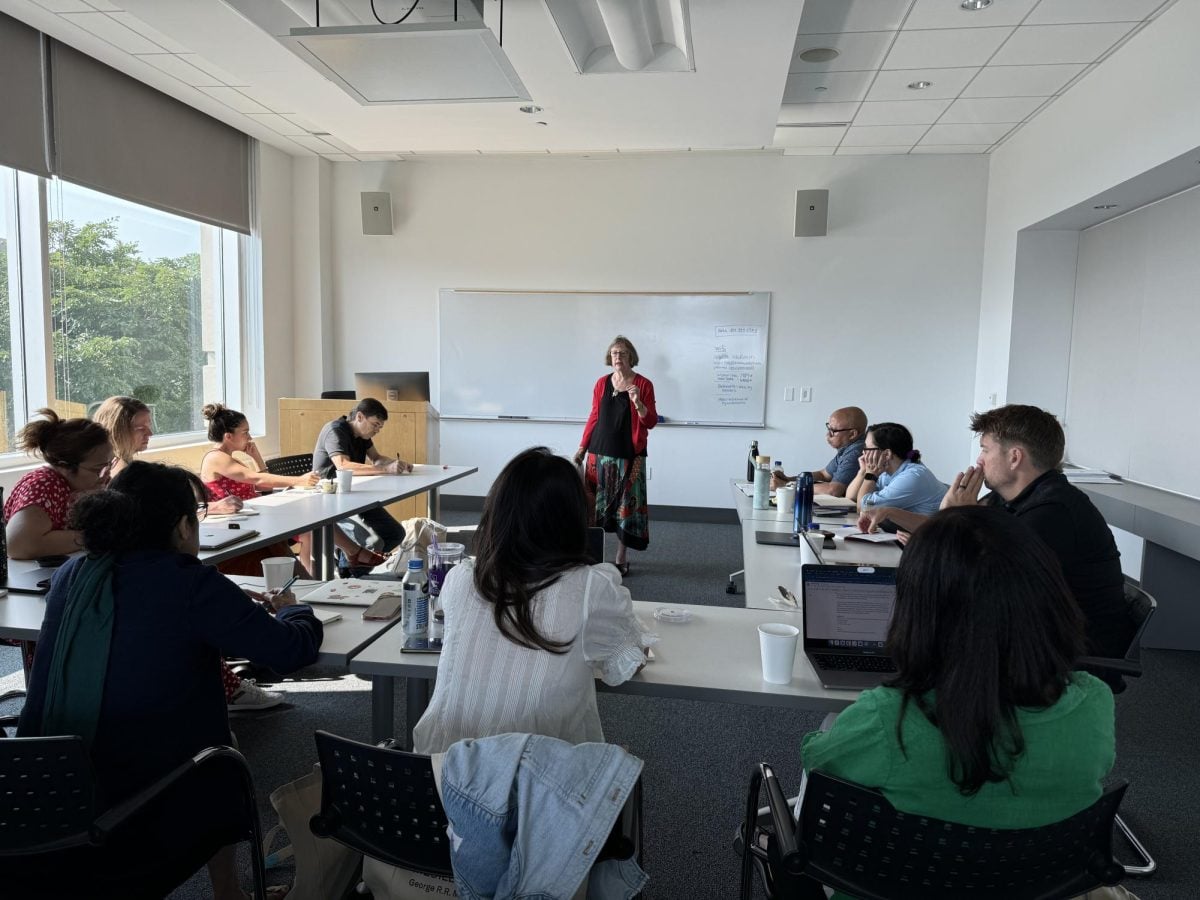
Last weekend in the Virginia Wadsworth Wirtz Center, the violent hum of a shredder filled the halls of the second floor.
The machine, placed in the center of the room, chewed through strips of multicolored paper, scattering fresh fragments across a floor already littered with the shreds. That’s the title of Communication junior Felix Gaddie’s latest work, “Shreds.”
“Shreds” is an original verbatim theatre piece that uses anonymous interviews with Northwestern students to tackle questions about Gen Z and the so-called “loneliness epidemic.” Gaddie said the project was inspired by reading articles, including the Fall 2025 Daily Northwestern poll, talking about a lack of sex and going out among his generation — some describing it as the loneliest generation yet.
“The barrage of news I was consuming talked about Gen Z as this loneliest generation,” Gaddie said. “It seemed there were a lot of answers being thrown around, but there was no actual understanding of why and where this loneliness came from.”
These news stories became the catalyst for the questions “Shreds” asks: When was the last time you felt lonely? How do you define connection? Where do you seek that connection? The result is a blend of movement, music and verbatim interviews.
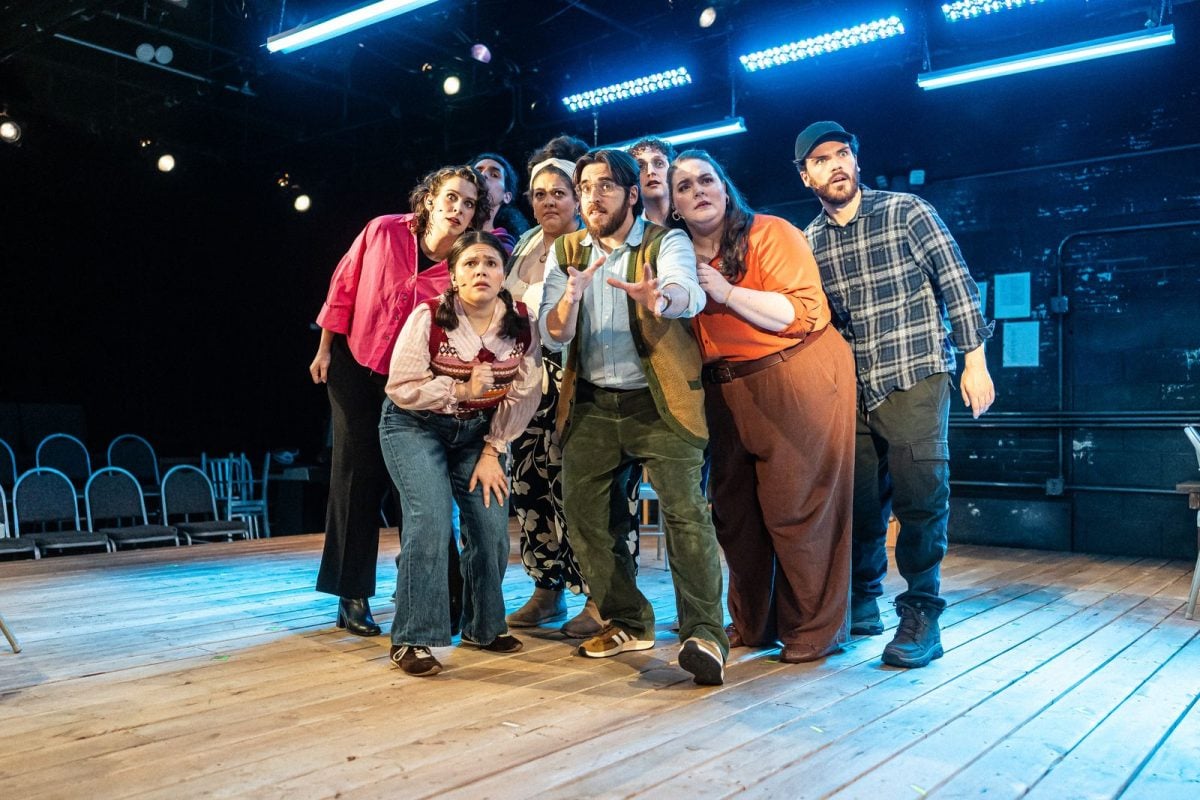
Gaddie, the creator and lead artist, performed the piece alongside Communication seniors Kate McCracken, Nastia Goddard and Kason Chesky, with production by Medill senior Ella Barnes and dramaturgy by Communication junior Lane Ruble. The experimental verbatim piece premiered in Wirtz on Friday and ran the entire weekend.
McCracken, a deviser on the project, said she and her fellow artists have brought their ideas to the table since day one, making for a collaborative creative process.
“We are putting these stories out there in a way that’s tangible,” McCracken said. “Theater is liveness, it is live and it is alive. And I think that when you put these stories into something that is live, that is changing, that is not constant, that is in our care. It adds a humanness to it and a vulnerability and a truthfulness that is very specific to theater as an art form.”
The docu-theatre and verbatim theatre work of Anna Deavere Smith is the artistic and intellectual blueprint for “Shreds.” Smith’s work features artist-collected, interview-based materials. Smith herself is also a performer, who presented painstakingly studied and intentionally rendered bodies and voices spanning race, ethnicity and gender in her work. She uses her own body as a tabula rasa — or, blank slate — as she brings stories to life.
In true Smithian fashion, this creative collective gathered more than 45 interviews, sourcing at first from close friends, then expanding to people they barely knew. There is total anonymity throughout the rehearsal and performance process, largely thanks to the work of Ruble, Gaddie said. Ruble focused on maintaining confidentiality by anonymously transcribing interview recordings for the actors.
“Shreds” is a completely devised theatrical work, with each member of the team contributing to the final product. Chesky describes each member as an “assistant” to the project.
“It’s less about creation and more about revision,” Goddard said. “We would just throw things into the space, and the next time we ran it, we would completely scrap them. It was a lot of just trying things on (our) feet and figuring it out.”
Goddard expected, at first, to be strictly artistic inspiration in the process. Gaddie arrived with a reputation — partly the product of a quirky online persona, partly of the relentless pace at which he staged experimental work across campus. Now, after meeting in January, Gaddie and Goddard have plans to move to Paris together in the fall as they pursue their dream of physical theatre and performance art at the Ecole Philippe Gaulier.
The group considers itself to be deeply connected, on and off the stage, Chesky said.
“This is a great example of the beautiful things that can happen when you take initiative and decide that the art you want to make is necessary,” McCracken said. “People will eventually look back on it and be like, ‘Wow, that was so of the time.’”
Email: [email protected]
Related Stories:
— Curtain Call: ‘The Ballad of Ricky Jo’ uniquely mixes cowboys, comedy and crooning
— Behind the scenes: MFA designers bring Wirtz productions to life
— Curtain Call: Cosmia Opera Collective’s production of ‘The Hunt’ is a prize catch