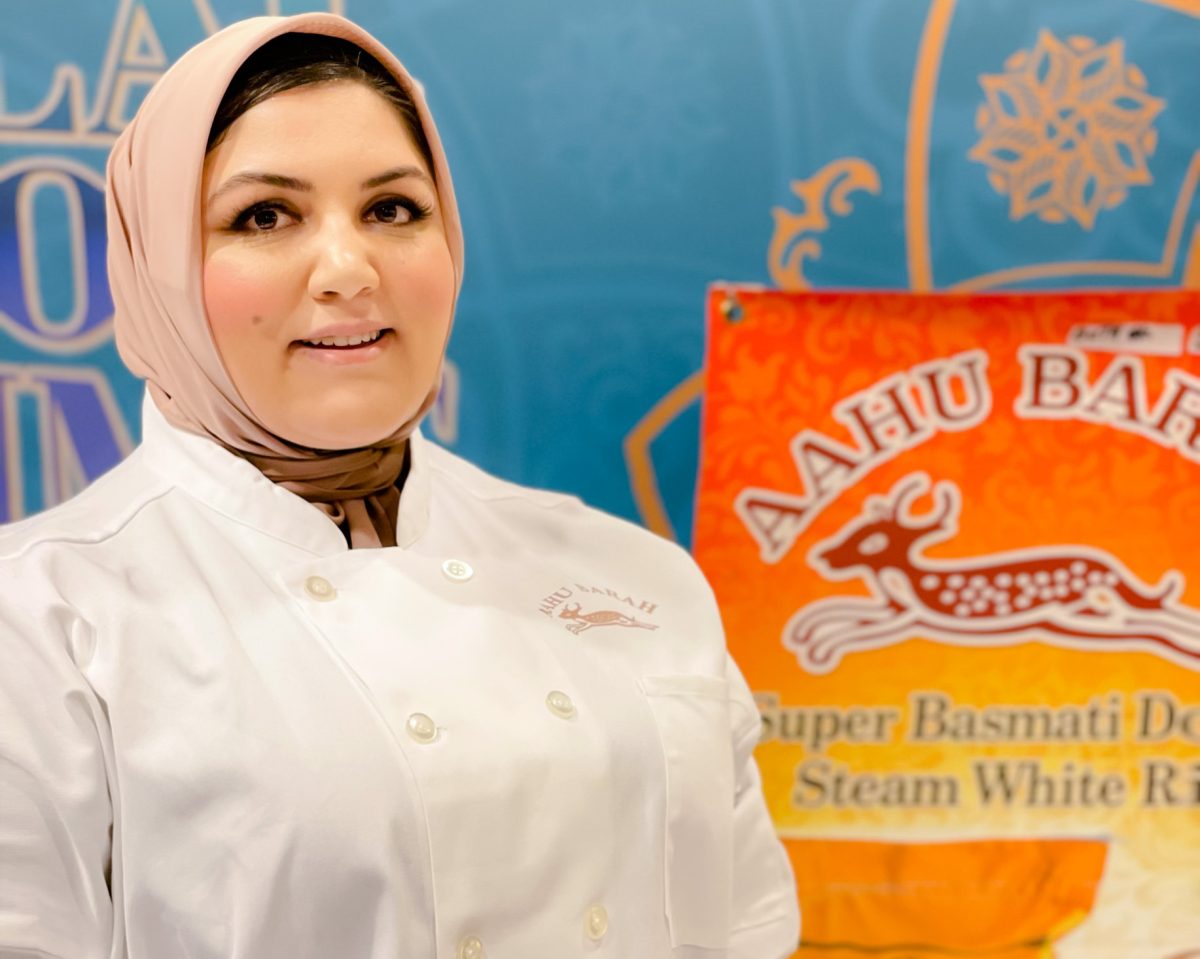
Chef and sociologist Iman Sediqe (Weinberg M.A.’14, Doctorate ’19) will appear on an episode of Fox Network’s cooking show “MasterChef” April 22. The season’s “Global Gauntlet” theme was inspired by the upcoming World Cup, and in the episode, Sediqe represents the continent of Asia and her Afghan heritage.
Sediqe said her memories with cooking began at age five, when she would follow her mother around the kitchen. The kitchen was the heart of her family’s home, Sedique said. As she got older, cooking became a therapeutic outlet, leading her to create a cooking blog during the COVID-19 pandemic.
The Daily spoke with Sediqe about the intersection between cooking and sociology, her blog “Imanistan” and her “MasterChef” experience.
This interview has been edited for brevity and clarity.
The Daily: How does sociology influence your relationship with cooking?
Sediqe: I think my journey with food changed mostly through my Ph.D. Doing my Ph.D was very stressful. My stress relief outlet became this hobby of making beautiful food and hosting people. I would intentionally have 20 friends over in my tiny apartment at one time and cook an enormous amount of food. That’s when I could forget about everything else in the world and focus on the perfection of this art and creating joy.
Food is an amazing way that people have an opportunity to travel to places they would have never traveled to all through a plate of food. As a sociologist, it’s really fascinating for me to see how food can be something that crosses boundaries, crosses languages, crosses cultures and allows people to get outside of their comfort zone.
The Daily: You launched your blog, “Imanistan,” during the pandemic. What inspired you to do so?
Sediqe: Before I did my Ph.D, I had gotten my master’s at Harvard. When I was graduating, my family knew I was always the family historian in a way, so they gifted me a Canon SLR. And, what did I like to do? Make beautiful food and then photograph the food and post it on my Facebook because I’m an archaic millennial.
I would always post my beautiful food photos on Facebook. And I had like, at this point I’ve lived in like 5,000 cities, so I have like 2,000 friends on Facebook. These food photos would go viral. And when COVID happened, so many people kept asking me, “Can you please teach me how to make Afghan food?” I was like, “I’m not gonna one by one teach everybody. I’m just gonna make one YouTube video, I’m gonna post it and you can just watch that.” By the end of the day, the video had like 3,000 views and I was like, “Apparently people want to learn how to make Afghan food.”
The power and impact of it is more than just teaching someone how to make something. It’s about being able to share a community that often doesn’t necessarily have their voice presented from their own vantage point.
The Daily: How did you end up on this season of “MasterChef?”
Sediqe: Some of the producers from the show reached out to me on Instagram and I got a DM. I thought it was spam at first because I was like, “This is not real.” And they’re like, “I’m so-and-so from ‘MasterChef, and we’d love to connect with you if you would consider our show and whatever.” And then, after a week, I was like, “You know what? What if it’s not spam? Let me just reply back.”
It ended up not being spam. It was a casting producer for “MasterChef” and so at first I was like, “There’s no way. I have a toddler, I’m not leaving her, I’ve never left her before.” My husband was like, “This is a great opportunity just to learn about the food industry from a different vantage point and like what goes on behind a food show. You don’t actually have to go on the show.” The casting process — this was September — turned out to be four months long, and it is so arduous. I didn’t know. Apparently over 10,000 people apply, and only 40 people make it onto the show.
The Daily: What was the filming experience like?
Sediqe: It was an incredible experience. It was really cool. Meeting Gordon Ramsay was really awesome. My favorite part honestly was meeting the other contestants because I’ve never had the opportunity to meet people who are so passionate about the thing I’m most passionate about in life and have all of us in one space and also have them come from so many unique backgrounds.
There is a lady who’s representing Scotland and she’s a dark romance mystery novelist. Another girl I met there that I became friends with is an Indigenous American who grew up in Alaska and she cooks whale and berry cured salmon. Had I not even been featured on the show, I think I still would have walked away with a life-changing experience just having met all those people.
The Daily: What are you hoping people will take away from watching you on “MasterChef?”
Sediqe: One, I really hope that they can see how beautiful Afghan culture is and how beautiful Afghanistan is. I don’t know if many of us will ever have a chance to go there in our lifetime, but I think it is one of the most underrated cultures just because we haven’t had a lot of opportunity to explore it.
Two, I really hope that other women, mothers and people in all stages of life can be inspired. I’m 38 now, and that’s not old to me, but, a lot of people think your career, if you don’t do it right when you’re 21, it’s over. I’ve started a totally different career path that I don’t think I would have expected after COVID.
And just know — especially young girls and women — you really are the creator of your own destiny. There may be certain limits and struggles that we face that are unique to us, but that I hope you could persist to pursue your passions at all times and give yourself permission to do that and really forge your own path, no matter what society tells you, to just take life by the horns.
Email: [email protected]
Related Stories:
— Open Tab: Kabul House serves exceptional Afghan food with hospitality, authenticity
— Gallery: Cooked At Northwestern serves up cinema-inspired eats
— Open Tab: NaKorn offers a taste of Thailand in Evanston with authentic flavors, dining experience