For a second time, City Council delayed voting on an ordinance focused on short-term rentals in Evanston on Monday. After continued discussions surrounding the number of short-term properties allowed in an area and the length of a stay qualifying rentals as short-term, councilmembers unanimously voted to wait until their Feb. 23 meeting to vote on amendments to the Vacation Rentals Ordinance.
“I think we’ve done a lot here already. I think there might be other motions,” said Ald. Bobby Burns (5th). “I have a motion that I started talking to staff with today, so I think we can bring this back at the next meeting.”
Monday’s meeting mirrored council’s Jan. 26 meeting as councilmembers tabled the ordinance to continue looking at the language defining the short-term rental policies.
Following the Jan. 12 and Jan. 26 meetings, the Vacation Rentals Ordinance included changes to require property managers to work or reside within three miles of Evanston, decreased from 10 miles. The updated ordinance would also limit short-term rentals to one unit for every 100 long-term units instead of the previous ratio of one per 80 and increase all fines for violation of the ordinance to $1,000.
Additionally, the distance between short-term units would be increased from 300 to 600 feet apart. These changes have drawn criticism from some property owners who rent out their units on websites like Airbnb and VRBO.
To start the discussion Monday, Ald. Matt Rodgers (8th) raised questions regarding the amendment prohibiting units from operating within 600 feet of each other. He said the rule contradicts another section of the ordinance stating that no more than 25% of the units can be short-term rentals.
Rodgers, who said “25% is high in some buildings,” wanted someone to remove the language defining the percentage of qualifying short-term units, but the amendment was never proposed.
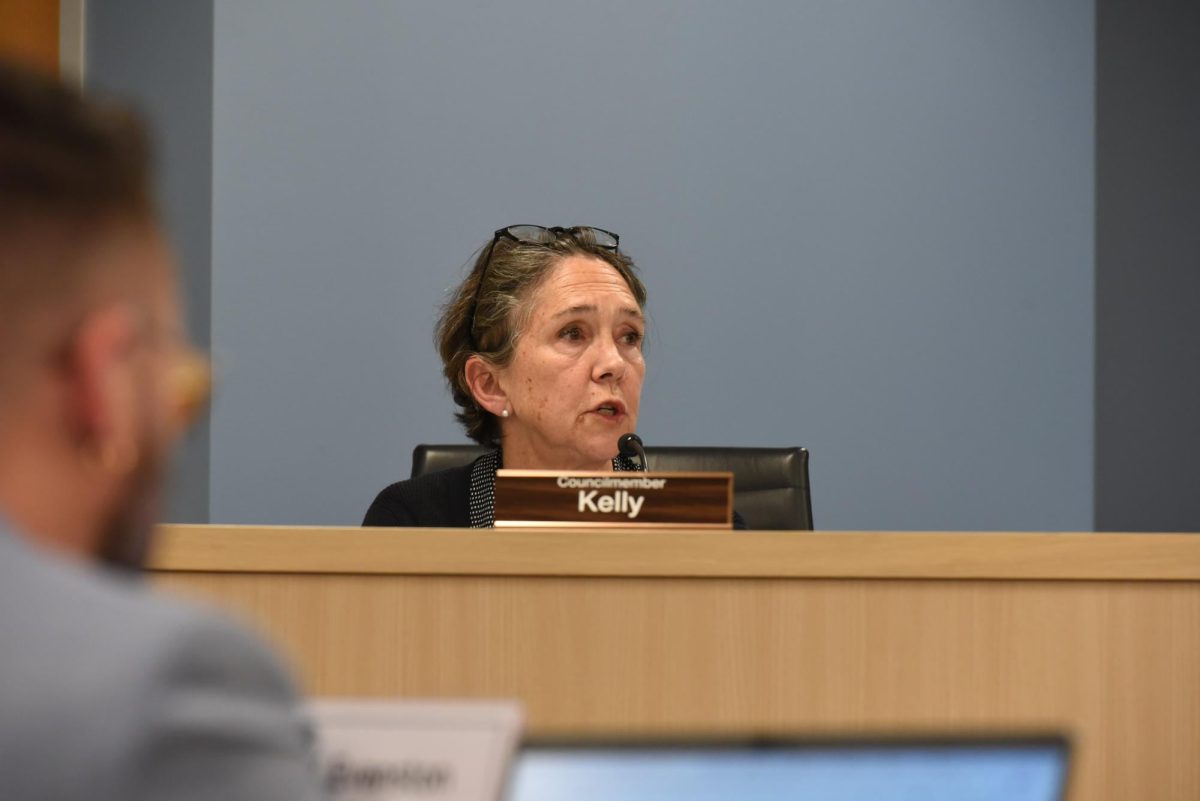
Revisiting discussions of the definition of short-term rentals, Ald. Clare Kelly (1st) proposed an amendment to restore the original language defining them as “a dwelling unit or portion thereof offered for rent for a period shorter than thirty (30) consecutive days.” Before Kelly’s amendment, the language defined these units as properties rented for less than one year.
During public comment, 7th Ward resident and property owner John Fell expressed concerns about expanding the definition of short-term rentals.
“I think you risk capturing legitimate midterm housing usages by the city,” he said. “These could be people using Furnished Finder, nurses and visiting professors.”
According to city staff, the initial expansion to one year was proposed to close a loophole when properties were listed for more than 30 days but less than the qualifying period for regular licensed rentals.
However, current city code defines rentals as properties “rented for a period of thirty (30) days or more.”
“I don’t know why we would want to be this outlier city and make it up to one year,” Kelly said. “It feels punitive for our local landlords, who do provide wonderful rental units.”
Following a clarification, councilmembers voted 9-0 to amend the ordinance to revert to the original 30-day language.
City Council must vote on the ordinance before a September moratorium on license distribution expires on March 9.
Email: [email protected]
Related Stories:
— City Council postpones Vacation Rentals Ordinance until next meeting
— Evanston property owners wary of proposed changes to Vacation Rentals Ordinance
— City Council rejects TIF grant request for West Village restaurant in Monday night standoff