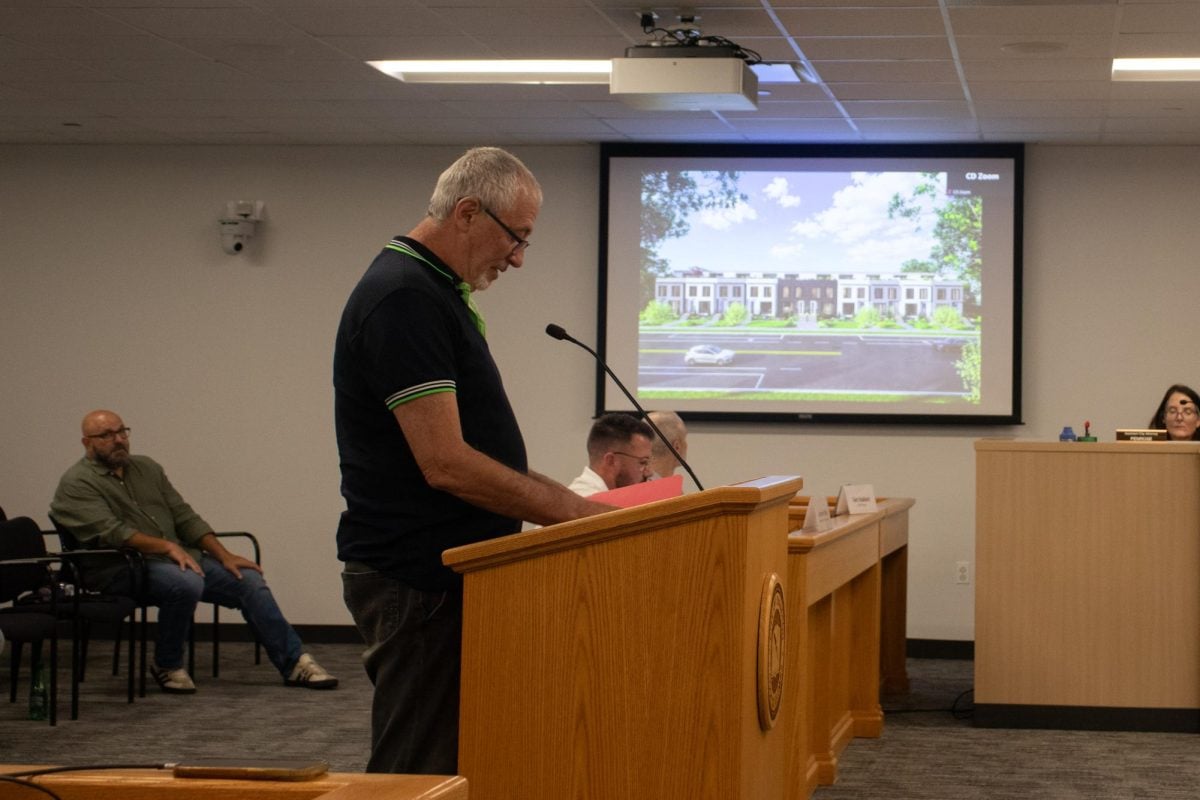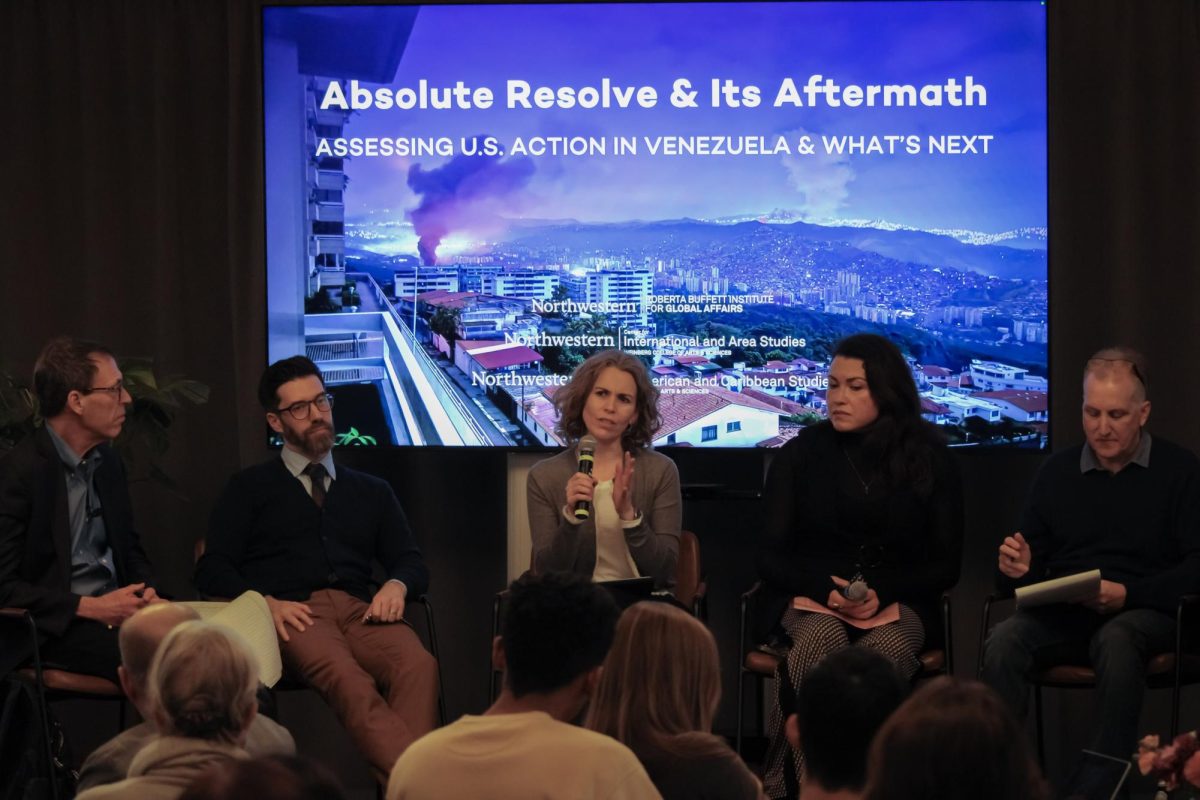
Seven professors discussed the implications of the recent U.S. military operation in Venezuela, dubbed “Operation Absolute Resolve,” at a Friday event hosted by the Buffett Institute for Global Affairs.
The Jan. 3 strike and capture of Venezuelan President Nicolás Maduro has generated mixed reactions among Venezuelans in the Chicago area and condemnation from local Democratic politicians.
Medill Prof. Peter Slevin moderated the event, which featured six other Northwestern professors who spoke about their perspectives on the situation in Venezuela.
History Prof. Daniel Immerwahr described President Donald Trump’s foreign policy approach as “anti-hegemonist, not isolationist.” He highlighted the administration’s efforts to annex Greenland, adding that he takes such ideas seriously, whether or not they actually happen.
Political science Prof. Ana Arjona acknowledged that the U.S. has made similar interventions before in Latin America. But she said the Venezuela operation raises unique concerns, because the U.S. didn’t provide a humanitarian justification for the attack, breaking with its foreign policy norms.
“This is going to make it so much easier for future administrations to just do what they want,” Arjona said.
History Prof. Lina Britto said the word “drugs” and the label “narco” have allowed the administration to participate in international operations like this one.
Referencing the Iran-Contra Affair, Britto said the CIA has participated in arms and different types of trafficking before, and that it’s clear the U.S. has other motivations than limiting drug trafficking.
“If we stop thinking about the War on Drugs as a war against drugs, and we see it as a toolkit for the administration of state violence …,” Britto said. “We see that it’s not a contradiction, it’s not even hypocrisy — it’s a logical, functioning strategy.”
Political science and sociology Prof. James Mahoney said it’s important to note that while the operation was remarkably successful, it easily could have been “some kind of Bay of Pigs disaster.”
Mahoney echoed the other professors’ point that the operation was motivated by interests beyond curbing the flow of drugs, adding that such U.S. interventions often lead to more political instability.
“The key ingredients for a future revolution in Venezuela might be emerging,” Mahoney said.
Sociology Prof. katrina quisumbing king said the operation in Venezuela doesn’t have the same facade of “democracy-building” compared to past instances of U.S. military involvement. She also discussed that the once-opposing concepts of nativism and imperialism are now coupled as “America First” principles under the Trump administration.
Political science Prof. Edward Gibson spoke about the future of Venezuela, focusing on opposition leader María Corina Machado and how she provides a surprising alternative to what he called the “main actors” following Maduro’s capture: acting President Delcy Rodríguez, coercive internal security forces and the armed forces.
“The one thing that unites all three of these groups: They do not want democratization,” Gibson said. “They want preservation of the authoritarian regime.”
Email: [email protected]
Related articles:
— U.S. attack inspires relief, sparks concerns among North Shore Venezuelan community
— ‘Another war for oil’: Local Democrats denounce Trump’s surprise attack on Venezuela
— Alum Roberta Buffett Elliott donates $11.8 million to expand undergraduate global education