The One Big Beautiful Bill Act, enacted on July 4, 2025, included multiple changes to federal financial aid. Specifically, the bill decreased student loan borrowing limits and overhauled income-based loan repayment plans.
For undergraduate students, the Pell Grant and Parent PLUS Loans are the most drastically impacted.
For graduate students, the OBBBA has eliminated Grad PLUS Loans and implemented new borrowing caps, which will likely impact a large number of students pursuing professional degrees, such as medicine and law.
Undergraduate impacts
Under the new bill, Pell Grants will be subject to a new eligibility limit. Students whose Student Aid Index, calculated based on incomes, is double the maximum Pell Grant or more will not be eligible to receive any Pell funds for the 2025-26 school year. This restricts eligibility for Pell Grant recipients significantly in comparison to previous years.
The SAI ranges from -1500 to 99999, with a negative number demonstrating a higher need for financial aid. The maximum Pell Grant for the 25-26 school year is $7,395. The new changes mean that if a student’s SAI is over 14790, they no longer qualify for a pell grant.
Parent PLUS Loans, which parents can take out to subsidize their children’s education, have also been affected. Under the OBBBA, Parent PLUS Loans will be limited to $20,000 a year with a $65,000 lifetime cap per child, a large departure from the complete lack of lifetime cap previously.
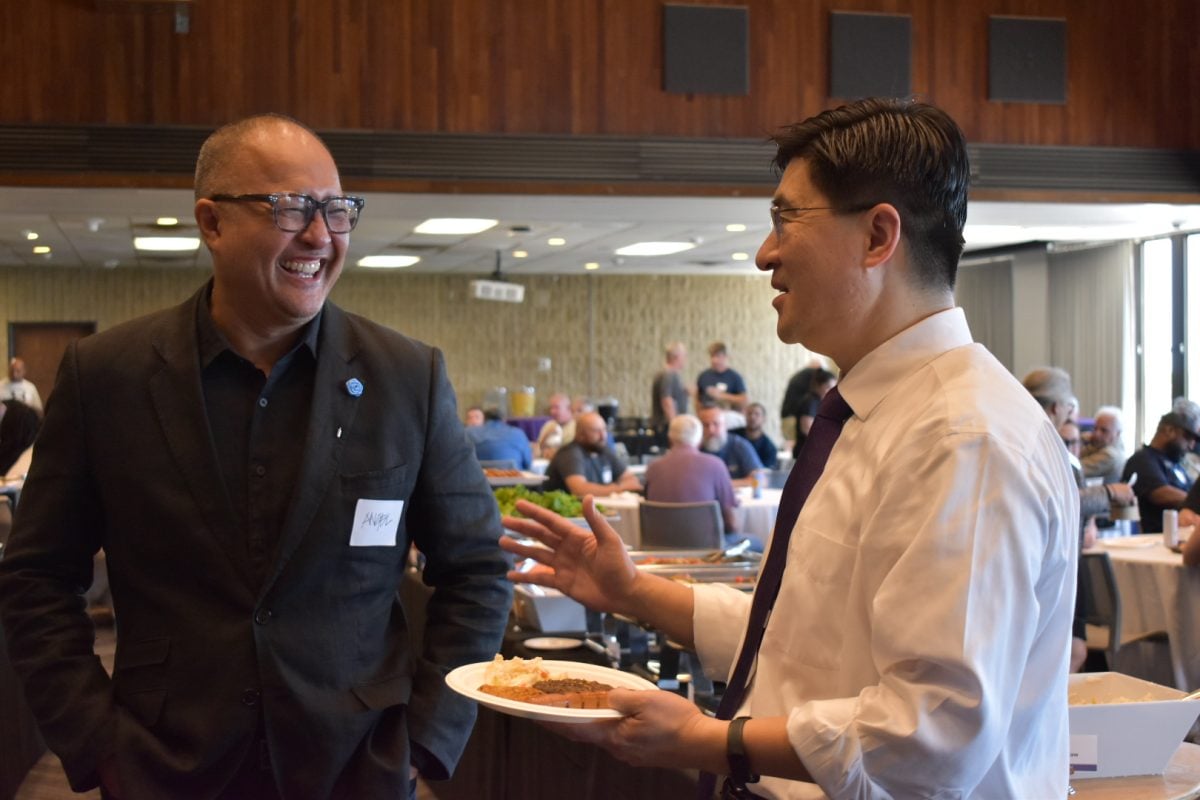
According to fourth-year SESP Ph.D. candidate Julia Turner, these limits will impact several income levels, including lower income families who need to borrow smaller amounts to make up the difference in costs, as well as high income families who use the loan as a form of liquidity management.
Turner, who previously worked at the White House Council of Economic Advisers in 2023-24 and as a Ph.D. intern at the Department of Education in the Office of the Chief Economist, said that she believes the changes under the OBBBA are for the government’s economic benefit.
“A lot of the provisions have to do with making sure the government is getting a good return on their investment,” said Turner.
Graduate student and loan repayment impacts
Graduate loans are also facing drastic changes. Previously, Grad PLUS Loans allowed graduate students to borrow up to the amount needed to cover the parts of their education not subsidized by other financial aid.
The OBBBA will eliminate the loan program for new borrowers starting July 1, 2026. After this date, graduate borrowing will be limited to direct unsubsidized loans, with lifetime caps of $100,000 for graduate students and $200,000 for professional students.
According to the Postsecondary Education and Economics Research Center, the OBBBA’s new loan limits will restrict borrowing for about one-third of all parent and graduate student borrowers.
Jim Heller, University director of financial aid, wrote in an email to The Daily that a legacy provision in the bill will allow current borrowers to continue receiving support through Grad PLUS.
“We do not anticipate major changes for current students who already use the Grad PLUS Loan, though we are awaiting additional guidance from the Department of Education regarding implementation details,” Heller wrote.
Turner said that she worries these limits will not have the government’s intended effect, instead impacting students who are hoping to go into fields with high returns on investment and would therefore be likely to pay back their loans.
“Between a quarter and a third of all graduate students who currently borrow from the federal government borrow above those limits, so that’s really going to affect the ability of people to pursue graduate education,” said Turner.
She added that the fields most likely to be impacted by the lifetime loan limits would be medicine and dentistry.
“If the intent behind some of these provisions at the federal level is making sure that the government recoups their investments, then this policy is not doing that. It is not structured well to mitigate some of those issues that they’re worried about,” said Turner. “Instead, what it is likely doing is constraining the ability of students who come from under-resourced backgrounds to pursue those really high (return on investment) fields.”
CJ Libassi, a Ph.D. student at Columbia University’s Teachers College, said he doesn’t see an obvious reason for the government to limit these ROI field loans.
Libassi, who previously worked as a senior advisor at the Office of the Chief Economist, said that doctors tend to borrow an average of $300,000 in loans over the course of their education, but typically don’t pose a loan risk given how much money they make annually after graduation.
“It’s weird that doctors who make $300,000 a year have the same loan limit as lawyers who, on average, make $100,000 a year,” Libassi said. “One of the weirdest things that they did was that they set the same loan limit for everybody with the same credential level.”
The largest OBBBA-caused change to financial aid, however, is an overhaul of income-based repayment plans.
Previously, IBR plans included Income Contingent Repayment, Pay As You Earn and Saving on A Valuable Education among other loan repayment plans. The OBBBA eliminates the ICR and PAYE Plans entirely, according to Federal Student Aid.
The SAVE plan was introduced by the Biden administration as a plan to forgive student loans faster and with lower monthly payments, an expensive plan that was broadly denounced by the right, according to Libassi. SAVE is currently held up in legal battles and blocked by a federal court injunction.
Under the OBBBA, the existing repayment plans have been consolidated into two plans: a fixed plan and the new Repayment Assistant Plan. The RAP is based on monthly income and requires payment for 30 years, while the fixed plan has fixed monthly payments. Starting July 1, 2026, new borrowers will be required to choose between the two repayment plan options, and current borrowers will have to switch by July 1, 2028.
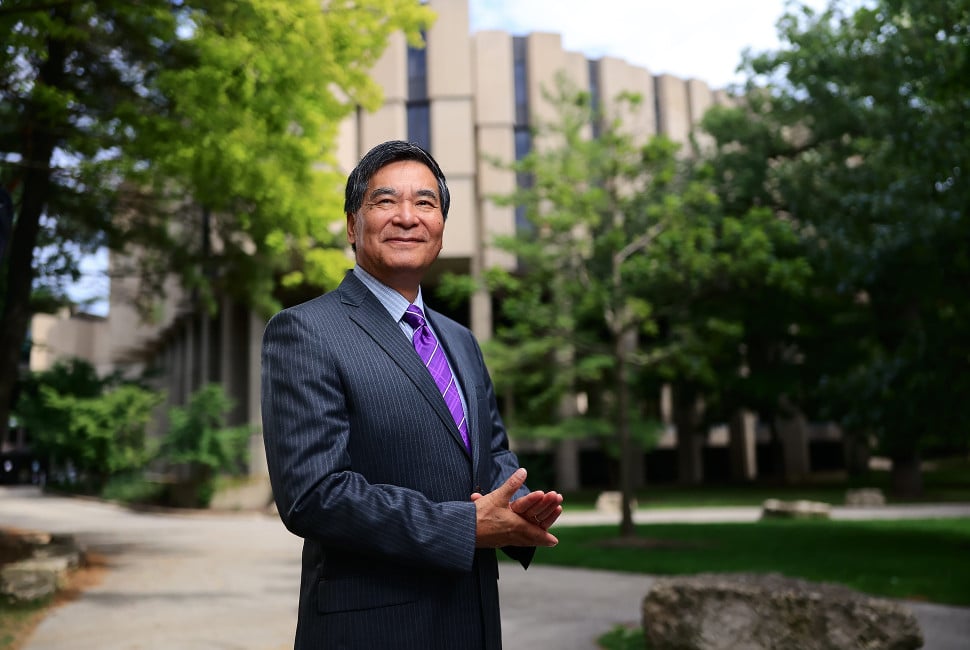
SESP Prof. Ofer Malamud said he can see the logic behind consolidating the plans.
“In principle, I think it’s a good idea to simplify the system and have one income-based repayment scheme. So I actually think that’s not an unreasonable change,” said Malamud.
He noted some of the largest impacts of the switch to RAP, including the 30-year repayment plan, caps on borrowing and the elimination of “zero” payments. Previously, borrowers who earned below $10,000 a year did not have to make monthly payments, which, under RAP, will now be $10 a month.
Malamud said he believes the reason behind the changes is a concern that individuals and families will borrow excessively for programs that won’t necessarily pay off, putting families into debt and forcing the government to pick up the tab.
Turner also expressed understanding of the consolidation, although she also expressed concerns.
“The benefit of consolidating down to these two plans is that it simplifies what is a very complex system,” Turner said. “I think the intention of simplifying that for students really is a good thing, but I think implementation really matters.”
Turner said that she worries about taking optionality away from borrowers without clear new implementation, which can lead to stress and problems for students.
Libassi said that cutting IBR plans saves the government money from a budgetary perspective, but pointed out that “if you stop a bunch of people from becoming doctors,” they won’t be paying income taxes on a large doctor’s income, causing the government to actually lose money.
“Loan limits are not, per se, a bad idea,” Turner said. “But these are very blunt instruments that are included in this particular legislation. Loan limits might have a place in policy, but I think they need to be implemented with a lot more nuance than what we’re seeing in this regulation.”
Email: [email protected]
X: @caylalc
Related Stories:
— Financial aid lawsuit against Northwestern dismissed