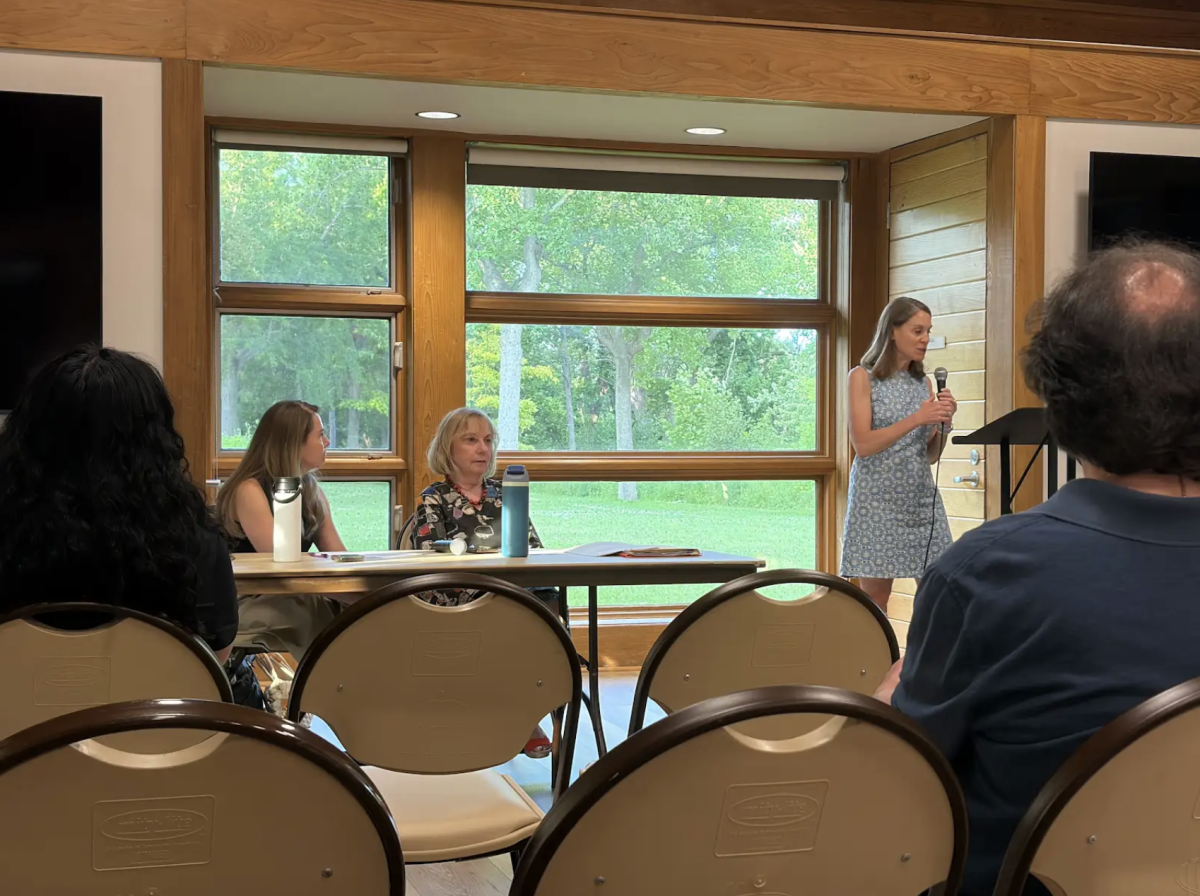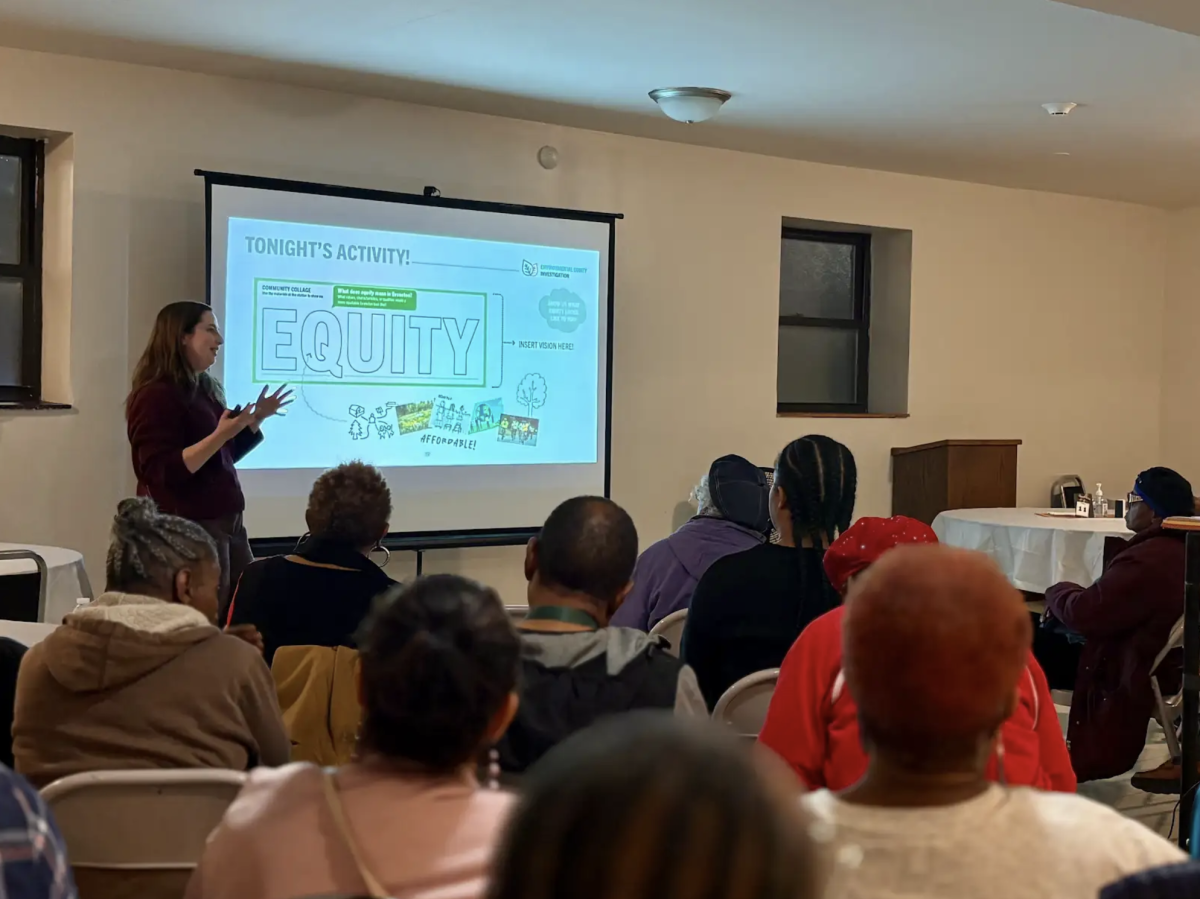
Leaders of the Evanston’s Environmental Equity Investigation solicited feedback from around 30 community members on its draft action plan at a fourth and final workshop Wednesday night.
The Environmental Equity Public Workshop, held at the Ebenezer AME Church, was part of an ongoing effort to incorporate residents’ opinions and gather insights regarding the city project. In collaboration with consultants specializing in urban development and environmental issues, the EEI aims to ensure accessibility to environmental opportunities for all Evanston residents.
The consultants began the event by giving a presentation highlighting EEI’s efforts thus far, including pop-up events and public workshops to actively engage with the Evanston community. Afterward, they unveiled their draft action plan composed of four categories: open space, parks and trees; streets and transportation; housing and development; and community services.
Each category was composed of about 10 ways to combat environmental injustice. The participants indicated their priority by putting stickers on draft action posters and leaving a comment on Post-It notes.
The Evanston-North Shore Alumnae Chapter of Delta Sigma Theta Sorority, Inc. co-sponsored the workshop. Chapter members Eva Coley and the Rev. Linnette Hill said the public workshops are an effective way to educate people of environmental issues in the city and to involve residents in the policy-making process.
“A lot of people in our community are not really involved or do not know about justice and equity,” Coley said. “You know, it’s something new and different, but it’s really important because equity and the environment affects us all.”
The EEI will take residents’ feedback into consideration in finalizing the draft plan.
Terri Shepard, a senior advocate for the Foster Senior Club, described the workshop as a “learning process” to gain more insight about the environmental inequality rooted in historical redlining.
“I never think about it as being a racial thing, but it is a racial thing,” Shepard said. “So there’s a disparity between the communities.”
Brett Weidl was one of two representatives for MKSK, the main firm leading the team behind EEI, at the meeting. She recalled how the first public workshop consisted of “roundtable conversations” focused on brainstorming topics, the second workshop involved sharing of the research and data and the third worked to untangle the topics through understanding the “historical context” and the “lived experiences.”
The final workshop is a culmination of the preceding efforts, she said.
“We’ve built upon (the prior workshops) with some actual tangible ways to address these issues,” Weidl said. “All of that, building upon each other, has been encompassed by the community participation and their feedback.”
She hoped that EEI’s efforts will provide a foundation and resources for organizations, communities and the city moving forward.
While this is the final workshop, Weidl added that she was optimistic that Evanston could lead the movement to protect environmental equity.
“The work can’t stop with us, and it won’t because there’s people that care so much about it,” Weidl said.
Email: [email protected]
Related Stories:
— Public workshop highlights environmental injustice in 5th Ward
— Activists rally for state legislation on Climate Action Lobby Day