Evanston councilmembers unanimously approved a Code of Ethics amendment requiring all ethics complaints to be made public, and further debated changes to City Council Rules in a Rules Committee meeting Monday night.
The ethics amendment, recommended by city staff and referred by Ald. Parielle Davis (7th), would require nearly all ethics complaints and jurisdictional determinations made by the Special Ethics Counsel to be publicly released on the city’s website.
Currently, the city does not release ethics complaints to the public on its own, but does “routinely release them” via Freedom of Information Act requests made by the public, according to a city staff memorandum.
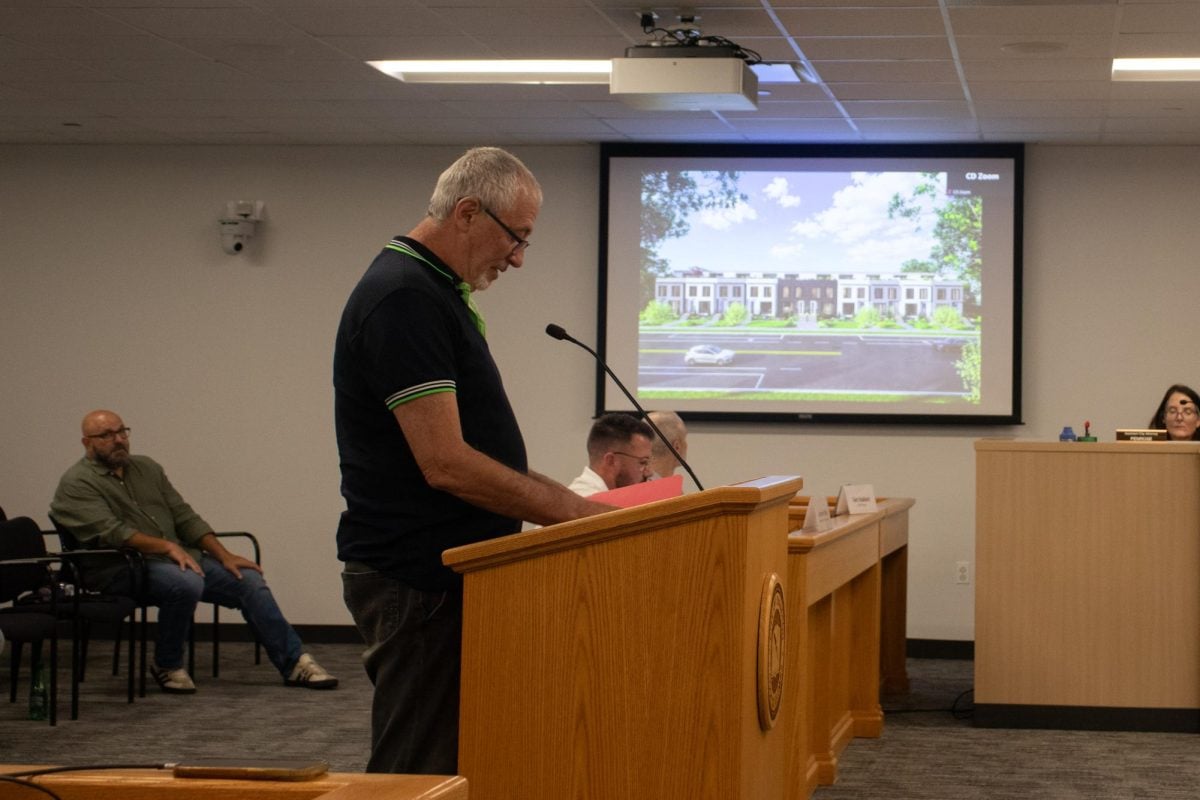
The revision would “restore appropriate transparency while avoiding weaponization” of the ethics complaint process, according to Board of Ethics Vice Chair Toby Sachs, who spoke during the meeting’s public comment.
Committee members, who include Mayor Daniel Biss and all nine councilmembers, moved to amend the draft to exclude the publication of anonymous complaints. Ald. Clare Kelly (1st) proposed the action, saying it would “open up to something (the committee is) not anticipating.” It was unanimously passed by the group.
During the meeting, Biss confirmed with Evanston Corporation Counsel Alex Ruggie that the public could still access anonymous complaints and their formal review by Special Counsel via standard FOIA requests.
While the Code of Ethics amendment was resolved relatively quickly, the rest of the night was dominated by debates on changes to the City Council Rules — a continuation of previous discussions held in May and June suggesting an overhaul of the body’s rulebook.
The committee powered through five previously undiscussed sections, of eight, focused on different aspects of the council’s processes. Over the course of about three hours,the committee touched on topics ranging from “Agenda” and “Conduct of Meeting” to “Committees.”
The most contentious topics discussed were the use of “special orders of business” to add items to council agendas considered at a specific date. Currently, only the mayor or a majority of City Council can request a special order of business.
Ald. Matt Rodgers (8th) proposed a change requiring the mayor to go through the Referrals Committee to put legislative items in the council agenda — an idea Biss called “untenable” and said he was “totally uncomfortable” with.
Biss emphasized the importance of the mayor’s use of legislative “special orders of business,” using the amendment of Evanston’s Welcoming City Ordinance in January as an example. Due to President Donald Trump’s then-forthcoming inauguration, it was an action Biss said was crucial to execute quickly without the referral process.
Rodgers’ motion was later shot down in an 8-2 vote, with only Rodgers and Kelly voting in favor of curtailing the mayoral power.
The topic of “special orders of business” returned when Rodgers proposed having a three councilmember threshold, rather than a majority of City Council, have the ability to submit a written request to the mayor for a special order of business — in alignment with the three-member requirement needed to request a special meeting.
Rodgers’ second proposal generated a committee-wide discussion with city staff about the specific definition of “special orders of business,” and what situations require them, including what constitutes an “emergency” or “time-sensitive” situation.
While the committee did not vote on the motion Monday night, Ald. Bobby Burns (5th) said the three-member threshold is more likely to be abused through special orders of business requests than special meetings.
Changes approved by the committee include the creation of a City Council agenda item designated, “Public Announcements by Councilmembers,” allowing alderpeople 45 seconds to provide ward-specific announcements following communications from the City Clerk at the start of council meetings.
The proposal, made by Burns and unanimously approved by the committee, is meant to move up ward-specific communications usually discussed during the “Call of the Wards” at the end of typically hours-long council meetings.
“It’s a way for us to communicate to the public about upcoming ward meetings and other events while the meeting is full and people are actually there,” Burns said.
After an unsuccessful 6-4 vote to eliminate the “Call of the Wards” entirely, the committee voted 8-2 to institute a 2-minute time limit on the “Call of the Wards” for councilmembers.
Committee members also voted 8-0, with Biss and Ald. Tom Suffredin (6th) not in the room, to allot public commenters at least one minute of discussion during meetings, regardless of the 45 minutes typically allotted for the portion at city meetings.
The Rules Committee will further discuss and vote on an updated draft of the Council Rules at a future committee meeting. The amendment to the Code of Ethics will be introduced into action at a future City Council meeting.
Email: [email protected]
Related Stories:
— Housing language debates dominate City Council’s first Comprehensive Plan review
— City Council passes health data protection measure, underpins existing state statute