The Housing and Community Development Committee heard updates from city staff on affordable housing trends in Evanston and approved funding for a rental assistance program supporting low-income families at its Tuesday night meeting.
The meeting focused on strategies to protect Evanston residents from displacement, one of the major goals of the Housing4All work plan that the committee approved at its May 20 meeting.
Committee members first heard updates on the Community Partners for Affordable Housing waitlist and Inclusionary Housing Ordinance units. Marion Johnson, the city’s housing and grants supervisor, reviewed CPAH’s report on the management of Evanston’s Inclusionary Housing waitlist, the centralized list of potential tenants of IHO units. When units become available, prospective tenants are contacted based on their place on the waitlist.
As of the June 1 report, 1,345 households were on the waitlist, a 48% increase from the last report in 2025, Johnson said. She said this increase is “somewhat by design,” expanding the pool of eligible households.
According to the report, the city expects 123 new affordable units by 2028, including 84 from the 605 Davis St. tower project approved by City Council in November.
“We’re gearing up to be ready for a large influx of new units that are coming in the next two to three years,” Johnson said. “So we need to be able to bulk up this waitlist to make sure that people are aware of the program and that we can reach out to them once the units become available.”
Johnson said households most likely to be eligible for IHO units are earning between 50% and 80% of area median income, and about 68% of households currently on the waitlist are making under 50%.
Ald. Bobby Burns (5th), who chairs the committee, emphasized additional in-progress projects set to create affordable housing on Church Street and South Boulevard.
“Those are, I think, where we get our more deeply affordable units,” Burns said.
The committee also unanimously approved $200,000 of federal housing grant funds for a new cohort of Evanston’s Tenant-Based Rental Assistance Program. The program, administered by nonprofit Connections for the Homeless, offers rental subsidies for up to 24 months, targeting households with an income at or below 60% of the area median income.
“With the rising rents, this program provides stability necessary to overcome housing insecurity,” Ana Elizarraga, the city’s housing and economic development analyst, said.
Elizarraga said the program’s newest cohort will run from August 2026 to December 2028, with the goal of assisting 10 to 12 low-income families with children attending Evanston schools.
Committee members also explored a proposal to expand the city’s Emergency Assistance plan to include property tax relief for residents experiencing financial hardship. The program provides up to $2,000 annually to residents “experiencing urgent, life-threatening situations that threaten basic needs,” including evictions, utility shutoffs and food insecurity, according to the city’s website.
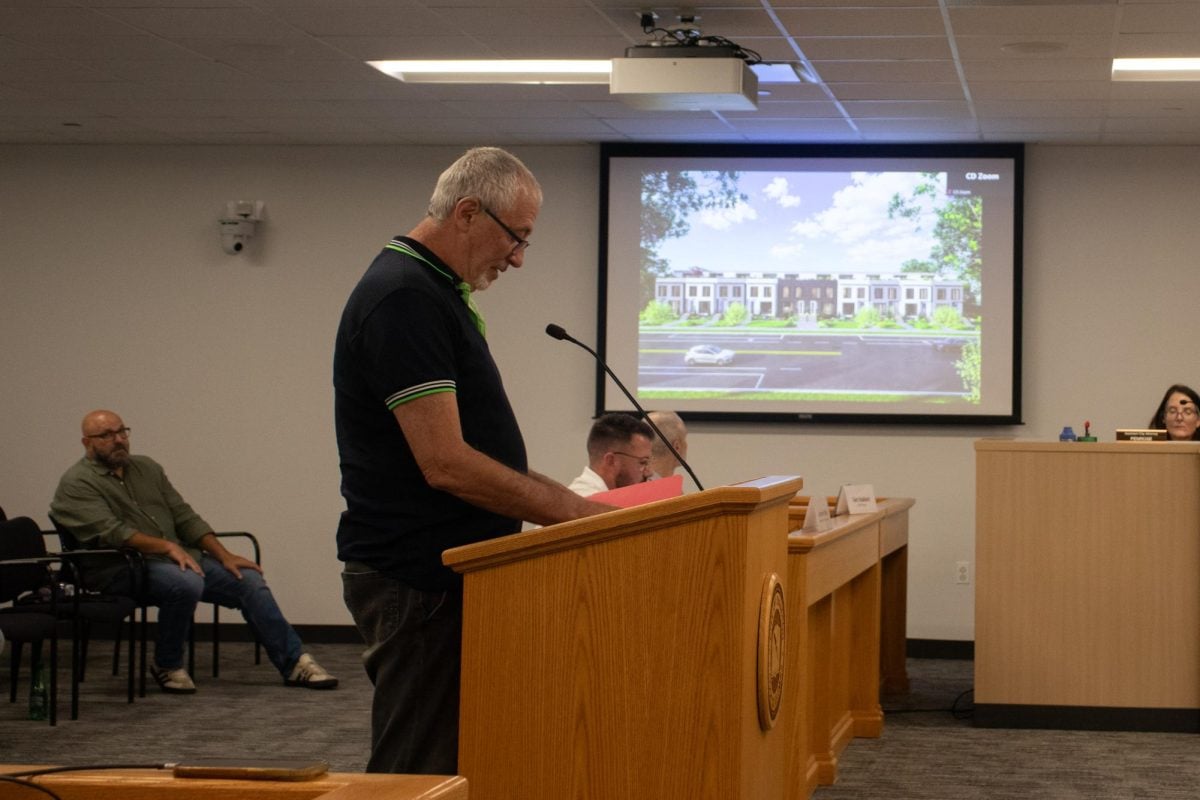
Burns, who recommended the proposal, said it would be a less expensive alternative to the proposed “circuit breaker” property tax relief plan, which was highlighted by a community member during the meeting’s public comment. Burns’ proposal would use $100,000 from the Affordable Housing Fund, compared to the circuit breaker plan’s proposed $500,000.
Sarah Flax, the city’s community development director, expressed concerns over giving residents cash before they’ve been deemed eligible for other benefits. She also said recent Illinois property tax reforms may help to alleviate some burdens on residents.
Burns said he’s not aiming to create a new program but instead expand an existing service to support more residents.
“The point of emergency assistance is that if this issue is not resolved, things could get worse,” Burns said. “We’re trying to stop things from getting worse.”
Email: [email protected]
X: emmarichman_
Related Stories:
— HCDC approves Housing4All work plan
— HCDC reviews 2026 action plan, public comments tax relief program