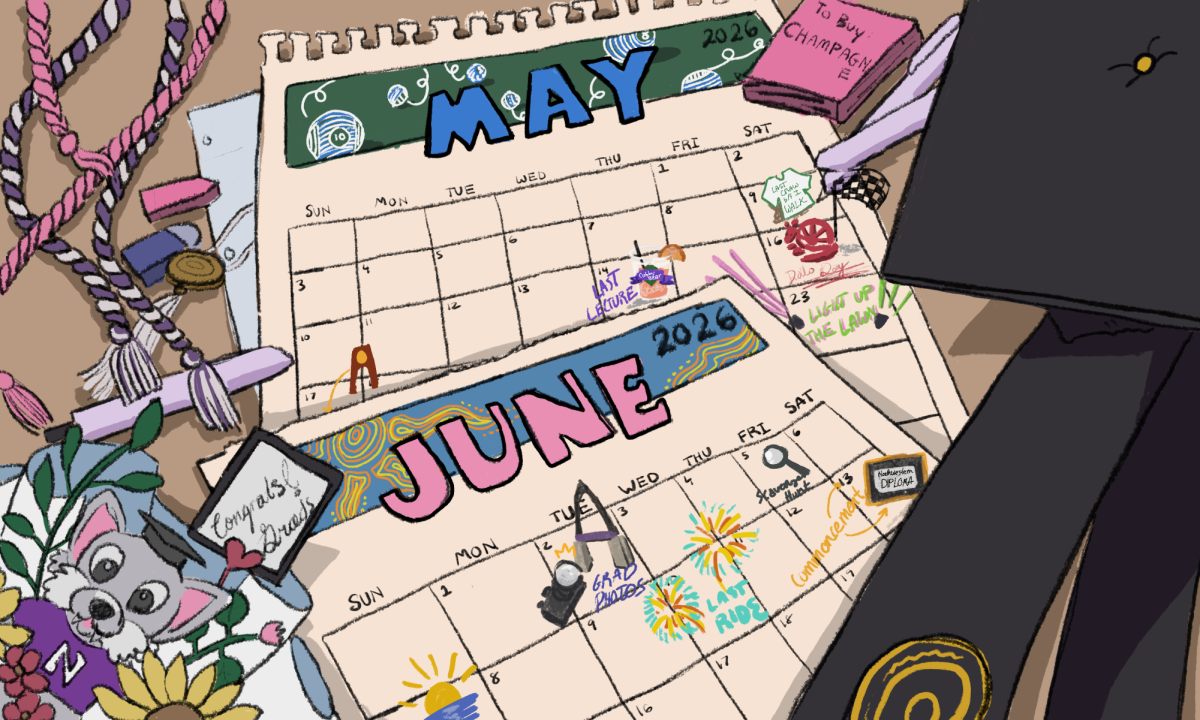
“So, what are you doing after graduation?” Ensue the internal screaming. I spent most of this school year avoiding answering this question, wrestling with the uncomfortable feeling that comes with not knowing what comes next.
Facing ambiguity was difficult as someone who spent a lot of time over the last few years thinking about answers. Student journalists love a good answer. We are trained to ask people for their stories. We are taught to probe for “why” and try to recreate this amalgamation of research, reporting and experience in the form of video, image and the written word. But this process can feel like a fragment of a much larger whole.
I often thought: “How do I frame this question? How do I elicit the answer closest to the truth? How do I write this so it makes sense to someone that hasn’t been there?” We’re expected to be objective in this relentless pursuit for answers, but I experienced many things that made maintaining that clear-eyed lens challenging.
Being hungry after hours of reporting or long stints of editing in the third floor of the Norris University Center. Receiving criticism for a decision others and I debated, examined and wrestled with. Navigating quasi workplace relationships with other journalists at The Daily.
These moments were inextricable from my identity as a reporter, but also affected my mindset as a student. I felt like there was more I could be doing as a reporter, especially during the times when I did not want to be one. Editing in Norris was not always my preferred plan for the evening, and I felt guilty for it.
When I examined that feeling of inadequacy, I eventually saw that it did not stem from a lack of objectivity. Just the presence of humanity.
The thing is, there’s always going to be more between the lines. A quote from someone will never really capture their totality as a human being. Beyond that, stories are hardly ever just one-and-done. The sources and choices that we document persist. They live after the deadline and exist even after it’s edited by a peer or professor. That’s what makes storytelling equal parts fractional, beautiful and ephemeral.
All those truths are on the page for the people I spoke to in the approximately 108 stories I wrote for the paper since I was a first-year, and the many more I edited behind the scenes. But behind the stories I wrote, if you squint, there are other moments that live memorialized.
Shared laughter with my fellow editors when planning the print paper. The grease on the pizza from the last night of publication for the quarter. Frenzied typing in a backroom to meet a deadline. My excitement reporting on Capitol Hill, at Lollapalooza, in buildings across campus.
I’m at the end of a story which I have written since the fall of 2022. I’m thankful for the time I spent at The Daily and the dozens of peers I worked with. I’m also beyond grateful to the people that trusted me to listen and tell their stories, if only for that moment in time.
Now, my “what are you doing after graduation?” does have an answer — one that only captures a slice of what’s coming. After graduation, I’m sure a myriad of changes will surprise and challenge me, and will morph the truth into something else entirely. In that sense, I still have a sea of unanswered queries that my curiosity hasn’t waded through yet.
But I know the pursuit of answers is going to make a good story to tell one day.
Email: [email protected]
Related Stories:
— Lichty: Does everybody really want this?