If there’s one thing Hollywood loves, it’s a war movie. From films like “Apocalypse Now” and “Saving Private Ryan” to the more recent “Dunkirk” and “All Quiet on the Western Front,” it seems like there will never be a shortage of movies depicting the visceral history of humans and war.
I don’t blame them. Everyone knows that war is terrible, yet it often draws our attention for that very reason. From war comes an endless supply of stories, whether they be through the eyes of one soldier or through the advances of an entire country. When in doubt, just dig through the history books, and there will probably be an untold tale waiting to be put on the big screen.
With all this being said, I still can’t believe that somebody greenlit “Pressure.”
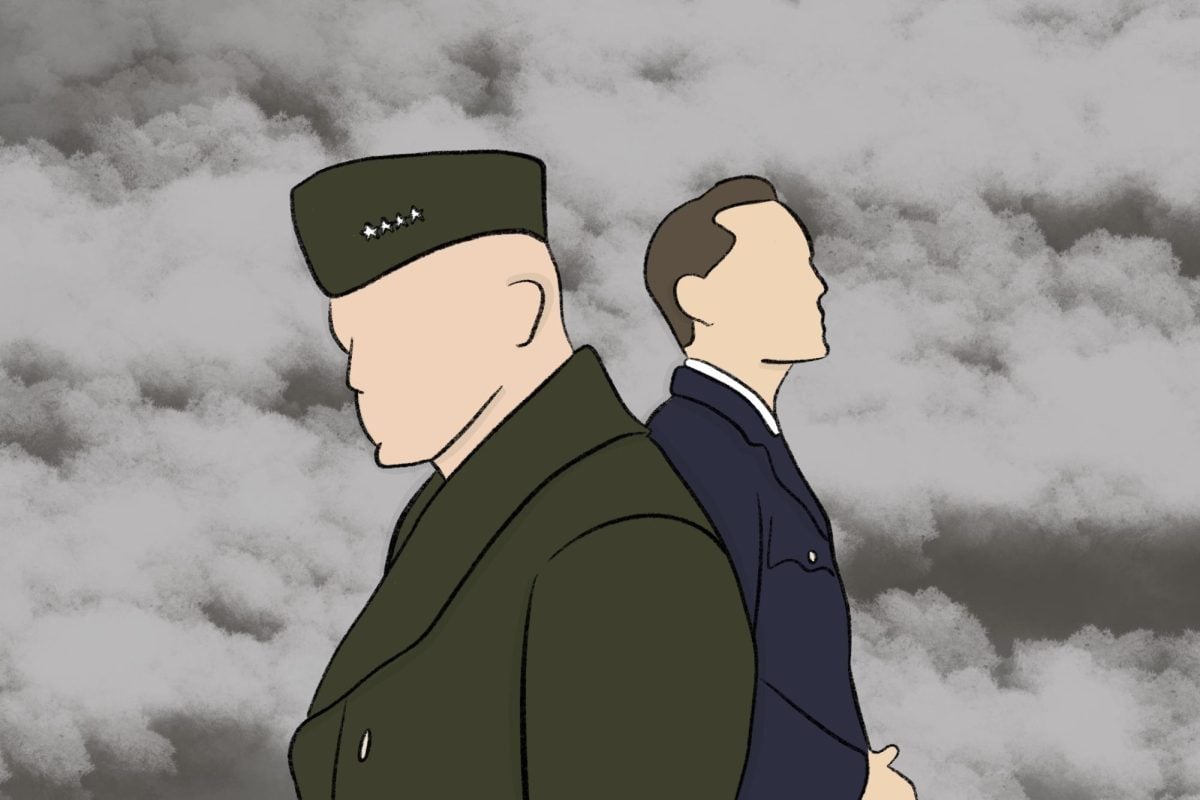
I found the new war drama film to be extremely informative, and despite how that previous line sounded, I actually quite enjoyed it. The movie, based on a true story, follows former President Dwight D. Eisenhower (Brendan Fraser) in his time as a general, and the Allies’ chief meteorologist James Stagg (Andrew Scott), in the days leading up to D-Day, as they struggle to decide whether or not to go forward with the operation.
The fate of World War II rests not in the strength or preparation of their troops. In the film, the only unknown variable remaining is the weather. Stagg predicts the arrival of two storms on the morning of the D-Day plan, which would render the operation nearly impossible. However, U.S. Air Force meteorologist Irving P. Krick (Chris Messina) presents the Allied forces with a different forecast, claiming that the morning of D-Day will be clear with sunny skies. With the hours ticking down, Eisenhower must decide who to trust.
The film does a good job positioning the central conflict as one of extreme stakes, making the feud between the two meteorologists one that isn’t just petty but one that could impact the outcome of the war. The historical weight of Eisenhower’s decision is heavy, and although the audience might know how D-Day played out, there is still a sense of unease that looms over the entire film.
Despite this, I stand by my previous statement. At the end of the day, I’m watching two meteorologists argue over the weather. Is it impassioned and high-stakes? Yes, but it is still the weather. I found myself hyperaware of this fact at times, which is unfortunate because I do believe the movie did its best at attempting to tell an untold, unique story.
The situation “Pressure” finds itself in reminds me a bit of “Marty Supreme,” which does a great job telling a brand-new story in a way that is full of energy, stakes and emotion, but is slightly deflated by the fact that it simply revolves around ping-pong. When zoomed all the way in, the execution is there, but when I take a second to reset my lens, I’m just a bit taken out of the film due to the subject matter’s inherent lack of seriousness.
It is for this reason that I was surprised that a major studio greenlit this movie. As I said earlier, if one looks through the history books, there are almost certainly new stories to tell when it comes to war, and “Pressure” is one of them. I am glad the unsung heroes behind these stories are able to gain recognition for their roles in history, especially through a well-made film like this. But when it comes to the movies, there are probably topics better fit for the big screen, and I don’t know if weather is one of them.
Email: [email protected]
X: @peng54829
Related Stories:
— Reel Thoughts: No wonder everyone’s obsessed with ‘Obsession’
— Reel Thoughts: ‘Star Wars: The Mandalorian and Grogu’ is an exciting return to the galaxy
— Reel Thoughts: There are no new tricks in ‘Corporate Retreat’