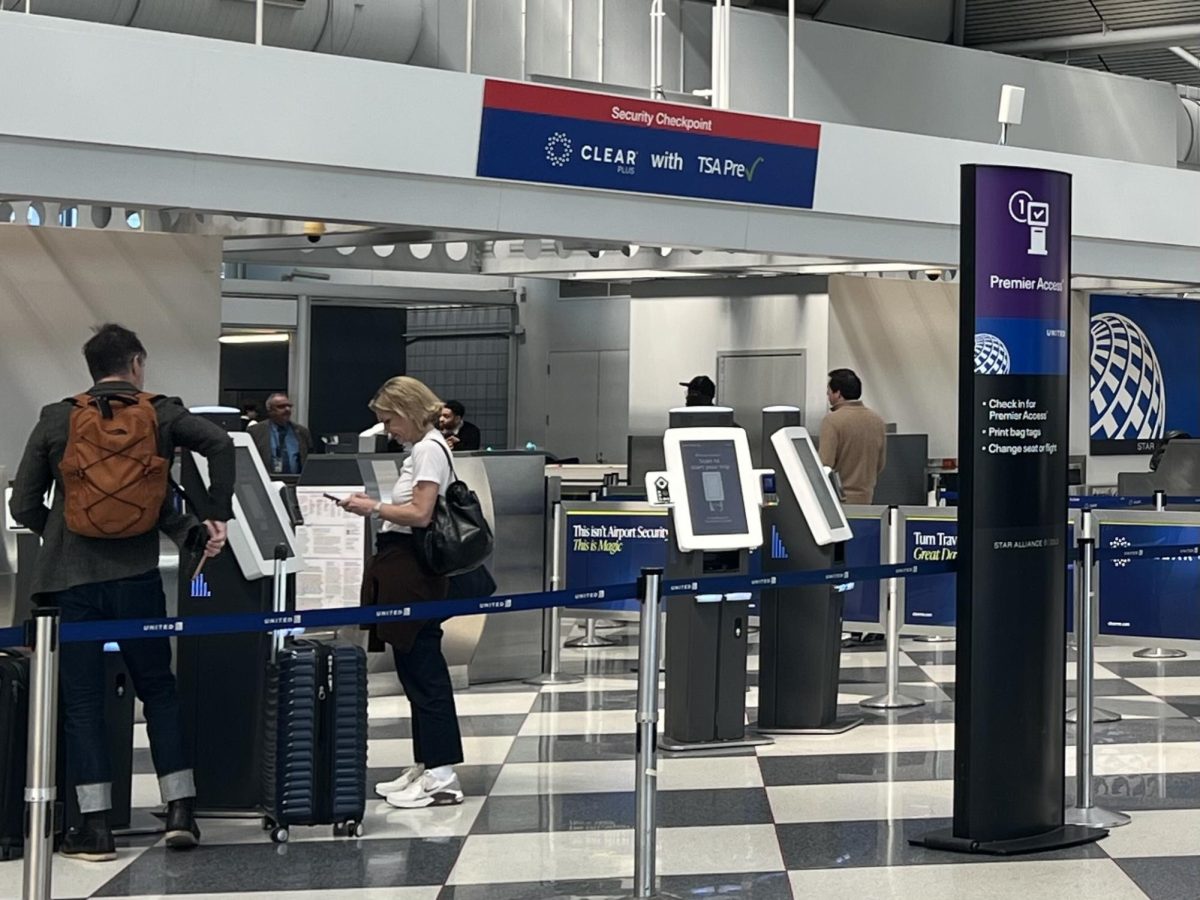
When Medill junior Jaisal Kalapatapu had plans to fly through Houston’s George Bush Intercontinental Airport on Friday morning, the airport’s website predicted a three-and-a-half hour wait at security checkpoints. So, he arrived earlier than normal.
Kalapatapu said the line snaked downstairs, near the baggage claim stations and back upstairs before wrapping around outside the check-in entrance. Once he cleared security, he said he had spent about two-and-a-half hours in line — still under the estimated wait time, to his relief.
He was not the only Northwestern student who arrived at the airport earlier than usual during and after Spring Break.
The Department of Homeland Security has been shut down since Feb. 14, after Congress disagreed over funding for immigration enforcement agencies. Among other repercussions, the federal government stopped paying Transportation Security Administration agents during the shutdown.
Students like Kalapatapu said they anticipated decreased staffing and increased wait times amid a weeks-long funding impasse for TSA workers.
“I had been seeing all this stuff on the news all week, as everyone else has,” Kalapatapu said. “So I was kind of hoping that it would get resolved. It basically just didn’t.”
TSA employees were paid retroactively starting Monday, following an executive order from President Donald Trump, although Congress has not yet passed its own bill to restore department funding.
In the meantime, the Trump administration began deploying Immigration and Customs Enforcement officers to airports, purportedly to reduce wait times. Starting March 23, media outlets confirmed ICE agents in at least 14 airports, including Chicago O’Hare International Airport.
TSA agents at many of these sites have called out of work, with some airports reaching call-out rates of more than 30%, according to DHS data reported by multiple news outlets.
DHS, ICE and the Chicago Department of Aviation did not respond to requests for comment.
Having spent spring break in Puerto Rico, Weinberg sophomore Anagha Menon said she saw ICE agents in Luis Muñoz Marín International Airport.
“They were kind of just standing there,” Menon said. “They weren’t really doing anything.”
She said the ICE agents were walking back and forth in the security lines looking at people, but she didn’t see any interactions between agents and travelers.
Some ICE agents in Houston helped direct traffic and hand out water bottles, Kalapatapu said. He also saw some officers at the security checkpoint itself.
“There was a TSA agent teaching a couple of ICE officers how to use that equipment — not to check what was in the bags, but literally how to press the button to make the bags go through,” Kalapatapu said.
Communication first-year Emilia Touw said that after waiting in a long line at O’Hare at the start of break, she felt motivated to get to the airport earlier on the way back.
But when she flew back to campus from Ronald Reagan Washington National Airport, she was shocked at the difference.
“I prepared for it to be really, really long and it was so quick,” Touw said.
Email: [email protected]
Email: [email protected]
X: @edwardsimoncruz
Bluesky: @edwardsimoncruz.bsky.social
Related Stories:
— ‘Shouldering Sanctuary’ documents impact of ICE in Chicago
— From O’Hare to overseas, students say wearing NU merch at airports is more than just a flex