Scrolling TikTok is a daily routine for plenty of college students; many use it as an opportunity to unwind, entertain themselves or fill an empty moment. For some Northwestern students, though, they may come across their professor on their “For You” page.
The origins of professors’ social media presences
Although their platforms might not be centered around NU, multiple professors on campus have large social media followings.
SESP Prof. Alexandra Solomon runs multiple social media accounts, primarily focused on relationship-related content. She launched her Instagram account, @dr.alexandra.solomon, in June 2015 and has since grown it to about 224,000 followers. The account features a range of content types, from talking-head videos to carousel posts offering relationship advice.
Solomon said she started the account with the goal of helping others.
“The more that I learned about the science of relationships and then the skills and tools that can help people have healthier relationships, the more I was like, ‘Oh my gosh, wait, if I get to have this for myself, I really want everyone to have this,’” Solomon said.
Solomon also runs a TikTok account, @dralexandrasolomon. She first started posting on the account in 2022 and has now reached about 2,000 followers. Similar to her Instagram, it features talking-head videos, but also a variety of clips from her podcast, “Reimagining Love.”
The idea for her podcast, which is available on YouTube, Spotify and Apple Music, among other platforms, came from viewers’ desire for more long-form content. Compared to a social media post, the podcast feels “a bit deeper,” she said.
“A podcast is a really different kind of medium,” Solomon said. “I’m in people’s ears and there’s an intimacy to that. It’s an unfolding conversation between either myself and the guest, or myself and the listener.”
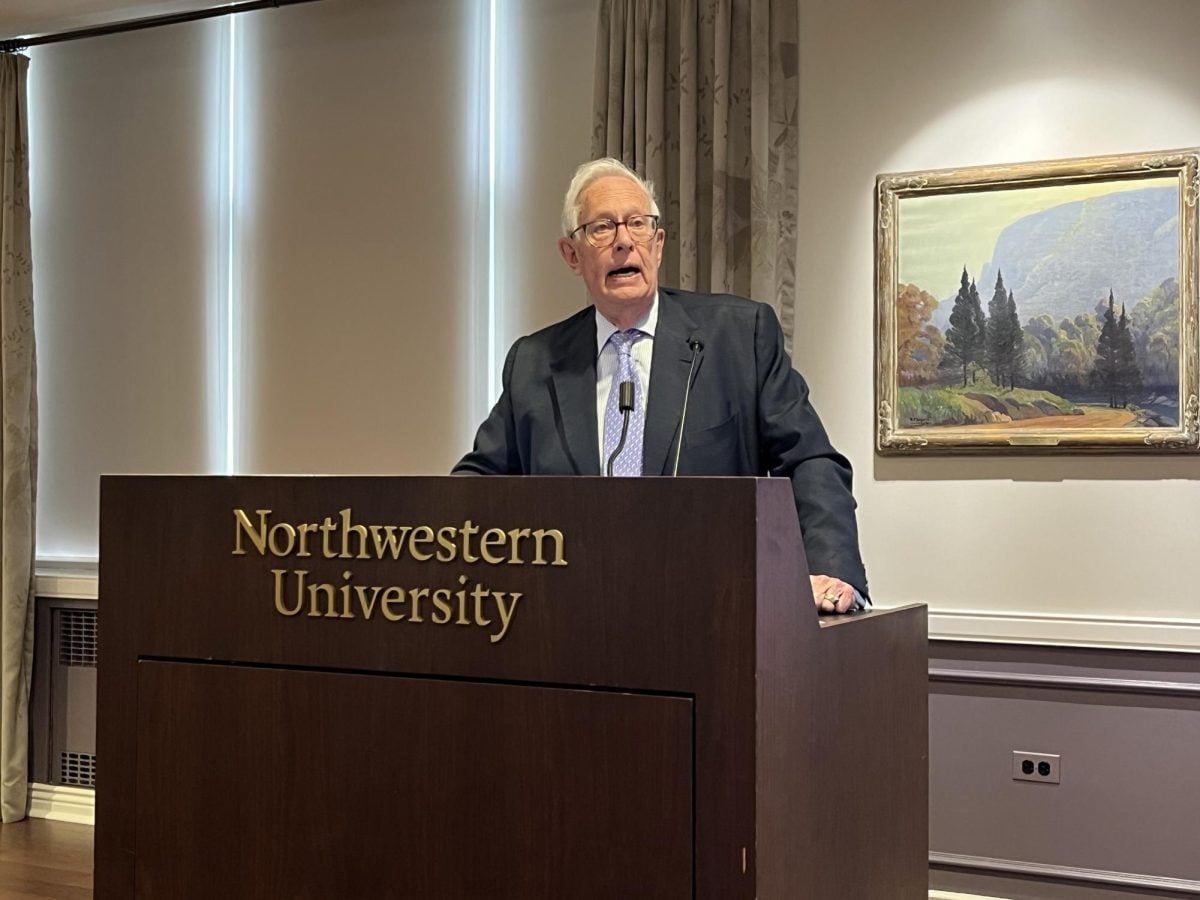
Another professor with a large online following is Communication Prof. Bruce Lambert, who started his YouTube channel, “How Communication Works,” in 2017. The account currently has about 200,000 subscribers. In 2020, he began his TikTok account, @howcommunicationworks, which now has about 335,000 followers.
Lambert describes his content as talking-head videos about communication skills, often aimed at teaching viewers the theories behind — as his tagline puts it — “how communication works.”
He said he was inspired to start his YouTube account while traveling the country with his colleague. Lambert was training hospitals and healthcare professionals around the country on how to talk to patients and families “who had been harmed by healthcare.”
“I did all this face-to-face communication training, and I realized people really liked it, and there was an audience for it,” Lambert said.
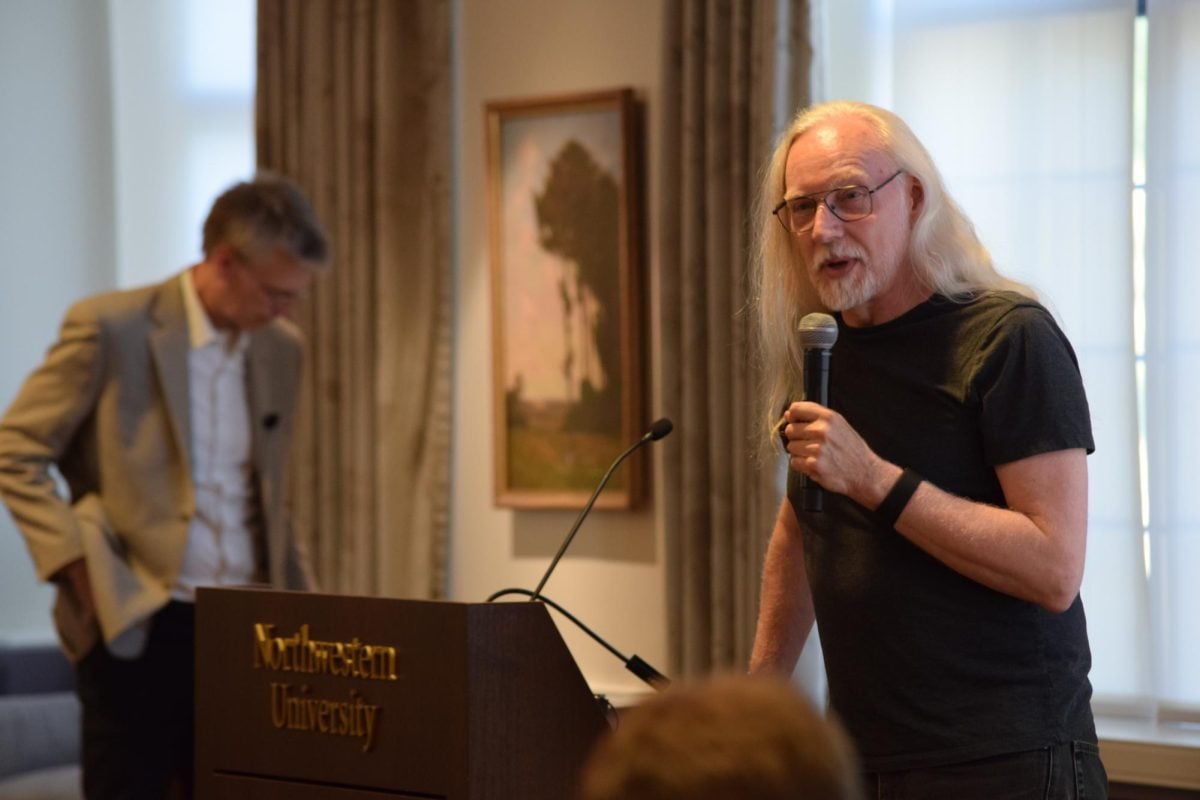
A third professor with an online following is Weinberg and Kellogg Prof. Eli Finkel, who co-runs his podcast, “Love Factually,” with UC Davis Prof. Paul Eastwick. The two met when Finkel was a first-year professor and Eastwick was a first-year graduate student at NU; Finkel went on to advise Eastwick’s Ph.D. studies. Finkel describes “Love Factually” as a “fact check for Hollywood” — the two analyze romantic films “from the perspective of relationship science.”
“Love Factually” also has accounts on both TikTok and Instagram, where short clips from each episode are posted.
Finkel said the idea for “Love Factually” came from a desire to do something a “little more creative” than a traditional research paper. The two originally planned to record 10 episodes for teaching purposes to bring concepts to life, he said, and then stop.
But, they eventually decided to go a different route.
“It was really fun,” Finkel said. “And it was like, ‘Are we done? Like, what are we doing?’ And we decided just to keep going. And it’s just enormously, enormously fun.”
Balancing time commitments
Considering that Solomon, Lambert and Finkel are all NU professors, managing their platforms as well as other personal commitments can be a balancing game.
Solomon said she views her work as “three corners of a triangle” that she aims to make “synergistic.” She said these three corners consist of her academic teaching and trainings, the therapy work that she does and the “public facing” aspect through books, social media or podcasts.
“Every corner serves the other corners,” Solomon said. “I’m a better teacher because I do therapy. I’m a better content creator because I’m in academia. So they all serve each other, and I think strengthen my work in all those areas.”
Solomon said that she used to produce all her content alone, but now she has separate teams that help her with the production of both her podcast and social media accounts.
Lambert said he is still a solo creator, and running his YouTube account is an immense time commitment. Combined with his busy schedule, he said he’s not posting as much these days, although he plans to “get back into it.”
“I have to write the script, I have to record the video, I finally hire an editor who edits the video, but then I have to post the video, thumbnail, titles, tags, send an email to my mailing list — it’s like having a second job,” Lambert said.
A larger purpose
The three professors all said money was not the primary motive for running their accounts. Instead, they had more altruistic motives.
Finkel said that “Love Factually” has given him a new avenue to connect with other academics that he sees at conferences.
“A normal thing that happens in our conferences now is like, ‘I know you haven’t seen me in a year, Eli, but I feel like I see you all the time because like I’ve been listening to you every other week for the last year,’” Finkel said. “It’s really fun when people we like are engaging with it and chatting about it and have questions about it.”
However, he also said his work on “Love Factually” is motivated by a desire to make relationship science more accessible and engaging to the general public.
Finkel said he believes the medium of movies helps relationship science go beyond just academic spheres alone, which is something that he is passionate about.
“It’s not that I think every professor or academic is obligated to spread the good word of their field,” Finkel said. “But I wouldn’t want a world where no professors did that. I think it’s pretty easy to stereotype academia or view it as the egg-headed ivory tower, unless we give something back.”
Solomon said that a similar drive to help people understand relationship dynamics led her to start her account.
She said her younger self would be excited that she now uses her skillset to help people understand and navigate romantic relationships.
“I was very excited to figure out, ‘How do you get relationship science out of the ivory tower and out of therapist’s offices?’” Solomon said.
Lambert said his desire to teach is what motivates him to create content. He pointed out that he can reach a larger audience on YouTube than he ever will in the classroom.
He also said that he is motivated by the impact his content actually has on people. On one of his YouTube videos about chronic illness, he received many inspiring comments, he added.
“Some of those people have made the most heartfelt comments to me about what this video means to them, and how it’s helped them understand themselves, or their situation — that’s incredibly rewarding to me,” Finkel said. “This is the part of social media that is worthwhile, and it’s why I continue to do it.”
The full picture: toxicity, going viral
Despite the positive aspects of using social media to educate audiences, there are some downsides as well.
Lambert said that due to the “toxic” nature of TikTok, he rarely posts anymore.
“If you get on social media, you better have a thick skin because they’re going to criticize your appearance,” Lambert said. “They’re going to criticize your intellect. They’ll criticize your religion or your nationality or your race, all of that. It is a jungle out there, and you have to be prepared for that.”
He said that in one of his classes, while discussing the concept of being an influencer, he told his students that he was one.
He feels his popularity on social media changes how students view him, he added.
“To students, the fact that I have a Ph.D., or 125 scientific publications or millions of dollars, that means nothing to them,” Lambert said. “The fact that I have 320,000 followers on TikTok, suddenly, I’m a person to them.”
Lambert, who has multiple videos with over a million views across TikTok and YouTube, pointed out that many people in his students’ generation have expressed interest in going viral on social media or eventually becoming an influencer.
Lambert warned against these obsessions.
“It gives you nothing of lasting meaning or value or purpose,” Lambert said. “It is all sound and fury signifying nothing.”
A “Love Factually” clip of Finkel analyzing a scene from “Brokeback Mountain” has over half a million views on the podcast’s TikTok, @lovefactuallypodcast. The clip was made by Communication senior Celeste Shuman, who has helped Finkel run the Instagram and TikTok accounts for the podcast for over a year.
Shuman makes a promotional video for each episode of “Love Factually.” She also tries to keep up with audience requests and feedback by reading comments and DMs on posts.
While she said she appreciates the audience’s resonance with the “Brokeback Mountain” clip, its popularity makes it hard for her to keep up with the video’s comments.
“At a certain point you can’t keep up with it,” Shuman said. “I’ll log into our TikTok and it’ll be like, we’ve got a hundred more notifications and comments and things. And it’s like, I’m not gonna read those. Chances are they’re saying the same things that other people have said.”
Lambert said that he tells students that if they choose to make online content, they should choose topics that they have a genuine interest in.
“You have to enjoy the journey, not the outcome,” Lambert said. “You have to make videos that you enjoy making, about topics that you enjoy learning about.”
Email: [email protected]
Related Stories:
— Nobel laureate Joel Mokyr offers advice, discusses human progress at Q&A
— Creativity, confidence, community: What NU content creators gain from social media