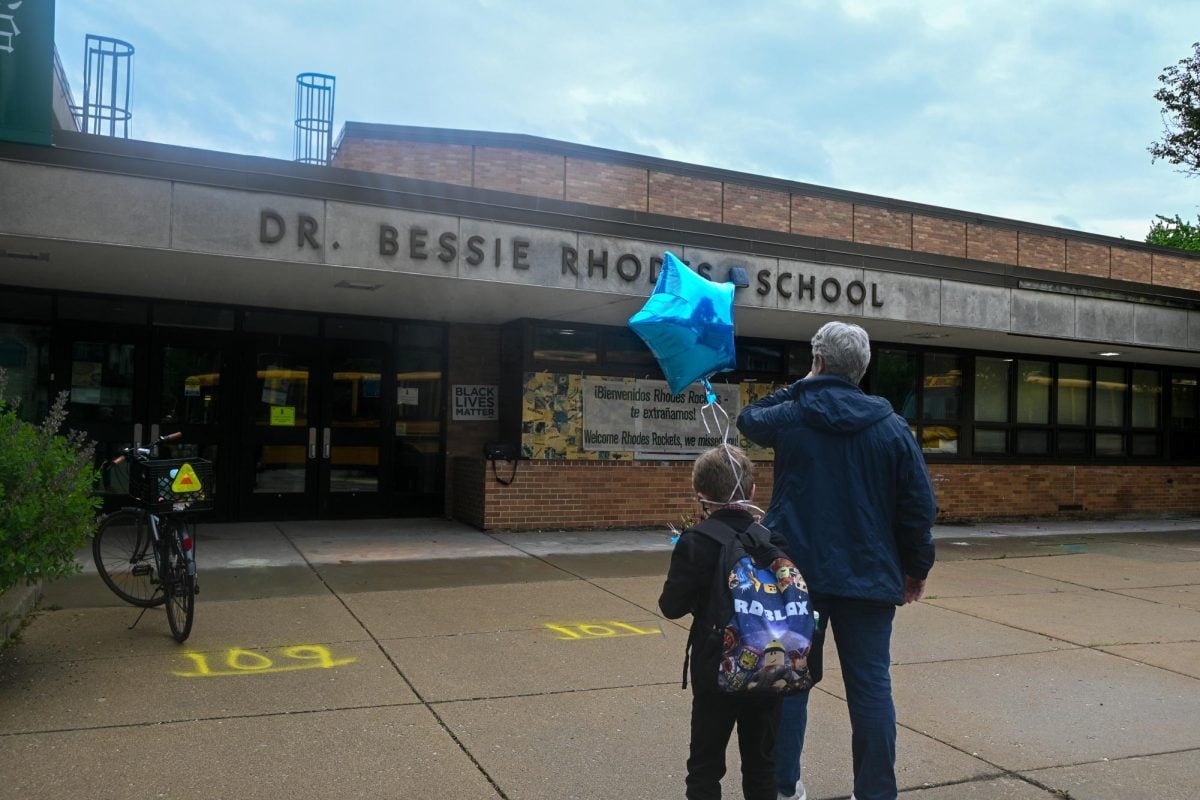
Evanston/Skokie School District 65 is ending its year in a crisis of indecision, with no schools set to close before the 2026-27 school year apart from Dr. Bessie Rhodes School of Global Studies, Board President Patricia S. Anderson announced Monday night.
The board remains at an impasse on both school closures and the appointment of a seventh board member to fill former board member Omar Salem’s vacant seat, Anderson said. The board has until Jan. 3 to select its seventh member — a 60-day clock began ticking after Salem’s resignation went into effect Nov. 4.
However, there has been no board consensus on the appointment, and the issue will likely be sent to the regional superintendent, who will fill the vacancy by Feb. 2, per state law.
“The timing of this appointment means that it is not possible for the administration to implement any school closures before the 2026-2027 school year,” Anderson said.
Salem’s departure has left the six-member board deadlocked on making school closure decisions — a far cry from the flurry of debate that has engulfed the district in a year already riddled with problems, including former Superintendent Devon Horton’s federal indictment in October.
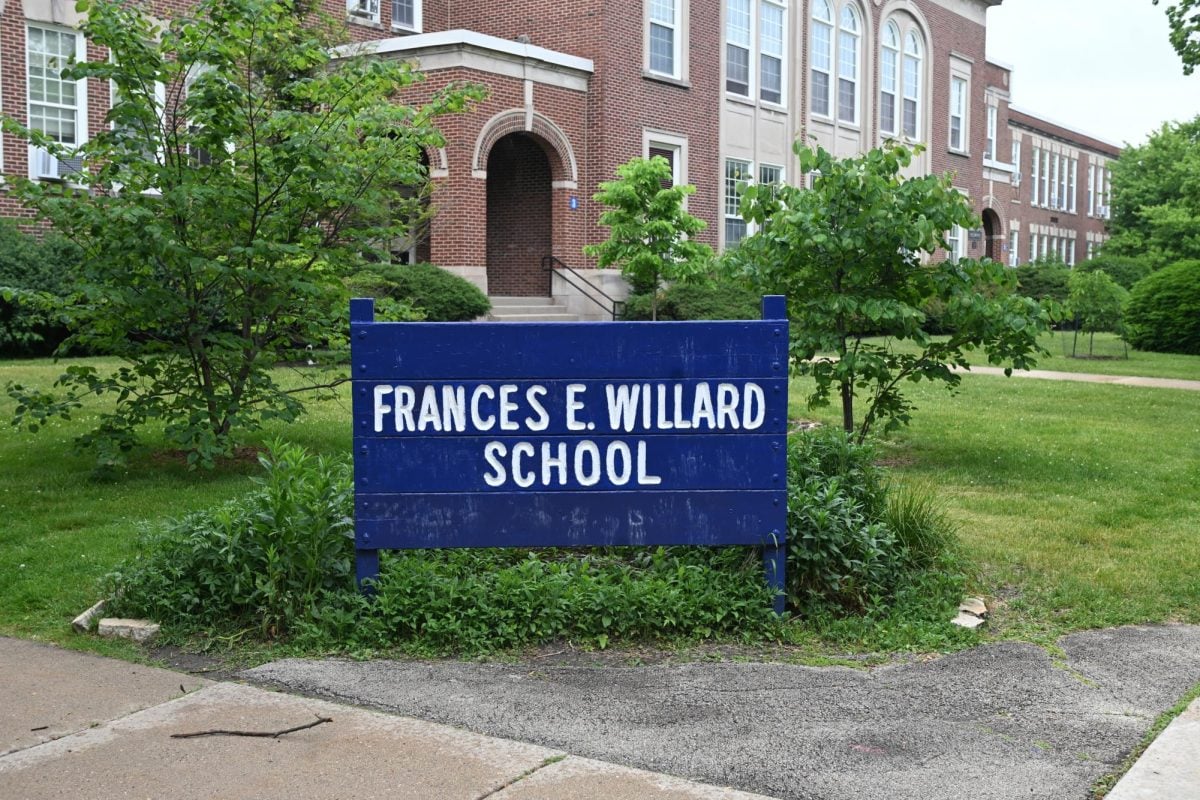
The district, however, decided to go forward with the decision to close Willard Elementary School’s Two-Way Immersion program, a condition that was part of every school closure scenario the board previously considered.
Willard leadership was informed about this decision prior to Monday’s meeting, according to District 65 Communications Manager Hannah Dillow.
Staff and families received communication from Superintendent Angel Turner following the meeting, and Dillow said school leaders and educators would inform students at school Tuesday, adding that the district will also provide administrative and mental health support to students.
Currently, Willard’s TWI program is not at maximum utilization, so its closure will help build stronger learning environments, said Stacy Beardsley, assistant superintendent of performance management and accountability.
“We know there’s work for transition. We know there’s work for opening a new school, but we’re very optimistic for what this can become for all of the (Bessie) Rhodes families and the Willard families,” Beardsley said. “This is not intended to be a message of closing. It is a message of consolidation and program-building.”
Based on the analyses conducted in Phase 3 of the district’s Structural Deficit Reduction Plan and its second and third iterations of Student Assignment Planning committees, the district will consolidate the TWI strands from Bessie Rhodes and Willard into two strands at Foster School.
District 65 will have seven TWI strands across its 10 elementary schools after the closure of the Willard strand, Beardsley added.
During public comment, several parents spoke in support of the Willard TWI strand. They highlighted bilingual education’s contributions to community diversity and its draw for many families not just to Willard, but to the district as a whole.
Christina Shessler has three children in Willard’s TWI strand. She pointed out that eliminating the program at Willard may create a “capacity bottleneck” at Foster, leaving students with “fewer seats, less continuity and weaker peer networks.”
“Families in the north region already endure displacement with the closure of Bessie Rhodes,” Shessler said. “Removing Willard TWI now strips away access, stability and trust from the very community this district claims to support.”
During the discussion, Board Vice President Nichole Pinkard raised concerns about how Foster’s culture will be established as it opens alongside the closure of Bessie Rhodes.
While opening a new school and building a cohesive school culture is already a challenge, Pinkard pointed out that launching Foster with a largely transitional student body could have the added challenge of molding the school’s identity around former Bessie Rhodes students — a demographic that will naturally decrease each year as cohorts age out.
“What does that mean for the culture setting of Foster?” Pinkard asked. “Because you’re going to create a culture around a population of kids who won’t be in the school.”
Board member Maria Opdycke asked Beardsley what conversations have occurred between the district administration, the central office administration, the Willard principal and the Willard TWI community about this transition.
Beardsley emphasized that this is a conversation that has been going on for a while, with continued community engagement.
Board member Sergio Hernandez said that his vision has always been for the district to provide a pathway to a seal of biliteracy that goes up through the high school. For example, hopefully Evanston can emulate Schaumburg’s language tracks in the future, which include Japanese and Spanish, he added.
“I’ve been to Willard and it’s an incredible community,” Hernandez said. “But again, at this point in time, we really need to optimize a program with the numbers that we have, knowing that maybe in the future there will be some flexibility and opportunity to be able to expand if our numbers continue to grow.”
District 65 alum and parent Alexa Caldicott compared the school closure process to “negotiating with a toddler.”
She slammed the actions of three board members — Hernandez, Mya Wilkins and Andrew Wymer — who voted in November to close either Kingsley and Lincolnwood Elementary Schools or no schools at all, contrasting it with the rest of the board and most of the community’s “responsible compromise” of closing one school.
“Those three board members’ response has been, ‘If I can’t have two, then I want zero,’” Caldicott said. “That’s not leadership. That’s foot-stomping. Our kids deserve adults who care more about doing right than being right.”
District to collect from Horton
Later in the evening, the board voted unanimously to engage law firm Linebarger Goggan Blair & Sampson to undertake collections actions against Horton for more than $7,500 in unpaid amounts owed under his employment agreement.
Horton’s early exit in 2023 triggered his contract’s $25,000 early departure penalty and the board is now seeking all remaining amounts owed under his contract.
This is separate from and unrelated to any amounts Dr. Horton may eventually owe the district in relation to his federal criminal indictment.
Financial pressures, potential layoffs
In light of the district’s remaining $4.5 million to $5.5 million budgetary gap for the 2026-27 school year, potential staffing reductions now loom over employees.
Updated financial projections showed that structural deficits persist despite cuts, according to Chief Financial Officer Tamara Mitchell. District leadership presented financial lever options — including consolidating low-enrollment classes, cutting transportation and transportation aides for pre-K and employee layoffs.
Layoff options range from cutting up to 78 jobs, if no schools close, to 35, if the district closes two schools. Wymer pointed out that among these options, there are similar layoffs needed whether the district closes one or two schools.
When reviewing these programming and staffing expenditures, Turner argued against reductions in central office administrators and staff, as it would “cause a delay in providing responses” to schools.
The board will meet next on Jan. 12.
Email: [email protected]
Related Stories:
— D65 board fails to pass additional school closures before 2026-27 school year
— D65 failed to advance a single school closure scenario. What now?
— Meet 7 stakeholders at the heart of D65’s school closure debate