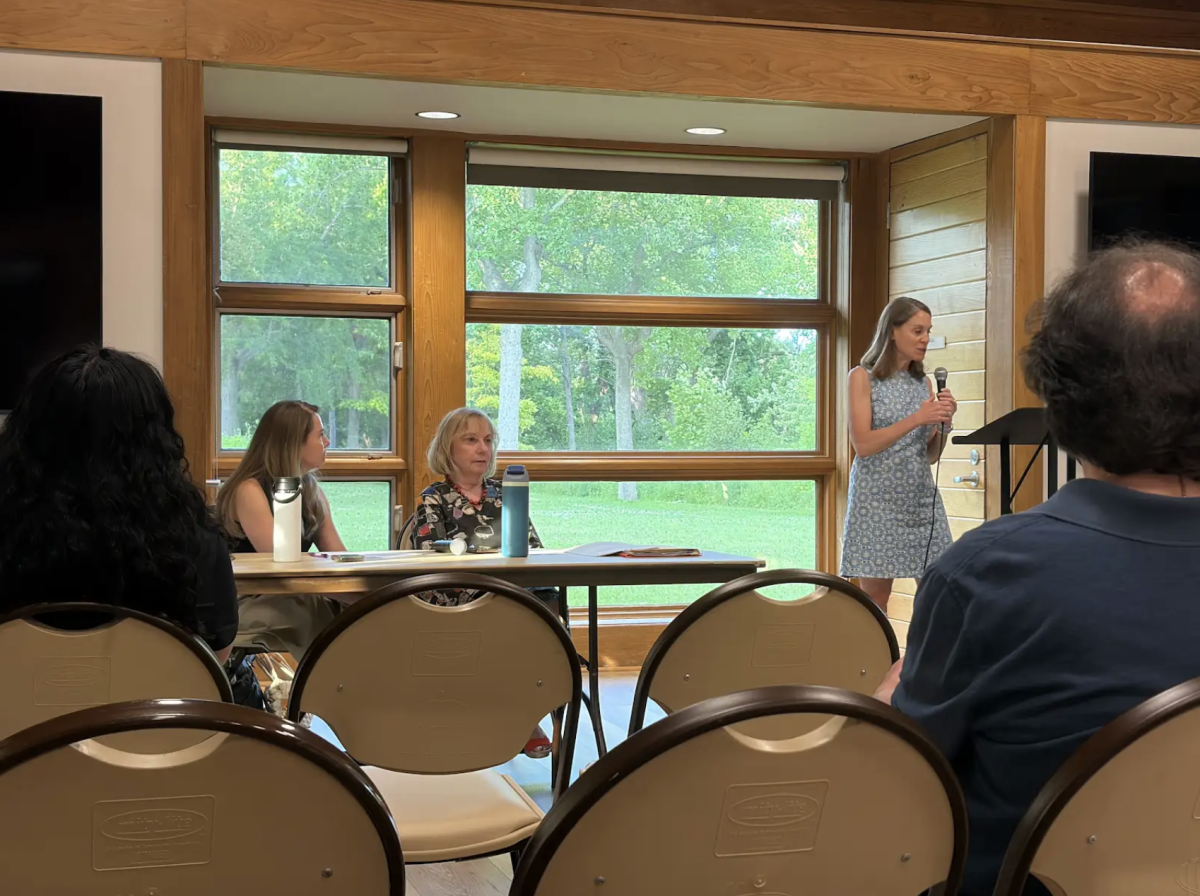
The Evanston Township High School District 202 Board of Education unanimously approved a 3.6% tax levy increase and evaluated post-pandemic changes at its Monday night meeting.
Under Illinois law, District 202 can raise its property tax levy at most by the consumer price index — which tracks inflation — or 5%, whichever number is lower. This year, the CPI rose by 3.4%.
The board approved a “balloon levy,” which requests the maximum allowed amount and then adds the projected value of new properties in Evanston, according to a memo from Chief Financial Officer Kendra Williams.
At the meeting, Superintendent Marcus Campbell said the disbursement of this year’s property tax revenue, which accounts for more than 80% of the district’s budget, has been delayed for months. Williams added that Cook County’s delay forced her to liquidate some of the district’s investments this week to maintain cash flow.
All told, Williams said District 202 is still waiting on “tens of millions of dollars” from the county.
“This money belongs to the citizens of Evanston,” Board Vice President Monique Parsons said. “The fact that we’re going to the bank to cover a deficit they created — and, for whatever reason, felt comfortable creating it — needs to be broadcast.”
Williams said she hopes the district will receive the funds on Friday. If not, Campbell warned the district might have to issue tax anticipation warrants and could consider lobbying for state legislation to address the problem.
Earlier in the meeting, Assistant Superintendent for Curriculum and Instruction Pete Bavis and Director of Research, Evaluation and Assessment Carrie Levy presented on structural changes implemented when ETHS returned to in-person instruction following the COVID-19 pandemic.
The changes included adopting a block schedule with longer class periods, lengthening passing periods, temporarily eliminating semester exams and expanding professional development opportunities. They reflected a “renewed focus on humanizing the educational experience,” according to a district evaluation compiled in June.
Campbell said the goal of these changes was to “slow the school day down.” He noted that implementing a block schedule at ETHS had been debated for 30 years, and administrators initially pursued the report to demonstrate its effectiveness.
He added that Monday’s discussion built on the data presentations the board reviewed in November.
Levy said the report — focused on wellbeing support, behavioral trends and academic performance — was the culmination of four years of data collection, which included surveys of wellbeing and belonging among students and staff, random classroom observations and reviews of existing attendance and discipline data.
“Of all the reports that we bring to the board, this report is the one that we spend the greatest amount of time on,” Bavis said, adding that its results have already begun to inform professional development.
During the 2024-25 school year, 71% of students reported feeling like they belonged at ETHS, and 80% of students said they felt respected by their teachers. Both statistics represented a marked increase from the previous school year, Levy said. Later, she said many respondents who did not agree with the survey’s statements fell somewhere in the middle, with few expressing strongly negative views about their well-being or sense of belonging.
Board member Pat Maunsell praised the administrators’ dedication to collecting information about the student experience.
“Not every district does this — goes into this level of detail in terms of the questions, the longevity of the research, the action that’s taken as a result of the data,” she said.
Both Maunsell and Board member Mirah Anti focused on issues facing teachers, with Anti expressing hope that the district would implement data-driven changes to “help them help our kids.”
Levy said she views “data as a conversation” that should guide policy changes, which are themselves measured continuously over time.
“It’s not data for data’s sake,” Board member Leah Piekarz said. “It’s data we can use to see how we’re doing, what we’re going to do next, what works, what doesn’t, and where are our areas of opportunities.”
Email: [email protected]
X: @jdowb2005
Related Stories:
— District 202 shows high academic proficiency levels, wide achievement gaps in annual state report
— D202 board approves balanced $118.4 million budget for FY 2026 amid revenue concerns