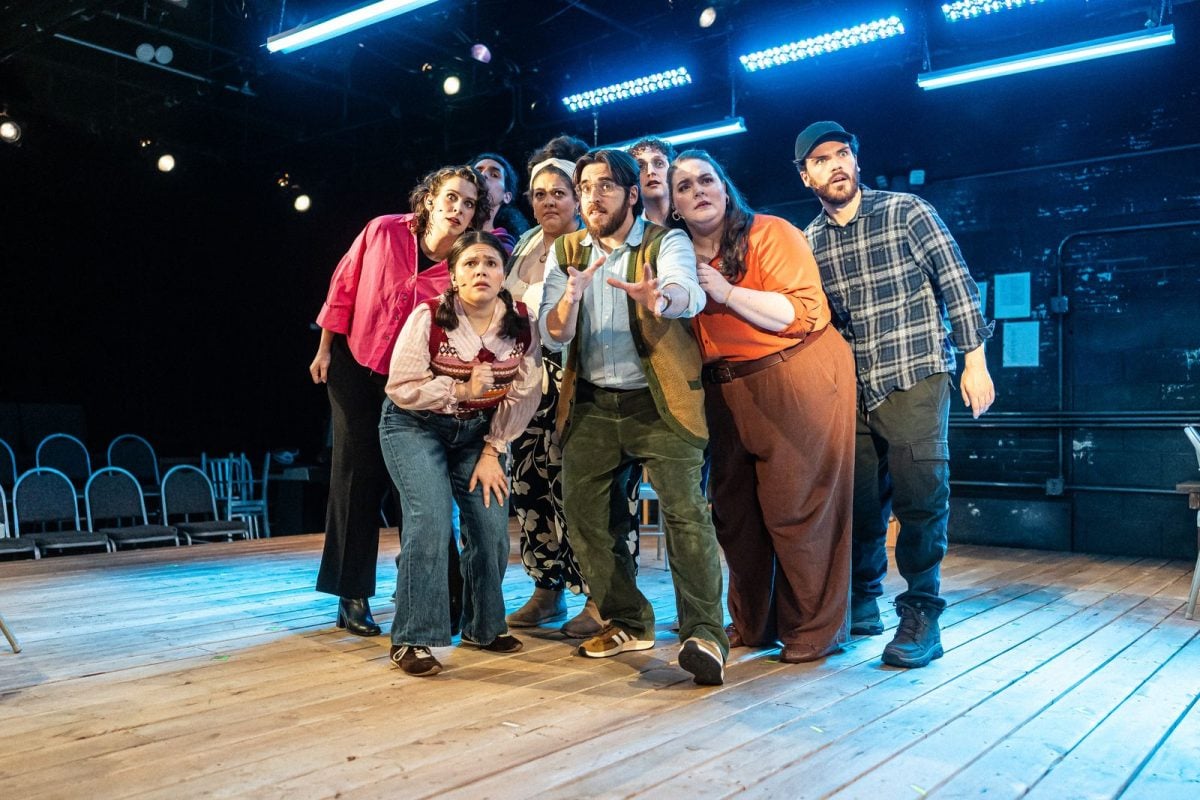
Over 30 students battled it out at Northwestern’s first-ever music hackathon, BitCrush, on Saturday evening, performing familiar hits and original compositions with an unusual instrument: code.
Contestants ranged from freshmen to graduate students. The groups took turns playing code that generated music, and many accompanied the programmed tracks with live singing and instruments including the violin, keyboard, electric guitar and clarinet.
Contestants used a variety of coding languages. Many teams put together their tracks with TunePad, a program that allows users to arrange coded music using Python.
As part of their performances, some even wrote code in real time. This ranged from simple tasks like calling up functions they wrote ahead of time to writing loops and functions that generated music on the spot.
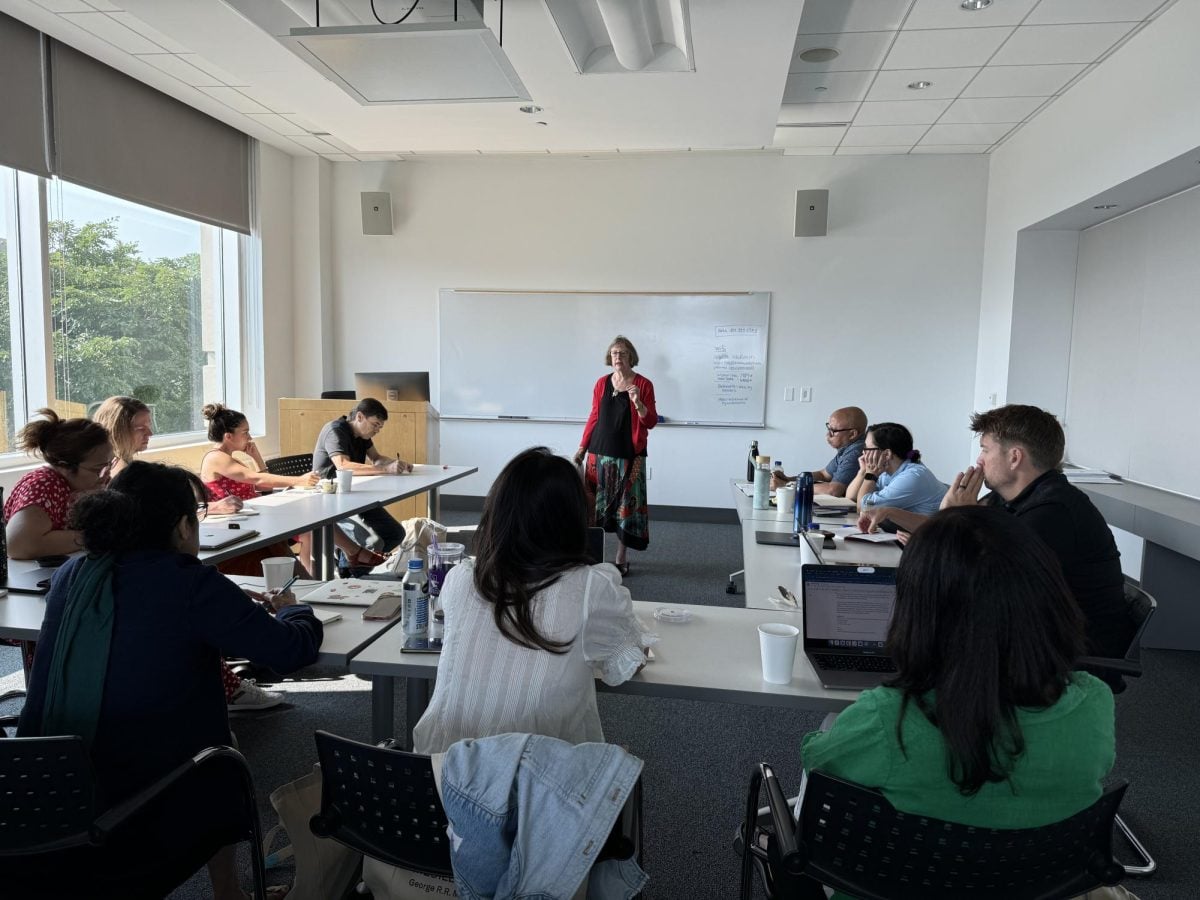
“We tend to think of computer code as something you used to write software, but it can also be sort of a language for self-expression, and we’re also thinking of it as a language for performance,” McCormick Prof. Michael Horn said.
Horn runs the Tangible Interaction Design and Learning Laboratory, which organized BitCrush at Annenberg Hall. The event was funded by various organizations, including the National Science Foundation.
At the end of the three-hour event, four first-year sound arts and industries masters students emerged victorious with an original composition programmed using visual programming language Max.
The four students met in their computer science classes, Cole Savitz-Vogel, one of the four, said. Savitz-Vogel said he wrote the contest-winning song when he was an undergraduate.
“I’ve always kind of been terrified of doing coded live performance,” he said. “When I learned about it, I thought it seemed like an impossible superhuman thing to do. So I’m grateful to our team for letting me use that song.”
Computational biology graduate student Anna Hightower and Weinberg junior Tanush Dhingra competed with a four-member team that presented a coded rendition of the “Pirates of the Caribbean” theme.
Hightower accompanied her team’s performance on the violin, while Dhingra joined in on the keyboard.
“This has been really different because it brings together two disciplines that usually aren’t combined as much, which is really cool,” Hightower said. “I think coding is creative in its own way, but this is a whole new level of creativity.”
Some took a different approach to the contest. Bienen junior Tian Li’s team built a pair of gloves with sensors that created music when triggered.
Shaking his hands, for example, added rumbling effects. Raising them increased volume.
First-year learning sciences Ph.D. student Kachi Onyeador was one of the evening’s judges.
“I thought they were great. The fact that they’re doing this literally right before finals, but everyone definitely put a lot of effort into their performances, and there’s been a lot of innovative stuff,” she said.
McCormick and Communication freshman Bridget Brown, was part of a group that placed third with their version of Taylor Swift’s “Love Story.”
Brown said the event inspired her to combine music and code more in the future.
“I’ve known I wanted to start a band since I got here. I never really envisioned it being like a live coding band, but this was really fun and it could definitely be a thing,” she said.
Email: [email protected]
X: @nicyaps
Related Stories:
— Students code through the night at NU’s largest hackathon WildHacks
— Code It! Challenge offers Evanston middle schoolers a path into STEM
— Bienen chamber music ensembles compete at Fischoff contest