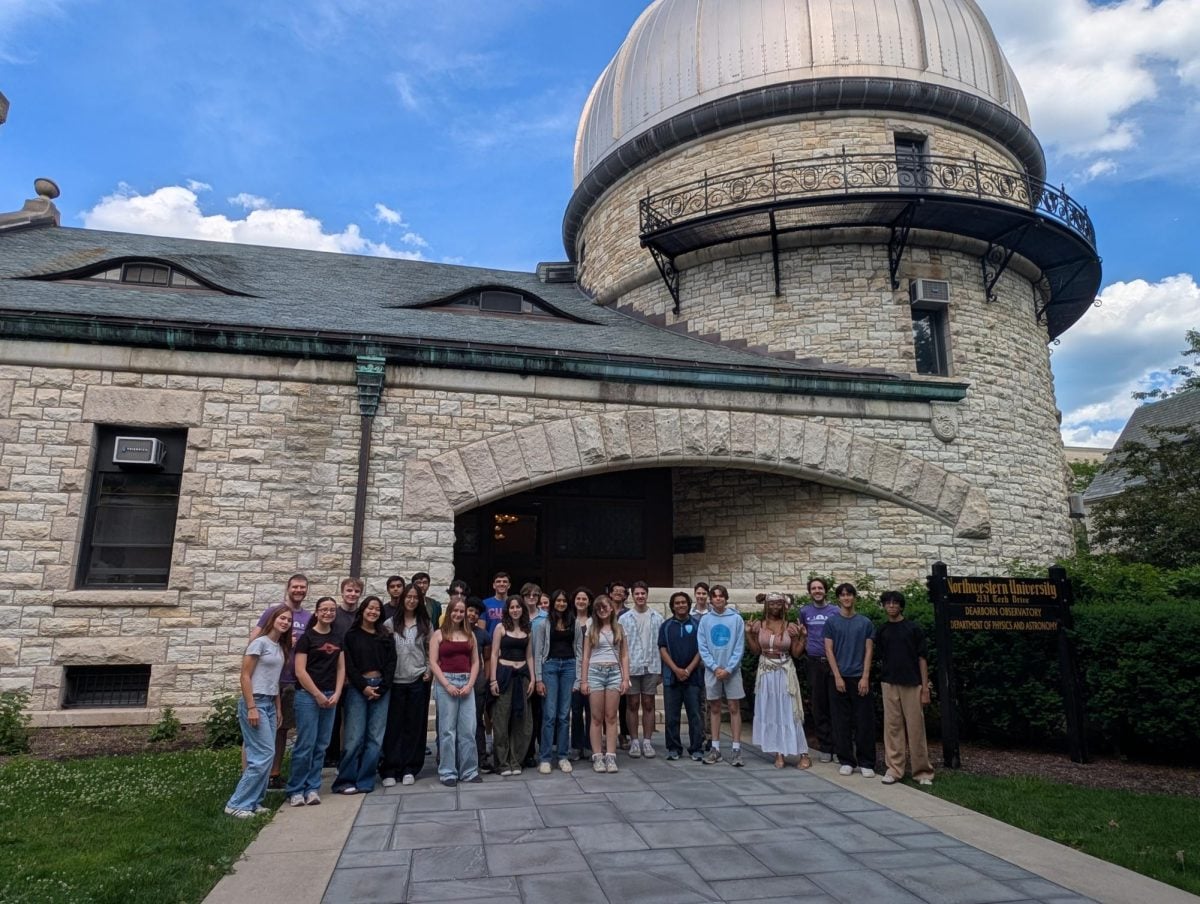
Northwestern Associated Student Government’s eight committees have finished recruiting members and are now launching into a project-packed 2025-26 term.
While ASG senators vote on stances, resolve internal bureaucratic issues and coalesce to make initiatives, committees create and implement their own larger-scale projects. Some committees work closely with University offices, and their proposals can receive funding from the ASG Executive Board’s budget.
“Every project is its own story,” said McCormick senior and ASG co-President James La Fayette Jr. “Not everyone goes through the same people or takes the same avenue in order to see a project through. And a lot of the time those projects take years.”
From a reproductive vending machine to a clinic that addresses students’ legal concerns, here’s a look into a few committee projects students can expect to see on campus soon.
Reproductive vending machine
The Health and Wellness committee expects their reproductive vending machine to be installed in the Norris Underground when it arrives sometime in the next few weeks, according to committee co-chairs SESP sophomore Evan Hostetler and Weinberg junior Aryan Kalluvila. They said it’s designed to provide easy-access tools for drug safety, sexual wellbeing and reproductive health.
Hostetler and Kalluvila said they have all the products ready to stock it: Narcan, urine test strips, Plan B, condoms, tampons and lube.
“We have a machine donated from Canteen,” Hostetler said. “We’re just waiting for it to be manufactured now.”
Hostetler said students will swipe their Wildcards to receive products, which will be free. There will be a limit imposed, however, to prevent resale.
The committee worked with Tess Benser, assistant director of outreach and sexual wellness at the Center for Student Advocacy and Wellness, to inform their product choices.
Kalluvila said Norris was selected intentionally for its “centralized” location on campus.
“Right now, if you want some type of reproductive resource, one of the only places on campus would be the Searle Center,” Kalluvila said. “That’s why we wanted to implement something in Norris.”
Mental health fund
Hostetler and Kalluvila are also moving forward this year with ASG’s mental health fund to help students with limited health insurance plans have access to mental health resources, which Hostetler said has been “in the works for a few years.”
The co-chairs are concerned about students with non-University insurance plans that limit the number of NU Counseling and Psychological Services therapy sessions they can attend for free.
Ideally, Hostetler and Kalluvila said the fund would increase the amount of sessions covered for those students.
“It may not seem like the most plausible thing to use that money for a fund, but we do think it’s a worthwhile cost,” Hostetler said.
The co-chairs are considering expanding the fund by collaborating with the ASG executive board to receive more funding. They hope the board can fund the initiative like it funded the reproductive vending machine.
“Mental health is a pretty big thing for me in terms of promoting University culture,” Kalluvilla said. “Last year (the committee) didn’t have the tangible impact that we’re starting to have this year.”
Quarterly survey
The Analytics committee will release its quarterly survey to the student body on the week of Nov. 9. The data from the survey is used to inform the Analytics committee’s annual budget recommendations to University administrators.
The survey-building process starts with a brainstorming session between committee members, according to Weinberg junior and committee co-chair Roberto Borsetti.
“We have a team of six members who are responsible for brainstorming, but we ensure that we do survey for feedback and student voices from those other stakeholders that we have, whether within ASG, other clubs or just our own friends,” Borsetti said.
Survey topics this fall will center around NU’s budget cuts, on- and off-campus housing costs, dining, student organization funding, transportation, students’ personal spending and evaluations of committee initiatives.
As usual, the fall survey will feature a set of questions about first-generation low-income student experiences, just as spring surveys routinely include a section on political climate.
“I’m really looking forward to seeing what data we’re able to extract and seeing what new proposals or ongoing proposals we can continue to strengthen based on the data we receive,” Borsetti said.
Analytics has adapted because of University budget cuts, according to Borsetti. He said private meetings between the committee and administration tend to be more frequent than those of other committees.
The committee meets with Vice President for Student Affairs Susan Davis quarterly, administrators who are relevant to projects as-needed and a large group of administrators at the end of the year to present the budget recommendation.
SESP senior and co-Chair Adrian Ayala-Perez said Analytics’ usual budget of around $350,000 was not cut this funding cycle, but the committee has taken steps to prepare for possible future cuts.
For example, Ayala-Perez said last year, the committee started doing advocacy proposals. These reports highlight issues without making monetary demands, he said.
“We mentioned that we would like to have a crosswalk between Emerson Street and Sheridan Road, where a lot of people jaywalk,” Ayala-Perez said. “But since we didn’t have an estimate for how much that would cost, we just did an advocacy report.”
Legal clinic
This winter, the Justice and Inclusion committee hopes to pilot a clinic to guide students through legal concerns.
“Essentially, a lawyer will have office hours in which students can go and ask them questions about anything related to the law,” said Weinberg junior Catherine Ndovu, co-executive director of Justice and Inclusion.
Ndovu said the committee is particularly focused on helping students understand their leases and know their rights as tenants. She said although the University provides specific legal guidance for certain groups of students, it lacks a legal service open to all.
Justice and Inclusion is still deciding between two legal partners to staff the clinic. Ndovu said whichever partner they choose, they will probably work pro-bono, free of cost for students.
If neither of the partners have good availability, the project may be pushed off slightly, according to Ndovu. She hopes that, even if it starts small, the program will expand over time.
“We’re trying to trial it this winter so we can see what kinds of questions students are going in for (and) what kinds of services they’re requesting so that we can create a broader proposal to bring to administration,” Ndovu said. “If it seems to be better to shift directions, we’ll do that.”
Established and ongoing projects
The Justice and Inclusion committee and Analytics committee are continuing to run and examine a project called Books for ’Cats, where they help support the Office of FGLI Initiatives to provide textbooks for first-generation low-income students, according to Borsetti.
Borsetti said Analytics is also hoping to receive feedback this year on the Chicago Express, an ASG-funded bus that has shuttled students to Chicago on Saturdays since it was piloted in 2023.
“We’re also looking for feedback for Pearson MyLab courseware,” Borsetti said. “ASG Analytics helps subsidize it so students can access it for free in most core math classes.”
Ndovu said Justice and Inclusion is once again planning its annual Cultural Summit. It’s one of the committee’s bigger initiatives, which aims to provide an opportunity for heritage- or identity-based organizations to have a space together.
One of the biggest ongoing ASG projects, according to Weinberg junior and ASG co-President Jamal Omoniyi, is creating more identity group houses in the model of the Black House.
The houses that will accommodate those groups are currently occupied by University staff. But Omoniyi said once the Jacobs Center is built and staff move there, identity groups may be able to move in.
“That will go out until at least 2027,” Omoniyi said. “We’d be responsible for allocating which student groups get priority for those houses first.”
After months to years of work, Hostetler and Kalluvila said it’s validating to see projects materialize on campus.
“We want to have these tangible effects so that this can be kind of a standard for future chairs to look back on and be like, ‘Okay, this is the caliber of events that we want to set up,’” Kalluvila said. “We really want to try to make as big of an impact as we can, but also be smart about the money that we’re given and spend that to make the maximum impact.”
Email: [email protected]
Related Stories:
— Northwestern’s Books for ’Cats 2.0 program gives students unlimited textbook access
— Chicago Express Pilot receives two more years of funding, expanding student access to Chicago
— ASG’s Fall Cultural Summit unites cultural organizations through live performances, diverse food