Northwestern’s Women’s History Month virtual keynote event on Tuesday brought together students, faculty and community members to discuss how feminist ecologies shape understandings of resilience and justice.
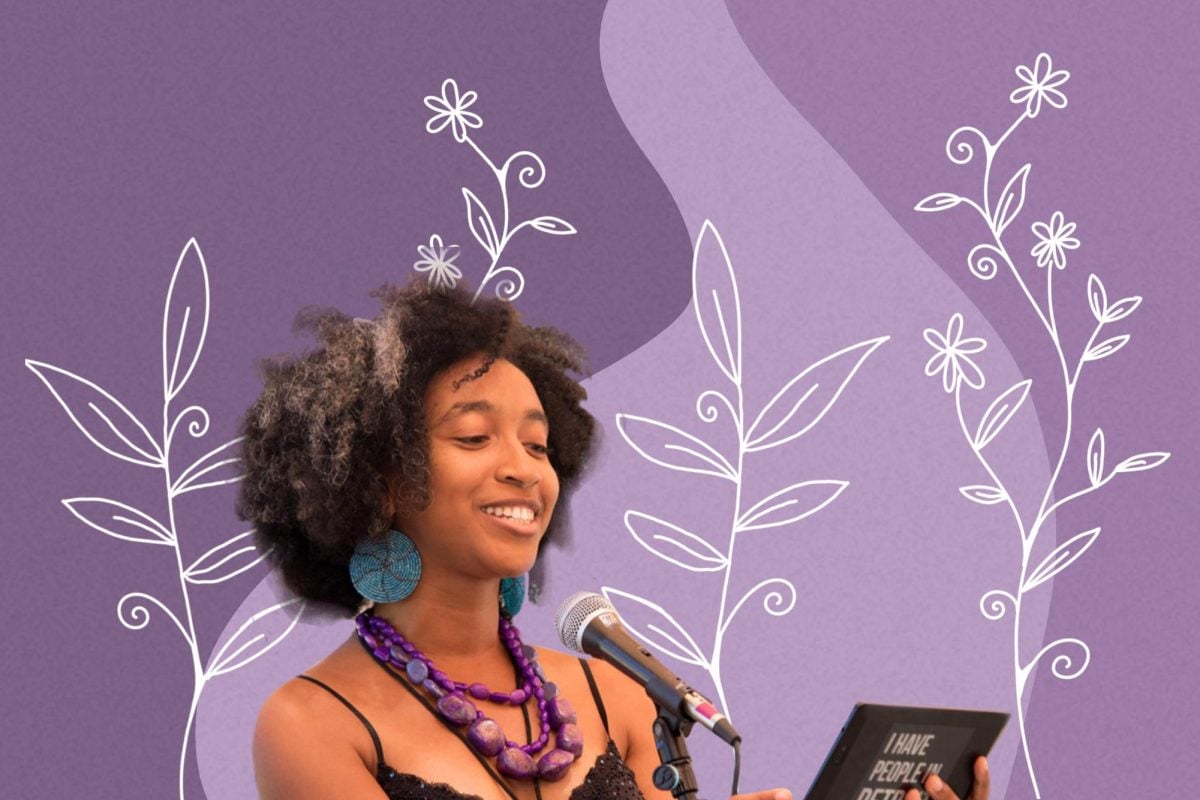
The conversation featured Alexis Pauline Gumbs, a celebrated poet, scholar and activist. E. Patrick Johnson, Dean of the School of Communication, moderated the questions for Gumbs. The event, titled “Earth is a Relationship: Feminist Ecologies of Survival,” was introduced by Sarah Brown, Director of NU’s Women’s Center.
Dr. Njoki Kamau, associate director of the Women’s Center, contextualized the conversation by referencing Gumbs’ book, “Survival is a Promise,” which builds on the legacy of Audre Lorde.
Lorde was a self-identified “Black, lesbian, mother, warrior (and) poet,” who dedicated her life and talents to confronting different forms of injustice. In her book, Gumbs asks whether we ourselves, the generations Audre made possible, will survive the multiple crises we face as a species.
“Gumbs advocates for a holistic view of survival that integrates human and ecological well-being, emphasizing that the fight for justice is also a fight for the planet,” Kamau said.
Gumbs opened her keynote by guiding the audience through a breathing exercise, inviting them to dedicate their engagement to someone who was not present. She explained that the exercise would help the audience practice dedication by remembering an intention.
Throughout the conversation, Gumbs emphasized that survival is not merely about enduring, but about transformation. Drawing on Lorde’s poetry and personal history, Gumbs explained that Lorde’s work was both metaphorical and literal in its exploration of human interconnectedness with the Earth.
“We live upon the covenant. The planet is the covenant. Earth is our relationship,” Gumbs said.
Gumbs further discussed how Lorde’s experiences, from growing up near the atomic research facilities in Harlem to her later years as a gardener, shaped her understanding of ecological justice.
Johnson transitioned the discussion, engaging Gumbs in a dialogue about the transformative power of love, survival and Black feminist thought.
In response, Gumbs emphasized that love, whether for oneself, one’s community or ancestors, is always present, even when not immediately obvious. Gumbs also noted how love underpins movements, such as the fight against apartheid.
“Ultimately, love is the transformative process that is happening,” Gumbs said.
Gumbs also explained that her exploration of Lorde’s life and legacy is not simply an academic pursuit, but a deeply spiritual one. She added that, for Lorde, survival is not about preserving oneself but about offering love and energy to something greater.
As the conversation deepened, Johnson posed a question about the challenges of writing a biography, particularly on how Gumbs balanced admiration for Lorde with the complexities of her personal life.
“One thing that’s difficult when writing a biography is not to make the person into a saint,” Johnson said.
Gumbs agreed, sharing that Lorde’s personal journals revealed a thinker willing to wrestle with her contradictions. She shared that these journals were intimate, and she had an endless amount of questions while reading them.
“She struggled with accountability. She was willing to challenge her own beliefs,” Gumbs said. “That’s why her work remains so powerful.”
Email: [email protected]
Related Stories:
— Fossil Free NU, Climate Action Evanston host lecture event on changing climate culture