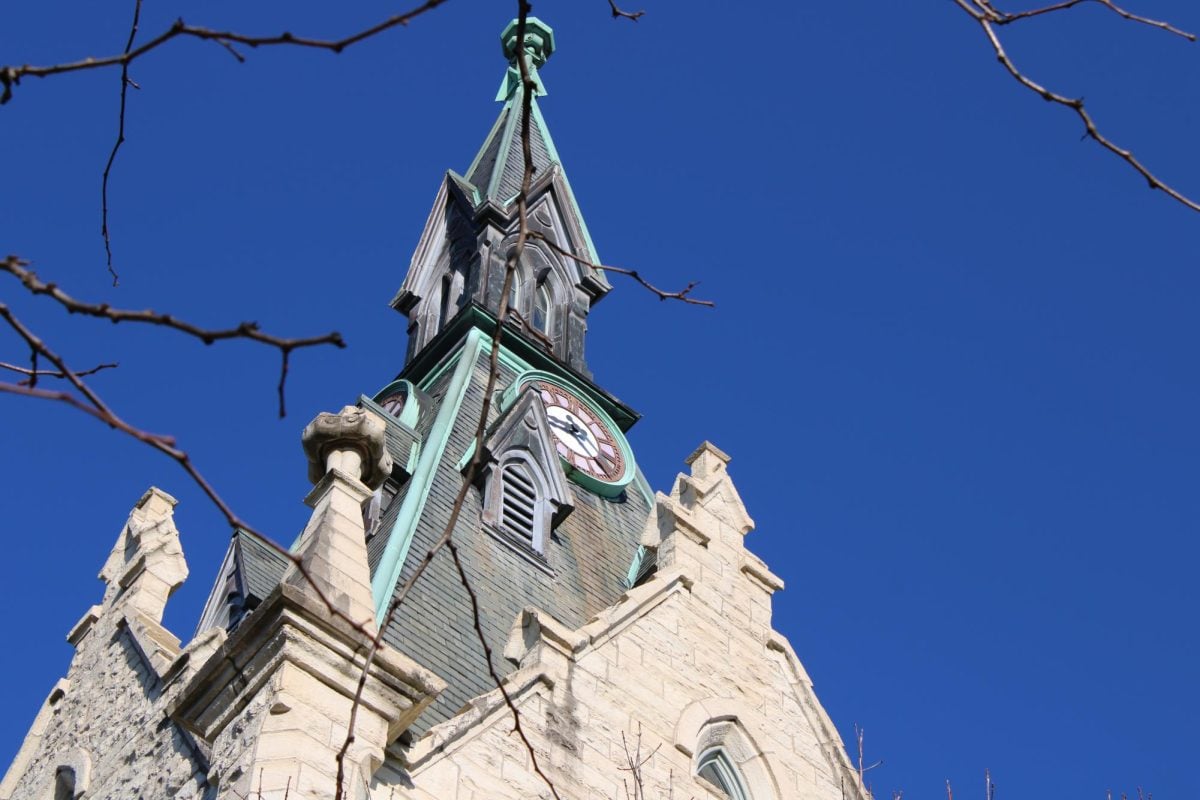
First-year anthropology graduate student Faraz Saberi has had enough of tolerating the “dark and dungeon-like” building that houses his program.
“It’s supposed to be a historic Queen’s house,” Saberi said, referring to the Queen Anne architectural style. “It is in some ways aesthetically appealing. But once you go inside, you’ll find a lot of things are falling apart.”
According to Evanston’s About My Place website, Northwestern’s anthropology and sociology houses are both designated Evanston landmarks. The longstanding buildings have become a point of contention among professors and students alike, preserving historical architecture at the cost of modern facilities. As these and other social sciences departments await relocation to the Donald P. Jacobs Center, questions on the preservation of the buildings remain.
Campus landmarks
Evanston Preservation Planner Cade Sterling said the city’s Preservation Commission began designating historic Evanston landmarks in 1978 amid a nationwide movement to protect architectural heritage.
The historic preservation efforts were originally governed by the 1981 Evanston Preservation Plan, but the commission and City Council adopted PRESERVE 2040: Preservation Commission Long-Range Plan in 2022. The endeavor aims to landmark buildings that represent Evanston’s historical context through their architectural, cultural and historical characteristics.
Located at 1810 Hinman Ave., the anthropology house is one of more than 850 registered historic landmarks in Evanston. Other landmarked University buildings include Deering Library, Lunt Hall and Scott Hall.
“(Preservation’s) purist intention is that you’re retaining portions of the built fabric that communicate this sense of past time that’s part of our collective memory as a community,” Sterling said.
While the anthropology building fosters a sense of “historic continuity,” anthropology Prof. Jessica Winegar said its “decrepit” conditions raise concerns.
Insect infestation, rain leaks and dysfunctional sewage plague the faculty offices located inside the house, Winegar added.
“The infrastructure matters because it goes to not only top quality facilities for research and teaching, but also (affects the) morale of faculty and of students,” she said.
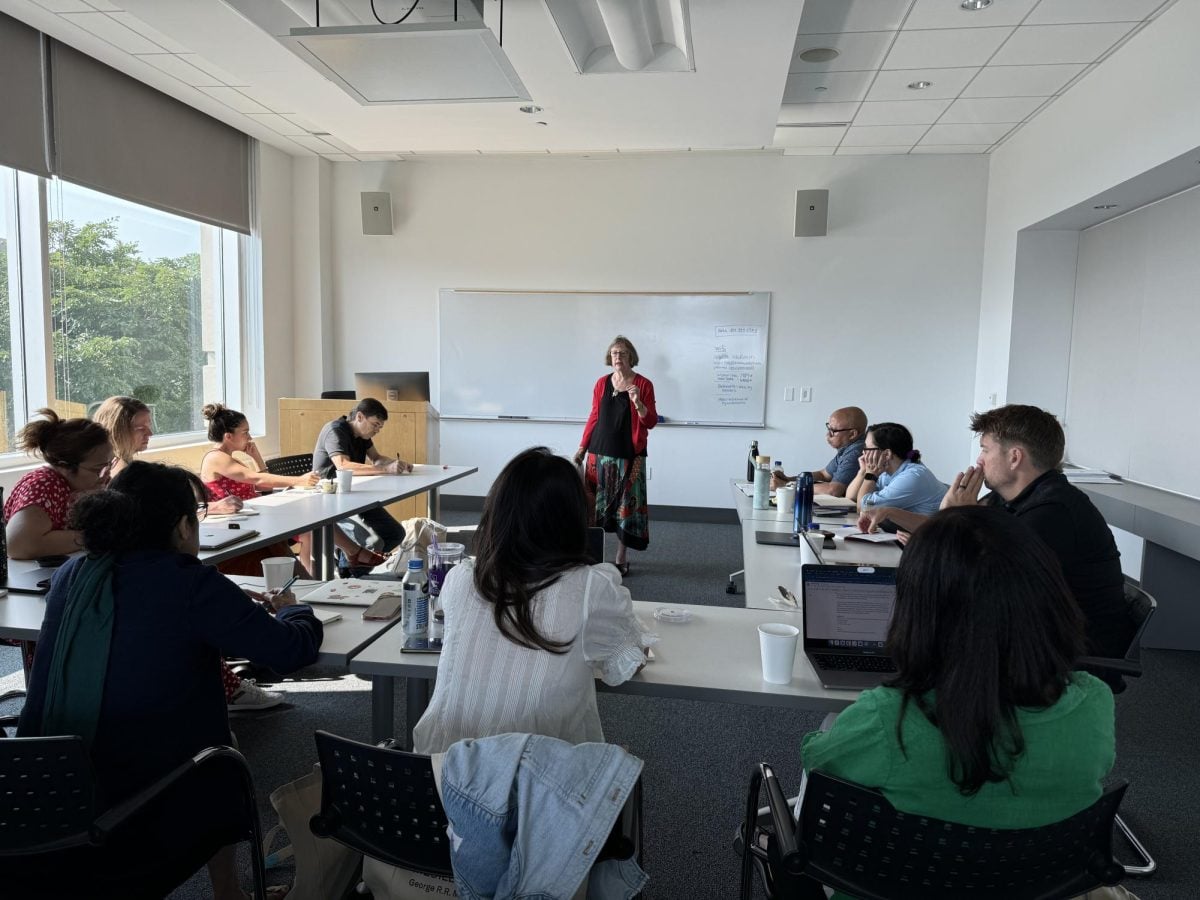
Saberi said outdated technology and limited space also make the house underequipped for scientific and academic work. He finds the basement classroom “depressing” and dysfunctional, recalling a time when the speaker did not work during a linguistic anthropology course.
At 1810 and 1812 Chicago Ave., the sociology house is a shingle style building not common in the Midwest, Sterling said. Stephen Alston Jennings, a locally renowned architect, built the house in 1890. Before becoming the sociology department in 1980, the building served a variety of functions from boarding house to sorority house.
Repurposing an old building came with locational and physical accessibility issues. Sociology Prof. Ann Orloff said the house lacks accessible accommodations such as elevators, and sociology Prof. Karrie Snyder said the building’s secluded location on the edge of campus, opposite Parkes Hall, is inconvenient.
Despite these concerns, some professors for both departments credit the historic houses’ lack of corporate feel with fostering a sense of community.
“It’s very nostalgic. It feels very communal,” sociology Prof. Rebecca Ewert said. “The old-timey vibes add to that community closeness feeling.”
Kris Hartzell, an architectural historian at the Evanston History Center, stressed the importance of historic preservation. Preservation ordinances in the U.S. allow homeowners to adaptively renovate the inside so buildings can easily be repurposed rather than demolished altogether, Hartzell said.
Because the sociology and anthropology buildings are located at the edge of downtown Evanston, Hartzell said maintaining their historical exterior is important in bridging the commercial and the campus area.
“To disrupt that fabric can be disruptive to the whole of the city,” Hartzell said.
Department relocation
Because both the anthropology and sociology departments’ sizes exceed their respective buildings’ capacities, they have had to rely on space outside of their landmarked buildings. As a result, the sociology and anthropology offices are split across multiple buildings, hindering communication among faculty members. Relocating to the Jacobs Center aims to provide an opportunity for inter- and intra-departmental unison, Orloff said.
Located beside the Deering Meadow, the center will become the Social Science and Global Affairs Hub. Announced in 2018, the hub reflects a key University priority to endorse interdisciplinary collaboration among social sciences and global studies. The center will also house the School of Education and Social Policy; Roberta Buffett Institute for Global Affairs; Institute for Policy Research; Weinberg College Center for Area and International Studies; and Weinberg College’s Program in Global Health Studies.
The center is wrapping up renovation, and the sociology and anthropology departments are set to relocate in Fall 2026, according to a University spokesperson.
“Having this hub just makes it more accessible for people to be cross-disciplinary,” Saberi said.
What’s next for the historic house
With the relocation, the future of the emptied landmarked buildings remains uncertain. The Historic Preservation Ordinance of the City Code stipulates that any external alteration, new construction, demolition or relocation of landmarked buildings requires authorization by the Preservation Commission. While it is difficult to demolish a landmarked building, it is not impossible, given that there are precedents where City Council overruled the commission’s denial, Hartzell said.
One example is the Butler Livery Stable. The commission landmarked the building in 1984 because its owner, Henry Butler, was one of Evanston’s first Black business owners. Five years later, City Council overrode the designation to develop Research Park, a joint endeavor between Evanston and NU. Although the park was never built, the city still demolished the once-protected stable. In 2020, the Shorefront Legacy Center designated the location as an African American heritage site in 2020 to recognize Evanston’s Black history and preserve the memory of the stable.
The University now faces the choice of determining what to do with the historic structures. A University spokesperson confirmed that NU conducted a comprehensive assessment of the houses to inform future decisions regarding their use. Hartzell said she hopes the University will choose to preserve the landmarked buildings.
“It’s not just because it’s a pretty building, but because it tells a story of your history,” Hartzell said.
Email: [email protected]
Related Stories:
— Building the campus of your dreams: updates on Northwestern construction
— Residents debate Envision Evanston and historic preservation
— Preservation Commission works to nominate Civic Center as landmark