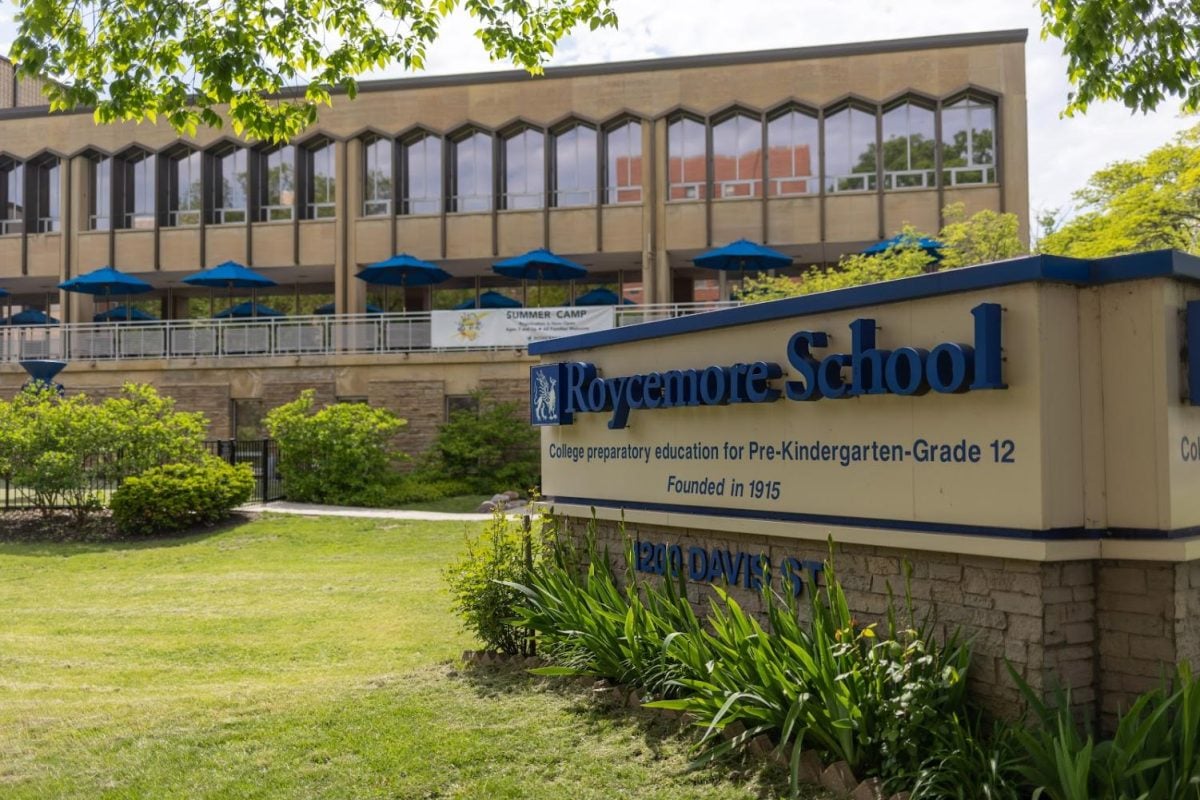
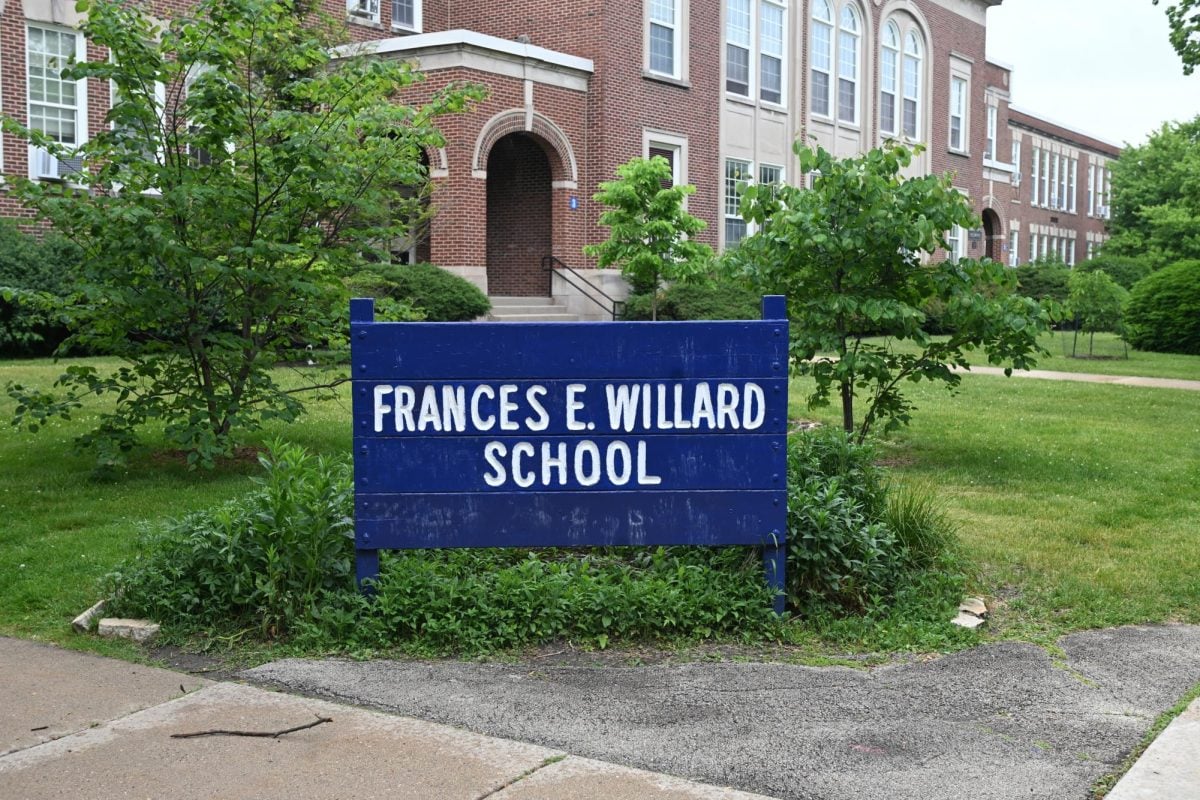
The Evanston/Skokie School District 65 community is in the midst of reckoning with a monumental decision: whether or not the board should close three schools to cut $11.8 million in costs, address outdated facilities and curb underenrollment.
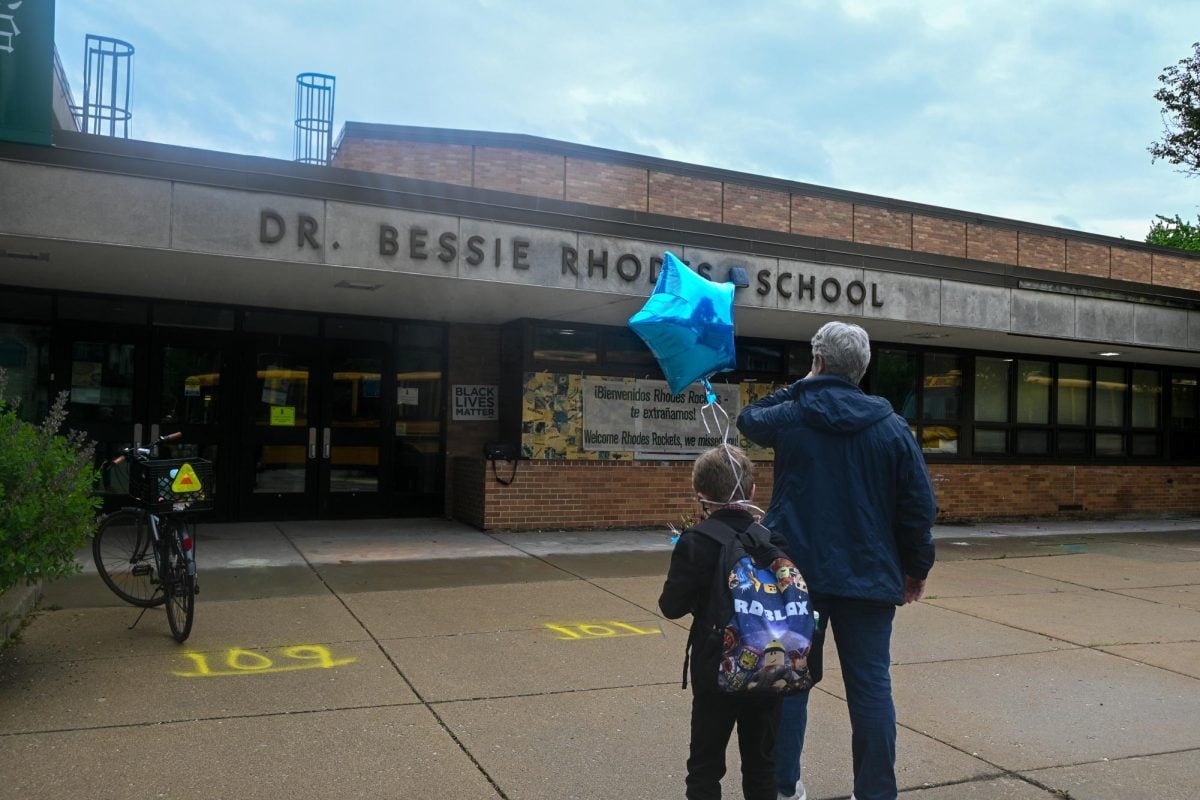
The board’s decision will add to the imminent shuttering of the Dr. Bessie Rhodes School of Global Studies and the $48.5 million opening of the new Foster School.
But the district has been in this position before — including in the 1970s, when it closed seven schools in a four-year span, local historian Kris Hartzell said in a presentation at the Evanston History Center Thursday night. While the particular details of each instance largely depended on the context of the time, there have always been competing interests between community stakeholders, she said.
“From the history of the district, we can learn that this is not new,” Hartzell said. “It has happened over and over again, continuously, throughout the development of Evanston. It’s kind of inevitable, and it’s always a struggle.”
As she introduced her talk on the history of Evanston schools, she added that she remembers that struggle acutely. She became interested in preserving historic buildings after her elementary alma mater, the old Lincoln School, was torn down when she was 10 years old. While she recalled historical examples of residents fighting to preserve their beloved schools, she also pointed out that the city’s difficulties with underenrollment and outdated facilities are timeless issues as well.
Evanston History Center trustee Katie Trippi recalled attending school board meetings as a high schooler to protest the 1976 closure of the Miller School. Her mother served on the school’s PTA because her younger brother was a fifth grader at Miller, she said. She recalled that school stakeholders argued in favor of keeping Miller open because it was one of the few neighborhood schools that was racially integrated without busing.
But an old boiler and other outdated facilities that demanded capital improvements — a familiar issue to district decisionmakers today — forced the school to close along with two others, she said. Children on her block started walking to Lincoln or Dewey Elementary Schools or attending magnet schools.
“It kind of split up the neighborhood,” Trippi said.
The city’s schools have a longstanding tradition of also doubling as community centers, Hartzell added. Although southwest Evanston was the last part of the city to be settled, rapid growth in the 1910s made the construction of Oakton Elementary School in 1914 necessary, she said. To help a growing immigrant community acclimate to the neighborhood, Oakton hosted evening classes and opened its bathrooms and showers to the general public.
Oakton has largely not been discussed by the board as a potential closure, but nearby Dawes Elementary School and Washington Elementary School — both of which host Two-Way Immersion programs — could be on the chopping block.
Hartzell said underenrollment was another reason for closing schools in the 1970s — as baby boomers grew up, the city’s school-aged population plummeted. She added that it was also the main rationale for closing the Larimer School during the Great Depression, despite significant community opposition.
Through over a century of closing schools, Hartzell said district administrators have found a variety of solutions to cope. She told the story of the city’s second-ever school building, which became a laundromat and polling location when the school moved to Orrington Avenue. She added that the conversion was an early example of adaptive reuse, a solution that could be applied across a variety of contexts.
“A lot of it just depends on the time, the location of the school, the condition of the school or whether there was an interested buyer or not,” she said. “So, adaptive reuse is a good idea … Every situation is unique, but similar.”
Trippi said she attended many community meetings to discuss the district’s current school closure dilemma, often finding herself sitting next to young parents who wonder why there isn’t a roadmap for the situation at hand. Balancing her perspective as a parent of Lincolnwood alumna and her experience of going through closures herself, Trippi said she doesn’t feel terrible about the school closing because she feels the district is making “a pretty fiscally responsible decision.”
She said the district should learn from the 1979 closing of the old Foster School, which forced the neighborhood school’s predominantly Black population to be bused to faraway schools.
“That community felt the loss of their center,” Trippi said. “I think that can easily happen at Lincolnwood, and I think it can happen at Dawes … I hope that we can learn from our past that schools really are the crux of the community.”
Email: [email protected]
X: @sidvaraman
Related Stories:
— Under new leadership, District 65 looks for wiggle room in 3-school closure plan
— ‘One shot to get this right’: D65 board mulls over school closure scenarios