

Apart from the nonstop rush of classes, clubs, eat, sleep and repeat, there’s often another fixture in students’ schedules — research.
The Office of Undergraduate Research provides advisors and workshops to guide students through the research experience, including editing applications and statements, and connecting students with faculty members. OUR also runs initiatives such as the Undergraduate Research Assistant Program and the Summer Undergraduate Research Grant program.
URAP targets students who are new to research. Faculty members apply to URAP for either a pre–selected student or to conduct an open job search, allowing them to mentor a research assistant over the academic year and pay them. Some students stay in Evanston over the summer, crafting a screenplay or working with protein samples, supported by SURG stipends.
Many departments offer courses focused on building research skills through quarter-long projects. In the humanities and social sciences, research often takes a more individualized form, like assisting a professor with their next book or pursuing a senior thesis. Several fellowships support more immersive or interdisciplinary projects, such as the Nicholas D. Chabraja Center for Historical Studies, the Buffett Institute for Global Affairs, and the Alice Kaplan Institute for the Humanities.
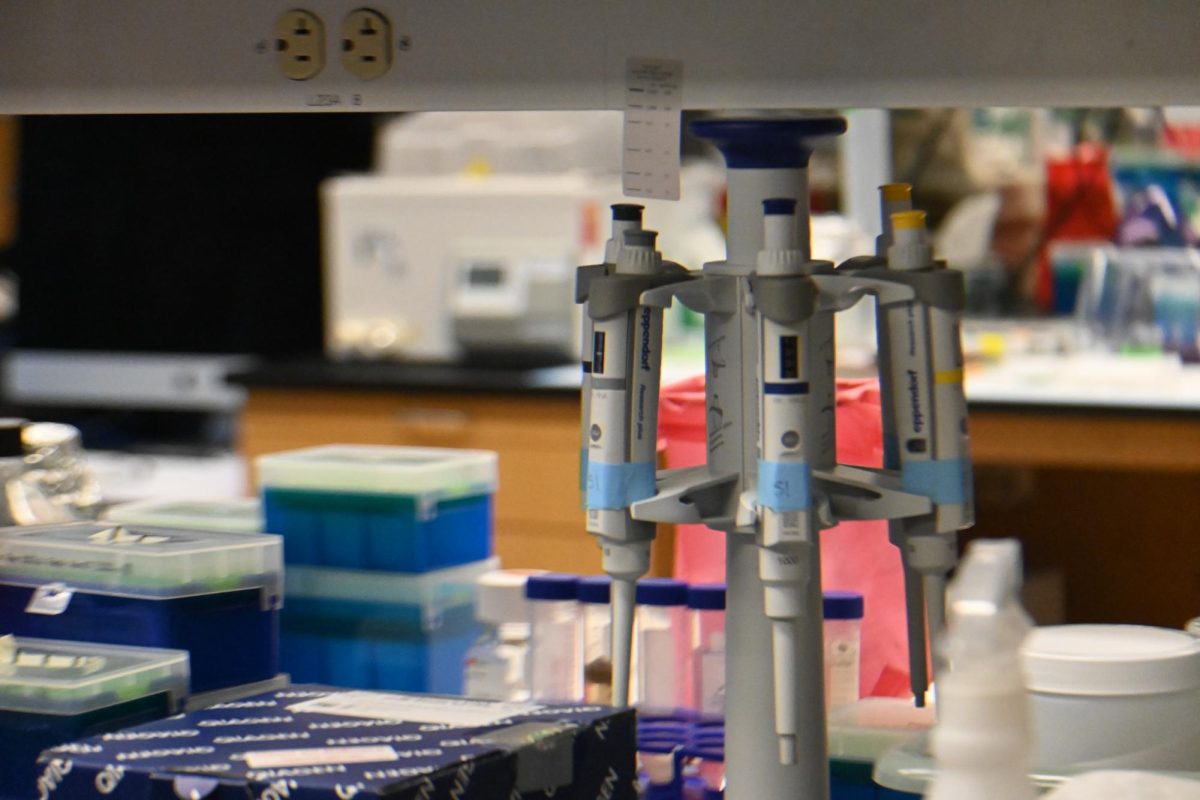
STEM undergraduates typically work in lab environments, through both informal pathways or structured programs like the Center for Synthetic Biology’s DeFeo Family Undergraduate Research Fellowship. The computer science department runs a two-quarter Research Track program for juniors, culminating in a spring poster presentation symposium.
For those whose curiosity extends beyond just one school, there are opportunities that bridge two seemingly disparate disciplines. For example, the Technological Innovations for Inclusive Learning and Teaching Lab and the Center for Connected Learning and Computer-Based Modeling are joint ventures between McCormick and SESP.
Apart from these structured programs, the best option may be reaching out to professors via email or after class. They may not have the capacity to take you on right now, but it never hurts to put your name out there and stay in touch. Before reaching out, do your homework by exploring lab websites and reading publications. When you email, explain what interests you about their work specifically and how your background or curiosity aligns with it.
Although there are opportunities for paid research work — by way of lab funding or NU grants — research for course credit is also possible through independent studies under a faculty member. Students present their work in a variety of places, including department-specific presentations, undergraduate research symposiums and large conferences across the country and around the world.
Everyone begins research at different points in their undergraduate lives, so don’t be worried about feeling behind. You might quickly discover that it’s not something you enjoy, or you might find yourself committed to it until you march back through The Arch — but you won’t know until you take that first step.
Email: [email protected]
Related Stories:
—Research Roundup: tea brewing, wage theft, HIV stigma
—Northwestern undergraduates explore research through grants
—NU redesigns homepage to spotlight research amid funding freeze


