Kevin Leonard (Weinberg ’77, ’82 MA) likes to view his job as hosting parties and introducing people to one another. But not everyone at his “parties” is still alive.
As a University historian, Leonard said he introduces contemporary people to written, documented forms of people from other periods.
When he was still a Northwestern student, Leonard said he once had to go into the archives to look up a fact and happened to strike up a conversation with someone working there. About 15 minutes later, he was offered a job in the archives, he said.
Leonard became the University archivist in 2009 and held the role for 14 years. Now he continues his work with the archives as the University historian.
University Archivist Matthew Richardson (Weinberg ’06, ’13 MA) is Leonard’s successor and has been in the position for a little over a year, he said.
Richardson was also an NU student and worked in the preservation department after graduation. Then, he worked in the archives at the University of Houston for more than a decade before returning to NU.
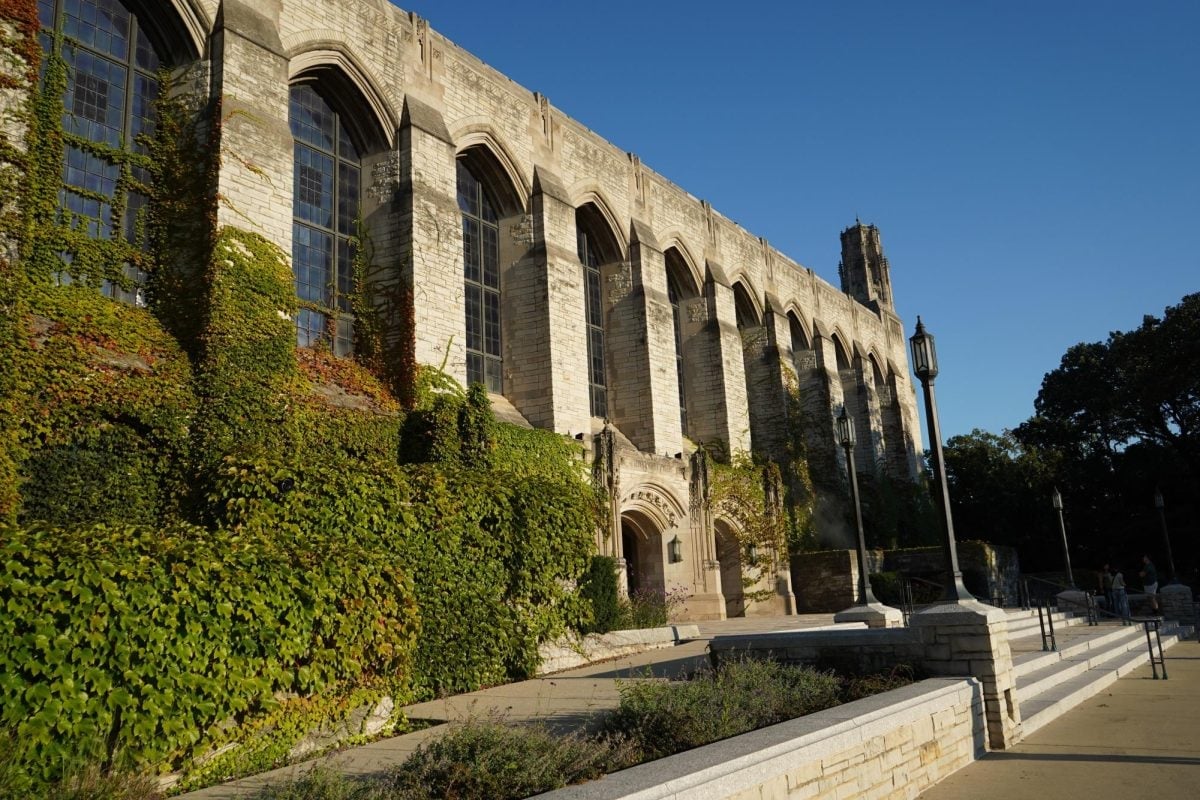
NU’s archives contain a volume of collections so extensive that it spans three storage locations — Deering Library, an underground storage facility on campus and the Oak Grove Library Center in Waukegan, Illinois.
“One thing I think is unique about the Northwestern archives that is not a given at other archives is how strong we are in the collections of alums who go on to do amazing things,” Richardson said.
Each collection in the archives unit has some tie to the University, which means the material comes from faculty, staff, alumni or others connected to NU.
The collections include materials related to everyone from All-American athletes to successful journalists and attorneys to psychiatrists called to testify in sensationalized crime cases.
“Getting to know people’s lives and valuing people’s lives through the documents that they leave behind can be fun, it can be touching, it can be interesting,” Leonard said.
The athletic career of Otto Graham (SESP ’44)
When Leonard started running the archives, the late NFL quarterback Otto Graham’s (SESP ’44) family was on his shortlist of people to reach out to. He was interested in acquiring Graham’s materials for an archival collection, he said.
Graham attended NU on a basketball scholarship, but after playing intramural football his freshman year eventually played on the school’s football team as well. He was recognized as an All-American in both basketball and football.
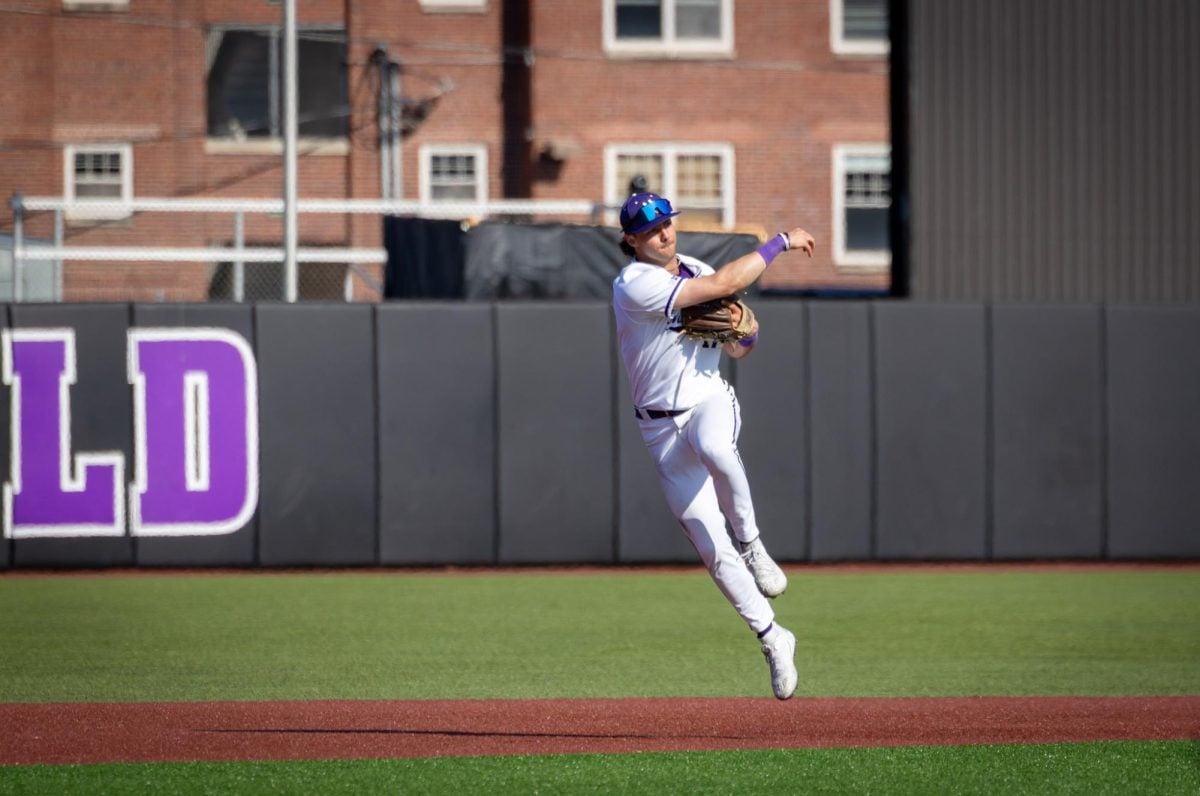
He was also skilled at baseball and even won an intramural ping pong championship during his time at NU, Leonard added.
“He’s the greatest athlete with which this school has ever been associated,” Leonard said.
Graham served in the United States Navy during World War II and then played one year of professional basketball before joining the Cleveland Browns to play football as a quarterback. He was the team’s quarterback for 10 years, during which the team advanced to the championship 10 times, winning seven.
Now, Graham is in both the College Football Hall of Fame and the Pro Football Hall of Fame.
The archive collection includes scrapbooks that outline his athletic career, spanning from high school through his college and professional career.
Other materials in the collection are physical artifacts, such as a bust of Graham, motion picture films and sound recordings. The impact of NU on Graham’s life can be traced in the materials, Richardson said.
Many sports fans — NU, college and professional sports fans — often come to look at Graham’s collection, according to Leonard.
“It is certainly a valuable collection of Mr. Graham’s life and accomplishments, but it’s also of interest to people who like college football history, college basketball history,” Leonard said. “It’s a great sports collection.”
International insights and personal correspondence of journalist Georgie Anne Geyer (Medill ’56)
Chicago native and NU alum Georgie Anne Geyer (Medill ’56) joined The Chicago Daily News early in her journalism career before eventually moving to Washington, D.C. to report on international affairs.
Geyer reported from Latin America in the 1960s, traveling to Peru, the Dominican Republic, Guatemala and Cuba. She interviewed many figures in global politics, including Fidel Castro and Saddam Hussein.
She also had correspondence with U.S. figures such as former Presidents Richard Nixon and George H.W. Bush, as well as former First Lady Nancy Reagan.
“She had a very significant career as a journalist and as a columnist,” Leonard said. “She had great insight into world affairs and the tectonics of international politics.”
As her journalism career began to wind down, Leonard said Geyer continued to write from home, mostly as a columnist. She kept a lot of her personal files in her home office, Leonard added.
Geyer contacted Northwestern to see if her materials would be of interest, and after a couple of years of contact, she decided to store her materials in the archives. Most of her materials weren’t acquired until after her death, though, since she wanted to keep her files as she continued to write, Leonard said.
Her collection includes personal correspondence that Leonard said is very revealing about Geyer’s life. Even though he knew Geyer personally, Leonard said her written records and correspondence revealed more about the journalist.
“If it’s accurate to say journalism is the first draft of history, then her materials in meeting with various political leaders of the world throughout her career should hold great interest for people,” Leonard said.
Materials and notes from attorney and advocate Karen DeCrow (Medill ’59)
For Jill Waycie, the Karen DeCrow (Medill ’59) collection was one of the biggest personal papers collections that she had ever worked on.
Waycie is a processing archivist at the University of Illinois Chicago and formerly worked in the archival department at NU for over a decade.
Waycie was assigned to work on the collection in 2016, she said. The collection was physically large and took a long time to process completely, she added. It contained a variety of materials, including ones that were weirdly-sized and difficult to store, such as DeCrow’s childhood doll.
Journalist, attorney and Chicago native DeCrow gifted her materials to NU, according to Leonard.
DeCrow began her career as a journalist but moved on to become an attorney representing cases focused on women’s rights and gender equality issues, Leonard said. She was later president of the National Organization for Women, meaning many of her materials are relevant to second-wave feminism, Leonard added.
Similar to Geyer, Leonard said DeCrow kept a lot of her materials close at hand until her death. She wanted her own archive at home to draw from for public speeches and writings.
Once NU acquired the materials, the archives department tried to respect her original organization as much as possible. Typically, archivists view the original organization as evidence of how a person kept their own records and worked with them, Richardson said.
“Karen DeCrow very meticulously ordered her files, so in that way, we were able to use her existing structure for some of it,” Waycie said.
In addition to the materials gifted by DeCrow herself, the collection also includes a series of notes donated by a friend of DeCrow’s after her death.
The notes were written on a stack of yellow legal pads, Waycie said. They were written both by DeCrow and her caregivers towards the end of her life. Waycie said she could see DeCrow’s wit and intelligence come through in her notes, but she also noted that she could see how DeCrow was “taking in the end of her life and dealing with that.”
“It was really poignant to see that, someone writing out their thoughts about that point in your life,” Waycie said.
The criminal case files of psychiatrist Harold S. Hulbert
Unlike Graham, Geyer and DeCrow, Harold S. Hulbert’s connection to NU is less obvious.
Hulbert was an affiliate of Pritzker School of Law and a prominent Chicago psychiatrist who often testified in court.
While going through a vault in the law school to obtain 19th-century and early 20th-century student records, Leonard found Hulbert’s case files. They were accompanied by a note from Hulbert, explaining that he left his files to NU for future study, Leonard said.
“The Hulbert collection is small, but it relates to ghastly yet memorable crimes in Metropolitan Chicago,” Leonard said.
The first was a case in which Hulbert was brought to testify as an expert witness at the sentencing hearing of Nathan Leopold and Richard Loeb. The two teenagers murdered a 14-year-old boy in 1924.
Leonard said the families hired a defense attorney to spare them the death penalty, which was ultimately successful. The defense called on Hulbert as a consulting psychiatrist.
The sentencing hearing became “an arena in which contending schools of psychiatry, which is a pretty new development at the time, argued out their positions in court,” Leonard said.
The second of Hulbert’s case files in the archives was about John Kammerer, a waiter working in Chicago who murdered a family that had invited him to dinner in their home.
Hulbert was the psychiatrist assigned to this case and a witness for the defense, Leonard said. He instructed Kamerer to keep diaries during his time in jail, which detail the crime and are a part of Hulbert’s collection in the archives.
For Leonard, reading the diaries is like seeing the crime happen in real time, he said.
“You can read about events that happen, but when you see personal materials from someone who experienced it, it just makes it that much more real,” Waycie said.
Richardson said the archives are a “conduit between the past, the present and the future,” connecting people across time periods. He added that the archives are evidence of what happened and who has been here.
For Richardson, the archives are important because they reflect the impact that NU has had on its students. But they also reflect the impact that the University has had on the world through those students.
He emphasized that the archives have enduring historical value and the extent of the materials means everyone can find something of interest to them.
“I think there is something for everyone here,” Richardson said. “You don’t need to have a big research agenda. You don’t need to have any particular scholarly credential or academic affiliation. You just need to have an interest, and more than likely there’s going to be something here that will get you excited.”
Email: [email protected]
Related Stories:
— The Daily Northwestern’s archives reveal cultural shifts and controversies
— NU’s conservation lab battles test of time to preserve historic archives
— Defining Safe: NU Library archives offer a window into decades of queer life