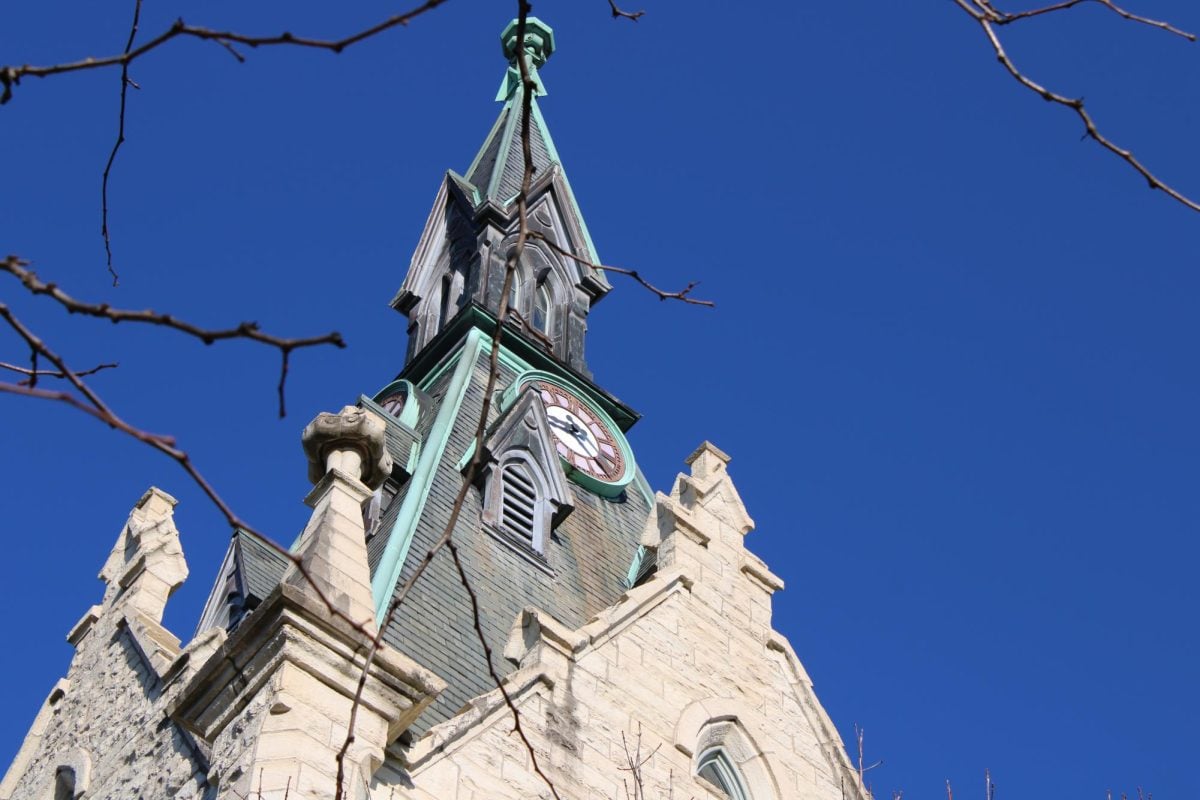
It’s not just the Lakefill that earns Northwestern its spot on “Most Beautiful College Campuses” lists, but the snaking ivy adorning the gothic buildings and fragrant hyacinths lining the paths that bring character to University. While the buds bloom only when the warm breeze returns to Evanston every spring, planning for the floral extravaganza begins months before.
By January each year, Campus Planner Sarah White is putting the finishing touches on her book: a yearly bible of sorts detailing the location and layout of each flower bed as well as its “plant palette,” containing a curated selection with photos of each plant and the quantities needed. The book lays the groundwork for the landscapers who are prepared to implement her commencement-worthy flower designs over the next few months.
Shades of purple comprise the majority of these plans, with up to 75% of all flowers on campus donning the University’s signature color, White said. With around 20,000 flowers planted every year across NU’s Evanston and Streeterville campuses, she aims for a colorful, diverse and thoughtful selection of flowers. Her goal is to find those that will look best in early June ahead of graduation festivities and into the fall to open the new academic year, she said.
“Spring and fall are very important seasons for us to make a visual impact,” White said. “Fall, to make it feel very welcoming and encourage people to be outside on campus. And then spring, just because I feel like everybody needs it after the winter.”
Nurturing nature
The planning begins in early winter, when White completes designs for each flower bed using Computer-Aided Design software and aerial photos from Google Earth and other online geographic information systems. Then, White’s team works with local nurseries and growers to source all the flowers needed for each display.
Bulbs are the first to bloom each spring. NU Facilities Management plants them by the end of the preceding summer, before the winter’s first frost. Landscapers then plant the spring annuals in March and the summer annuals in mid-May every year because they complete their life cycle within one growing season, White said.
The team replaces shrubs, trees and perennial plants on a rotating basis. Because of their longevity and resilience, display beds feature flowering perennials alongside annuals for a more sustainable and budget-friendly approach, White said.
Throughout the spring and summer, the plants stay vibrant and perky thanks to groundskeepers’ efforts to maintain them. They wield a fleet of vehicles and tools, including trucks, tractors, aerators, mowers, blowers and weed eaters. From hand-watering beds in secluded areas to trimming shrubs down to a standard height, Groundskeeper Foreman Stephen Camburn leads a team of more than 20 landscapers responsible for the maintenance of campus grounds.
A blossoming history
This year’s display will prominently spotlight dahlias as “a wonderfully showy summer annual” and Persian shield “for its deep purple and green foliage,” White said. In addition, the new Cohen Lawn at Norris University Center will feature its own display of annuals.
White said her predecessor, Ann Ziegelmaier, “raised the profile of campus gardens.” Over Ziegelmaier’s almost 40-year tenure, she replaced the homogenous geraniums across campus with planting designs that demonstrated how investment in plant material can have a positive impact on campus exteriors, White said.
Camburn said high profile areas have varied slightly since he started working at NU in the ’80s. He watched the Weber Arch construction in 1993 and was active in landscaping the surrounding area, which remains a focal point on campus today, he said.
Over the years, he’s also watched legacy gardens pop up, including Trienens Garden in front of Cahn Auditorium gifted in 1999 and the Marjorie Weinberg Garden by Deering Meadow in 2007. These gardens live alongside oak groves that have been around for hundreds of years, he said.
White doesn’t shy away from experimenting with the types of florals used across campus beds. White impatiens were a new addition last summer to the bed by the NU sign at the intersection of Chicago Avenue and Clark Street, alongside the customary spring hyacinths in varying hues that reflect the University’s Purple Pride.

The change came after years of planting a leafy summer plant known as purple hearts. White regularly selects new plants like the impatiens, but she can’t breathe a sigh of relief until she sees them bloom.
“Last year they put them in (at the) end of May, and they just looked so little,” White said. “But then by the end of June, for sure, it got really fluffy and pillowy, and they looked really good.”
Weinberg junior Bisola Famuyiwa said she often passes by the flower bed on her walks between campus and her apartment. Despite always carrying Zyrtec and eyedrops to combat her pollen allergy, she’ll stop to take photos and send them to her family group chat, she said.
Famuyiwa said her allergies have made her more appreciative of both the flowers and those who care for them, especially when she can take them in without her symptoms flaring up.
“It offers a soft touch and makes everything so much more beautiful,” she said. “You feel good about your campus, and you feel good about yourself, too.”
Wildcats tackle wildflowers
NU students also assist in revitalizing the campus and its biodiversity. Since helping start Prairie Cats, an ecological restoration club, her first year, McCormick senior Lianne Kim has helped restore the Wild Roots Garden by Norris and Shakespeare Woods by Shakespeare Garden.
Kim and other members of Prairie Cats remove invasive plants and non-native species, replacing them with native ones. They’ve cleared Shakespeare Woods of celandine, an invasive and contagious species, and looked into 50 native species they could plant instead. Since completing a design workshop in August 2024, the combined efforts of Facilities, students and community members have transformed the area, Kim said.
“Even though it’s more hidden away, (the restoration project) will call attention to this area, which is a very beautiful place on campus,” Kim said. “It’s very peaceful, and the people who do know about it like to go there to relax or study and to find refuge from the rest of campus.”
Blending into the ecosystem
Students aren’t the only ones drawn to campus florals. Camburn said the concentrated plantings of annuals, perennials and flowers attract fauna. But unless the animals are extremely destructive, his team lets nature run its course in areas like the lagoon bank just west of the Lakefill.
For instance, even though milkweed is a “so-called weed,” Camburn said he lets it grow for the monarch butterflies. On the lagoon bank, he leaves vegetation for small creatures such as mice, voles and beavers.
Rabbits, however, have caused quite the ruckus on campus. Facilities has tried various tactics to deter them from munching up the flowers, including putting a fence around beds and applying a hot pepper spray to the plants, Camburn said.
The department even planted rabbit–resistant plants, like daffodils and flowering tobacco, White said. But the rabbits have resorted to snacking on plants they usually avoid, including alliums, because of population pressure due to the unusually high number of bunnies on campus.
“The bunnies are the scourge of the campus the last couple years,” White said. “You would walk around campus in the summer, and the lawns would just be full of rabbits sunning themselves. And you just shake your fist at them, because there’s not much you can do, and they’re so cute.”
The bunny population has grown with the progressively warmer winters. But these same weather conditions have allowed White to bring in other species that can survive shorter winters and extreme fluctuations in weather, she said.
Recently, Facilities planted the first sweetgums, a tree native to the southeastern U.S., on campus at Cohen Lawn. The landscape architects chose the urban-tolerant tree for their aesthetic value, White said. They turn bright red in the fall, and Evanston’s warmer weather has allowed the sweetgum to thrive, she added.
Planting it forward
Since stepping into her role as campus planner three years ago, White has shifted her focus from choosing plant selections just for their aesthetic value toward sustainable, ecologically beneficial landscaping. She and her team have begun experimenting with replacing turf areas on campus with more natural alternatives.
For instance, she’s considered replacing the Kentucky bluegrass on oak groves across campus with grass-like plants such as low fescue or sedge. These alternatives are companion species that help tree roots thrive while requiring less watering, fertilization and mowing. White hopes to devise a diversified species list for the effort and make more progress in 2027, she said.
From the flower beds in Gladys “Hap” Pancoe Memorial Garden to the greenery on the Lakefill, Camburn said he hopes his work brings relief to students, visitors and the population at large.
“I hope it brings a sense of beauty — that they feel a connection to the natural aspect of the campus, not just the architecture,” Camburn said. “Hopefully there’s serenity of being outdoors, and students can take advantage of the quiet intensity of the experience of going to Northwestern.”
Email: [email protected]
X: @laurenhykee
Related Stories:
— Evanston and sustainNU lead climate action amid Chicago’s sustainability struggles
— Bad Bunnies? NU’s campus is hopping
— Meet the ‘seasoned’ team that keeps roads clear and flowers planted year-round