During an educational discussion on Thursday evening, Northwestern students highlighted their various perspectives on Teach for America.
Teach for America, a national nonprofit dedicated to solving educational inequity, recruits recent college graduates and trains them to teach for two years in low-income and underprivileged schools.
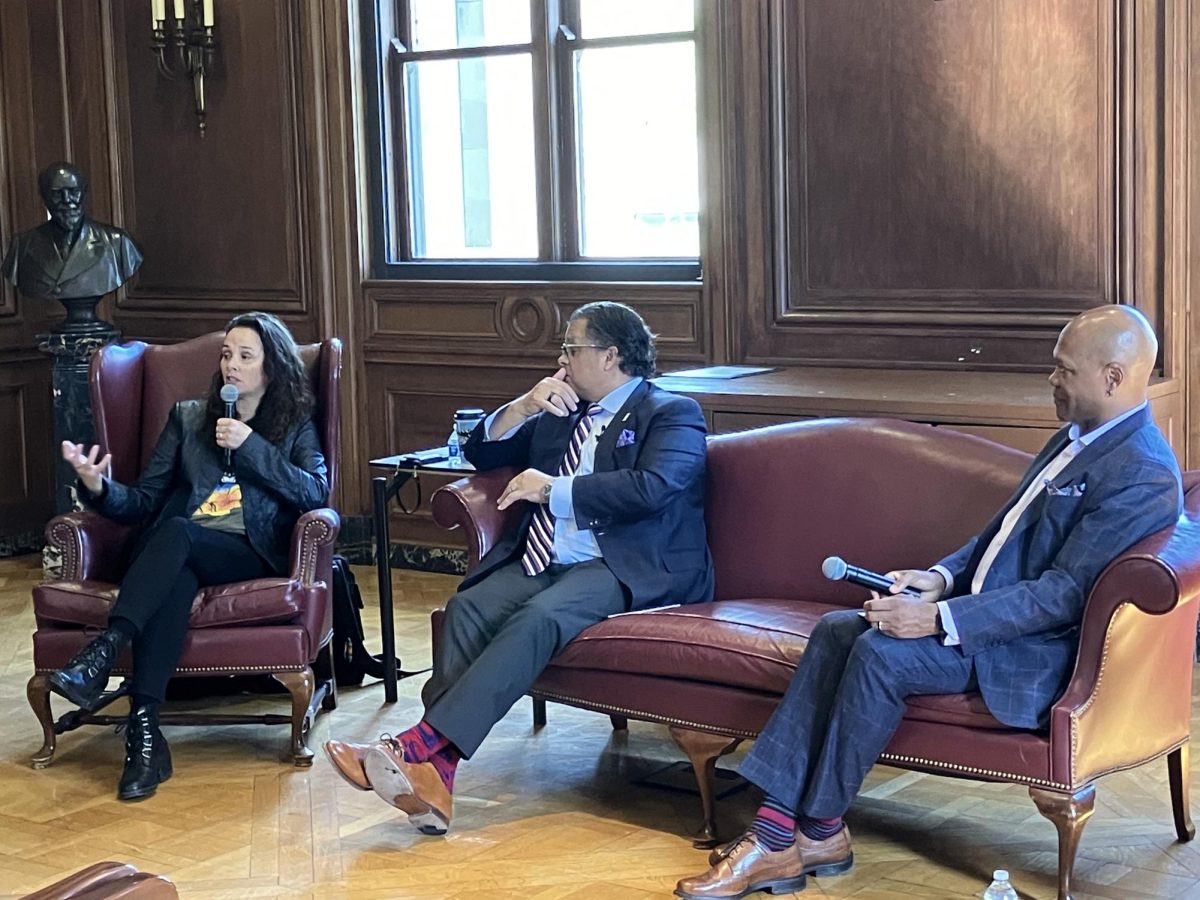
About 30 students attended the discussion hosted by the Center for Civic Engagement in Norris University Center’s Louis Room. A panel of people involved with TFA, including two recent NU alumni, shared their experiences working with the organization.
Ten percent of Northwestern graduates from the Class of 2012 applied to work for TFA, said Weinberg senior Lena Peck, a Center for Civic Engagement fellow who organized the discussion. Despite the high involvement of NU students, Peck said, many people still do not have clear perspectives of the program from current or previous corps members.
“You hear a lot of stuff about (Teach for America), there’s a lot of info sessions,” she said. “But what is it really like?”
Panelist Rob Crawford (Weinberg ’12) said he stumbled upon the group when, after college, he said he wanted to “do something that I would never have the opportunity to do again in my life.” He and fellow corps member Dal Ackerman (Communication ’12) have been working for Teach for America for three and a half months. Crawford acknowledged that the organization combines “a lot of work” with “an incredible experience.”
In addition to recent college graduates, the panel also included two TFA alumnae. One panelist described how the program sparked her interest in education issues and another explained how she did not take the traditional two-year route, instead joining the organization later on.
The panelists then answered questions about the effect of TFA on members’ future careers, as well as teachers’ experiences during the Chicago Public Schools strike in September.
Student attendees broke into groups to discuss their views on Teach for America. While some were interested in applying to become a teacher, others questioned the effectiveness of recruiting recent college graduates with no teaching experience to help students in struggling schools.
Some students were surprised by criticism of the organization. Weinberg junior Katie Funderburg said she was interested in hearing varying perspectives on Teach for America.
“Our conclusions were just that there are a lot of differing opinions about (Teach for America),” she said. “It’s possible to have a lot of positive views about TFA and also a lot of reservations about it.”
Peck said she was glad that the discussions brought up some of the lesser known issues surrounding TFA. Heidi Gross, program manager at the Center for Civic Engagement, said the event was intentionally planned not as an information or recruitment session, but rather as an opportunity for students considering Teach for America to ask questions and voice concerns.
“We wanted to provide a venue for that conversation to happen,” she said.